

Introduction
A drop in fire spray nozzle pressure can turn a properly designed suppression system into one that delivers weak reach, poor droplet distribution, and unreliable fire control. The cause is not always the nozzle itself: pressure can be lost through pump issues, undersized or obstructed piping, valve restrictions, leaks, incorrect nozzle selection, or wear at the discharge end. This article explains how pressure loss affects nozzle performance, where to look first when troubleshooting, and which corrective actions restore stable operation. By the end, readers will have a practical framework for diagnosing pressure problems and improving the reliability and safety of a fire protection system.
Why Fire Spray Nozzles Lose Pressure in Real-World Use
A fire spray nozzle is the critical delivery endpoint of any fire suppression system, responsible for converting water pressure into a highly specific spray pattern, reach, and droplet size. When a system experiences unexpected pressure loss, the nozzle’s ability to suppress or extinguish a fire is immediately compromised. Maintaining optimal operating pressure is not merely a matter of efficiency; it is a fundamental safety requirement.
System designers and facility managers must understand that even a marginal pressure drop of 15 to 20 PSI (from a standard 50 to 100 PSI baseline) at the nozzle can severely alter the hydraulic dynamics of the suppression effort. Identifying the root causes of this pressure degradation requires a comprehensive look at the entire hydraulic circuit, from the water supply and pump infrastructure to the terminal orifice of the nozzle itself.
How pressure loss affects fire spray nozzle performance
The performance of a fire spray nozzle is directly tied to the kinetic energy of the water passing through it. When pressure drops below the manufacturer’s specified minimum operating threshold, three critical performance failures occur. First, the effective reach of the water stream decreases, preventing the suppression agent from penetrating the thermal column of the fire. Second, the spray pattern collapses; a wide-angle fog pattern may narrow or lose its structural integrity, leaving blind spots in the coverage area.
Third, and perhaps most importantly, droplet size increases inversely with pressure. A pressure reduction of just 20% can increase the average water droplet diameter (typically engineered for 300 to 1,000 microns) to a point where the water fails to flash to steam efficiently. Because heat absorption relies heavily on the surface area of small, rapidly evaporating droplets, larger droplets simply fall through the heat plume without adequately cooling the environment.
Why pressure stability matters in commercial systems
In commercial and industrial environments, pressure stability is the cornerstone of regulatory compliance and property protection. Large-scale facilities often rely on complex networks of piping, valves, and multiple fire spray nozzle placements that must function simultaneously during a thermal event. If system pressure fluctuates, the nozzles furthest from the riser will fail to deliver the required gallons per minute (GPM) density (often ranging from 0.15 to 0.60 GPM per square foot depending on hazard classification).
Furthermore, commercial suppression systems are rigorously tested and certified to specific international standards, such as those published by the International Organization for Standardization. Failing to maintain the baseline pressure invalidates the system’s hydraulic calculations, potentially leading to catastrophic failure during an emergency and significant liability issues during post-incident investigations.
Technical Causes of Fire Spray Nozzle Pressure Loss
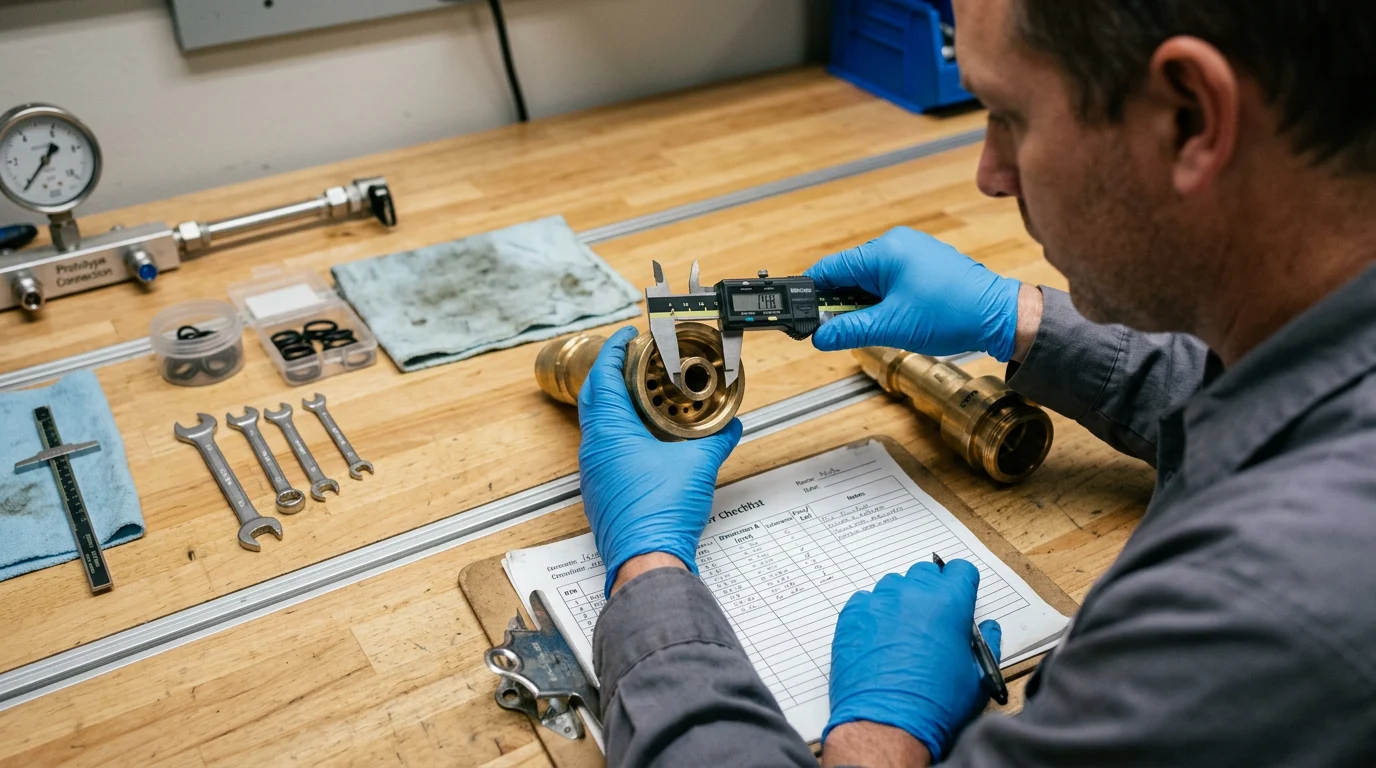
Pressure loss at the fire spray nozzle rarely originates from a single catastrophic failure; it is typically the result of cumulative hydraulic resistance and mechanical degradation throughout the suppression system. Understanding the technical mechanisms behind this loss is essential for effective troubleshooting. Technicians must distinguish between dynamic friction losses inherent in the system’s design and sudden pressure drops caused by mechanical blockages or equipment failure.
As water travels from the primary supply to the terminal nozzle, it encounters resistance. A standard rule of thumb in hydraulic calculations is that friction loss can account for a reduction of 5 to 15 PSI per 100 feet of hose or piping, depending on the internal diameter and flow velocity. When technical variables shift beyond their design parameters, the nozzle at the end of the line suffers the consequences.
How pump capacity, flow rate, and hose friction reduce pressure
The relationship between pump capacity, flow rate, and hose friction dictates the baseline pressure available to the nozzle. If a fire pump is inadequately sized or its impeller is worn, it cannot sustain the necessary head pressure under maximum flow conditions. As the flow rate (GPM) increases, the velocity of the water moving through the hoses and pipes also increases, which exponentially raises the friction loss.
Hose friction is heavily influenced by the interior lining material and the diameter of the conduit. For example, pushing 150 GPM through a 100-foot section of 1.5-inch hose generates substantially more friction loss (approximately 30 to 35 PSI) than moving the same volume through a 1.75-inch hose (approximately 10 to 15 PSI). If the pump’s discharge pressure is not calibrated to overcome this specific friction penalty, the residual pressure reaching the fire spray nozzle will be insufficient for proper operation.
How nozzle wear, blockage, valve position, and leaks affect performance
Mechanical degradation at the terminal end of the system is another primary culprit. Nozzle wear, particularly the erosion of the discharge orifice caused by particulate matter in the water supply, alters the flow characteristics. Even a microscopic increase in the orifice diameter (such as a 0.01-inch enlargement) can reduce the backpressure, inadvertently lowering the effective operating pressure of the nozzle.
Conversely, blockages caused by sediment, mineral scale, or debris trapped in the nozzle’s strainer (typically a 1/16-inch to 1/8-inch mesh) can choke the flow entirely. A mere 10% blockage in the waterway can drastically reduce the output pressure. Additionally, partially closed control valves, malfunctioning pressure-reducing valves, or undetected leaks along the supply line act as parasitic drains, siphoning off critical pressure before the water ever reaches the fire spray nozzle.
Which operating pressure and K-factor checks matter most
To accurately assess technical performance, technicians rely on two primary metrics: the operating pressure and the K-factor. The K-factor is a mathematical constant assigned to a specific nozzle that relates the flow rate to the square root of the pressure ($Q = K \sqrt{P}$). Verifying the K-factor ensures the nozzle is correctly matched to the system’s hydraulic design.
If a nozzle with a K-factor of 5.6 is installed where an 8.0 K-factor nozzle is required, the system will experience abnormal pressure readings and inadequate flow. Below is a standard comparison demonstrating how flow rate scales with pressure across common nozzle K-factors:
| K-Factor | Flow at 50 PSI (GPM) | Flow at 100 PSI (GPM) | Typical Application |
|---|---|---|---|
| 5.6 | 39.6 | 56.0 | Light Hazard Commercial |
| 8.0 | 56.6 | 80.0 | Ordinary Hazard Industrial |
| 11.2 | 79.2 | 112.0 | High-Density Storage |
How to Diagnose Fire Spray Nozzle Pressure Problems
Diagnosing pressure problems in a fire spray nozzle requires a systematic, evidence-based approach rather than guesswork. Facilities must implement rigorous diagnostic protocols to isolate whether the pressure loss is an isolated incident at a single nozzle or a systemic failure originating at the water supply. Effective diagnosis combines visual inspections with precise instrumental measurements to pinpoint the exact location of hydraulic failure.
Diagnostic accuracy is paramount because treating a symptom rather than the root cause can lead to recurrent failures. By utilizing calibrated testing equipment (typically certified annually), technicians can measure pressure differentials with an accuracy of $\pm 1$ to 2 PSI, allowing them to track the exact point in the system where the pressure drop exceeds acceptable design limits.
What inspection steps help isolate pressure loss
The first step in isolating pressure loss is a thorough visual and mechanical inspection of the fire spray nozzle and its immediate supply line. Technicians should begin by removing the nozzle to inspect the internal strainer and the baffle or deflector for signs of mineral buildup, corrosion, or foreign debris. Often, municipal water supplies carry rust or sediment that accumulates directly behind the nozzle orifice, particularly in systems with flow velocities exceeding 10 feet per second.
Next, the inspection must move upstream. Technicians should verify the position and functionality of all intermediate control valves, ensuring butterfly or gate valves are fully open. Checking for physical damage to hoses, such as kinks or delamination of the inner lining, is also critical, as these defects create severe, localized friction loss that mimics low system pressure at the nozzle tip.
Which field measurements and maintenance records to review
Visual inspections must be corroborated by hard data collected from field measurements. The most effective tool for this is a handheld pitot gauge (typically rated for 0 to 160 PSI), which measures the velocity pressure of the water stream exiting the nozzle. By converting the pitot reading to flow rate and comparing it against the static pressure in the supply line, technicians can calculate the exact pressure loss occurring within the nozzle assembly.
Furthermore, reviewing historical maintenance records is invaluable. By comparing current inline flow meter readings and pump discharge pressures against the original commissioning data, investigators can determine if the pressure loss is a sudden event or a gradual degradation over time. Any deviation exceeding a 10% threshold from the baseline commissioning data warrants immediate corrective action.
How to Fix Fire Spray Nozzle Pressure Loss
Once the root cause of the pressure drop has been diagnosed, implementing the correct corrective action is vital for restoring the fire spray nozzle to optimal performance. Solutions range from simple field maintenance to comprehensive overhauls of the hydraulic infrastructure. The goal is to restore the system to its original engineered specifications without introducing new hydraulic imbalances.
Determining the appropriate fix requires weighing the severity of the pressure loss against the operational requirements of the facility. While clearing a minor obstruction might restore up to 30% of lost pressure in 15 to 30 minutes, addressing systemic friction loss or pump degradation requires strategic planning and capital investment.
When to clean, repair, recalibrate, or replace a nozzle
The decision to clean, repair, or replace a fire spray nozzle depends heavily on the condition of the internal components. Routine cleaning using ultrasonic baths (e.g., 40 kHz for 15 to 30 minutes) or mild descaling agents is highly effective for nozzles suffering from hard water deposits or minor sediment buildup, restoring the internal geometry without damaging the metal.
However, if the nozzle has sustained physical damage, different rules apply. Industry best practices dictate that if the discharge orifice is worn, deformed, or enlarged by more than 5% of its original manufactured diameter, the nozzle cannot be reliably repaired or recalibrated. In such cases, full replacement is the only compliant option to guarantee the correct spray pattern and pressure retention.
How hose sizing, pump settings, and pressure regulation improve performance
When the nozzle itself is functioning correctly but is starved of pressure, interventions must occur upstream. Upgrading hose sizing is one of the most effective ways to combat friction loss. Transitioning a deployment line from a 1.5-inch diameter to a 1.75-inch diameter can cut friction loss by nearly 50%, delivering significantly higher residual pressure to the nozzle tip.
Additionally, adjusting the fire pump settings or recalibrating pressure regulating valves (PRVs) can compensate for minor systemic losses. Technicians can adjust the pump governor to increase the discharge pressure, provided the new pressure does not exceed the maximum working pressure ratings of the piping network (commonly 175 to 300 PSI) or the fire spray nozzle itself.
How to compare quick fixes with full system upgrades
Facility managers must carefully compare the long-term viability of quick fixes against the necessity of full system upgrades. A quick fix, such as cleaning a strainer or replacing a single damaged hose section, is cost-effective and minimizes downtime. However, if the underlying issue is an aging fire pump or severely corroded legacy piping, quick fixes only delay the inevitable.
A full system upgrade—such as replacing the pump impeller, installing larger diameter mains, or retrofitting the facility with lower-pressure, high-efficiency fire spray nozzles—requires significant capital. Yet, this approach ensures long-term regulatory compliance and reliability, ultimately providing a better return on investment and superior life safety protection over the building’s typical 30- to 50-year lifecycle.
How to Select the Right Fire Spray Nozzle
Solving pressure loss issues permanently often begins before a system is ever activated, specifically during the procurement and specification phase.
Key Takeaways
- The most important conclusions and rationale for Fire spray nozzle
- Specs, compliance, and risk checks worth validating before you commit
- Practical next steps and caveats readers can apply immediately
Frequently Asked Questions
Why does a fire spray nozzle suddenly lose pressure?
Common causes are clogged nozzle openings, partially closed valves, hose friction loss, undersized pumps, or leaks. Check the full water path, not just the nozzle.
How much pressure drop is serious for a fire spray nozzle?
A drop of 15–20 PSI from a 50–100 PSI operating range can noticeably reduce reach, spray pattern, and droplet control. Test against the nozzle’s rated minimum pressure.
Can hose length affect fire spray nozzle pressure?
Yes. Friction loss can reduce pressure by about 5–15 PSI per 100 feet, depending on hose diameter and flow rate. Longer, smaller hoses usually cause greater loss.
How can I fix low pressure at the fire spray nozzle quickly?
Inspect for nozzle debris, open all valves fully, verify pump output, check for hose kinks or leaks, and confirm the pipe or hose size matches the required flow.
Where can I find compatible fire spray nozzle and hose components?
You can review fire nozzles and matching hose fittings at nbworldfire.com to help ensure the nozzle, hose, and coupling sizes are properly matched for stable pressure.
Post time: May-27-2026