

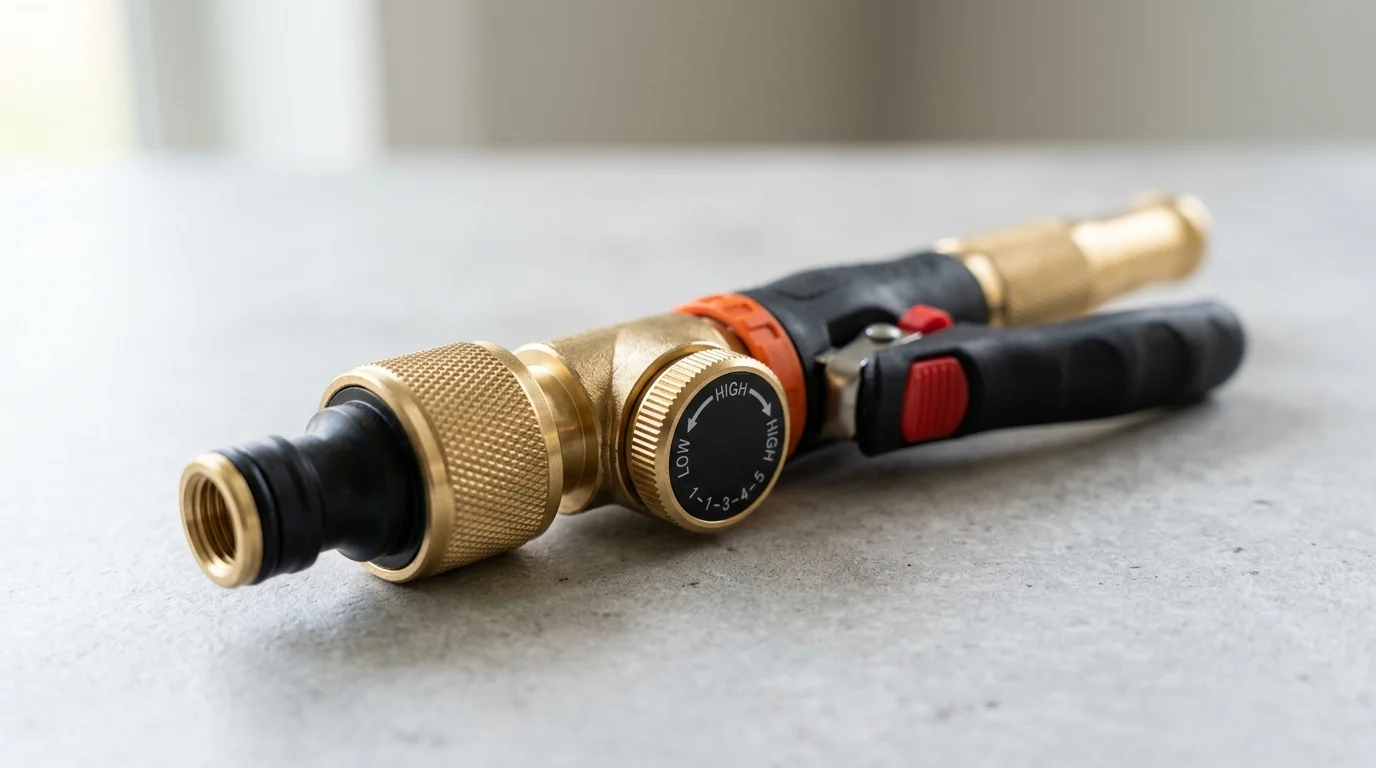
Why Adjustable Flow Rate Nozzles Matter
Fluid handling systems demand high precision to minimize operational costs and maintain stringent quality controls. Adjustable flow rate nozzles represent a critical evolution in industrial spray technology, allowing engineers to dynamically manipulate fluid volume without disrupting the entire hydraulic architecture. In modern manufacturing, production lines rarely operate under static conditions; facilities often face a 15% to 25% variance in continuous line speeds, requiring fluid application systems to adapt instantaneously to prevent product defects or raw material waste.
Historically, engineers relied on static, fixed-orifice nozzles, which forced operators to modulate line pressure to achieve different flow rates. This approach inherently compromises atomization quality. Adjustable flow rate technology fundamentally solves this hydraulic limitation by decoupling fluid pressure from the volumetric flow rate. By integrating dynamic flow control directly at the point of application, facilities can optimize fluid consumption, reduce environmental impact, and significantly enhance overall process efficiency.
Efficiency as a Commercial Advantage
Efficiency in fluid dynamics directly correlates with reduced chemical consumption and lower energy expenditure. By utilizing adjustable flow rate nozzles, manufacturing facilities can precisely match fluid output to real-time process demands rather than operating at a constant maximum output. This dynamic modulation drastically reduces pump wear by allowing variable frequency drives (VFDs) to operate at optimized setpoints, lowering the overall electrical load of the hydraulic system.
In high-volume applications such as automated coating, food glazing, or industrial cooling, the financial return on investment (ROI) for upgrading to adjustable systems typically ranges from 6 to 12 months. This rapid ROI is driven primarily by a 20% to 30% reduction in raw material waste and a concurrent 10% decrease in compressed air consumption for twin-fluid atomizing setups. When fluid application scales linearly with production speed, the commercial advantage becomes highly measurable on the balance sheet.
What Defines an Adjustable Flow Rate Nozzle
An adjustable flow rate nozzle incorporates an internal mechanical or electromechanical mechanism that actively alters the orifice size, fluid pathway, or duty cycle. Common internal architectures include motorized needle valves, pneumatically actuated cylinders, or variable bypass return lines that divert a portion of the fluid back to the supply tank. These mechanisms allow the nozzle to change its output volume while the supply pump maintains a constant header pressure.
Advanced models utilize Pulse Width Modulation (PWM) technology to achieve flow control. Instead of physically restricting the orifice, PWM nozzles cycle open and closed at extreme speeds—often operating at frequencies up to 10,000 cycles per minute. This high-frequency actuation allows the spray volume to be dialed back by as much as 90% from its maximum rating, while maintaining a constant droplet velocity, spray angle, and impact force. This defining characteristic separates true adjustable nozzles from simple throttling valves.
Operating Conditions That Require Flow Control
Dynamic operating environments necessitate precise, real-time flow control. Conveyor systems with fluctuating speeds, such as those found in automotive manufacturing or commercial bakery lines, require spray volumes that scale proportionally with line velocity. If a conveyor slows down by 40%, a fixed nozzle will over-apply the coating, leading to pooling, extended drying times, and ruined product. Adjustable nozzles automatically throttle down to match the exact line speed.
Furthermore, ambient environmental changes significantly impact fluid properties. Temperature swings on a production floor can alter fluid viscosity by 50 centipoise (cP) or more throughout a single shift, changing how the fluid behaves as it exits the nozzle. Multi-product lines that run different formulations with varying specific gravities also demand flow control. Adjustable nozzles accommodate these shifting operating conditions on the fly, ensuring that the target application rate remains mathematically precise regardless of external variables.
How Adjustable Nozzles Improve Efficiency

The mechanical advantage of adjustable nozzles lies in their ability to manipulate fluid mechanics at the point of exit. In traditional hydraulic systems, varying the flow rate requires altering the line pressure; however, pressure and velocity are inextricably linked. Changing the pressure inadvertently alters the spray pattern angle, droplet momentum, and atomization profile. Adjustable systems bypass this limitation entirely.
By sustaining optimal atomization metrics across a wide spectrum of fluid delivery rates, adjustable nozzles eliminate the physical compromises inherent in static spraying. This capability translates directly into measurable efficiency gains, specifically in the realms of transfer efficiency, waste reduction, and the precise control of droplet diameters across varying production runs.
Reducing Overspray and Fluid Waste
Overspray occurs when fluid is applied outside the intended target area, bounces off the substrate due to excessive velocity, or is applied in excess of the required film thickness. By integrating adjustable flow rate nozzles with programmable logic controllers (PLCs) and optical sensors, fluid delivery systems can trigger precise bursts or modulate continuous flows based on the exact dimensions and positioning of the target.
This targeted, dynamic approach dramatically increases transfer efficiency. While fixed nozzles typically achieve a transfer efficiency baseline of 55% to 60%, optimized adjustable systems routinely push transfer efficiency upwards of 85%. Consequently, fluid waste is minimized, which is critical when dispensing high-cost resins, industrial adhesives, or active pharmaceutical ingredients. Reducing overspray also lowers the burden on exhaust systems and volatile organic compound (VOC) scrubbers.
Improving Droplet Size and Spray Coverage
Droplet size consistency is paramount for applications like gas scrubbing, spray drying, and precision tablet coating. Because adjustable nozzles maintain constant fluid pressure while varying the flow, the Sauter Mean Diameter (SMD) of the droplets remains remarkably stable. For example, an adjustable twin-fluid nozzle can maintain a highly uniform SMD of 50 to 80 microns even when the volumetric flow rate is reduced by 75%.
If a fixed nozzle were subjected to a similar flow reduction via a drop in header pressure, the fluid would lack the energy required for proper atomization. The droplet size would spike drastically, leading to uneven coating, incomplete chemical reactions, or inadequate evaporation. By preserving droplet geometry across the entire flow range, adjustable nozzles guarantee that the specific surface area of the spray remains optimized for the process.
Comparing Adjustable and Fixed Spray Nozzles
To understand the magnitude of these efficiency gains, a direct technical comparison between fixed and adjustable architectures is necessary. Fixed nozzles operate efficiently at a single, specific design point on their performance curve. Deviating from that point guarantees a loss of efficiency. Adjustable nozzles, conversely, maintain a broad and flat operating envelope.
| Specification / Metric | Standard Fixed Nozzle | Adjustable Flow Rate Nozzle (PWM/Bypass) |
|---|---|---|
| Effective Turndown Ratio | 3:1 (Max before pattern collapse) | 10:1 to 20:1 (Consistent pattern) |
| Droplet Size Stability | Highly variable with pressure changes | Highly stable across flow range |
| Transfer Efficiency | 55% – 60% (Average) | 80% – 85%+ (Optimized) |
| Control Mechanism | Header pressure modulation | Internal actuation (PWM, Needle, Bypass) |
| System Complexity | Low (Static piping) | High (Requires PLCs, VFDs, Sensors) |
As the table illustrates, the operational flexibility of the adjustable nozzle vastly outperforms the fixed variant. While the system complexity increases, the ability to maintain a 20:1 turndown ratio without degrading the spray pattern is what ultimately drives the superior transfer efficiency and operational cost savings.
Key Technical Specifications to Evaluate
Selecting an adjustable flow rate nozzle requires rigorous evaluation of technical specifications to ensure compatibility with existing infrastructure and process fluids. Engineers must look beyond baseline flow charts and examine the dynamic capabilities of the nozzle under varying operational stresses. Because these nozzles contain moving parts and rely on precise internal tolerances, they are highly sensitive to misaligned specifications.
A single overlooked parameter—such as particulate size or fluid temperature limits—can lead to accelerated wear, erratic spray patterns, or complete system failure. Procurement and engineering teams must collaboratively assess flow ranges, material compatibilities, and long-term calibration stability before integrating these devices into critical process loops.
Flow Range, Pressure Rating, and Spray Pattern
The flow range and turndown ratio are the primary performance metrics for variable nozzles. The turndown ratio represents the maximum flow rate divided by the minimum controllable flow rate. High-performance adjustable nozzles achieve turndown ratios of 10:1 or even 20:1, providing immense flexibility. Pressure ratings must also align perfectly with the application; industrial variants are engineered to handle operating pressures ranging from a delicate 20 PSI in food coating to over 3,000 PSI in high-pressure descaling operations.
Equally critical is the stability of the spray pattern across this broad flow spectrum. Whether the application calls for a flat fan, full cone, or hollow cone distribution, the geometry of the spray must not collapse when the flow is throttled down. Engineers must verify the spray angle tolerance, ensuring that a nominal 90-degree fan pattern does not narrow to 60 degrees when the nozzle operates at the lower end of its flow range.
Viscosity, Temperature, and Particulate Compatibility
Fluid rheology heavily dictates nozzle design and internal geometry. Fluids with high viscosity require larger internal passages and more robust actuation mechanisms to prevent clogging and ensure responsive flow adjustments. Adjustable nozzles are frequently rated for specific viscosity limits, with specialized models capable of handling Newtonian and non-Newtonian fluids up to 5,000 cP without suffering from delayed actuation or internal fouling.
Temperature ratings are equally critical, as they heavily influence the selection of O-rings, gaskets, and actuator components. For high-heat applications, such as metallurgical continuous cooling, nozzles equipped with specialized Viton, Kalrez, or PTFE seals can withstand continuous operating temperatures up to 250°C. Furthermore, particulate compatibility must be verified; bypass-style adjustable nozzles generally handle suspended solids and slurries better than fine needle-valve designs, which are highly susceptible to scoring and blockage.
Wear Resistance, Seal Design, and Calibration Stability
The internal moving parts of adjustable flow rate nozzles subject them to constant friction and fluid erosion, making wear resistance a vital specification. Orifice inserts and metering needles manufactured from tungsten carbide, ceramic, or hardened 316L stainless steel offer superior longevity. Specifying these high-hardness materials often extends the Mean Time Between Failures (MTBF) beyond 15,000 operating hours, significantly reducing maintenance downtime.
Seal design impacts not only leak prevention but also calibration stability over the nozzle’s lifespan. As internal seals degrade, friction within the actuator changes, potentially causing a hysteresis effect. Hysteresis occurs when the nozzle delivers different flow rates at the exact same control signal, depending on whether the valve is in the process of opening or closing. Premium nozzle designs minimize this mechanical hysteresis to less than 2% of the full-scale flow, ensuring that a 12mA control signal always produces the exact same fluid output.
How to Select, Install, and Validate Nozzles
The theoretical benefits of adjustable flow rate nozzles are only realized through meticulous selection, precise installation, and rigorous post-installation validation. Transitioning from a static hydraulic network to a dynamic spray system introduces new complexities in fluid routing, control signal integration, and pressure management that engineering teams must proactively address.
Without strict adherence to installation best practices, the advanced capabilities of the nozzles can be entirely negated by upstream hydraulic instability or control lag. A structured approach to commissioning ensures that the dynamic fluid application meets the exacting tolerances required by the manufacturing process.
A Practical Selection Process for Engineers
The selection process begins by mapping the absolute maximum and minimum flow requirements of the process, thereby defining the necessary turndown ratio. Engineers must then calculate the pressure drop across the entire fluid delivery circuit. It is vital to ensure that the supply pump can deliver the required head pressure directly at the nozzle inlet, accounting for all friction losses through pipes, valves, and manifolds, rather than just measuring at the pump discharge.
Following the hydraulic calculations, control integration must be firmly defined. Decision-makers must determine how the facility’s PLCs will drive the nozzles. Standard industrial integrations typically utilize 4-20mA analog signals for continuous modulation, 0-10V inputs, or digital industrial protocols like IO-Link or EtherNet/IP for advanced PWM control. Matching the nozzle’s actuation requirements to the existing electrical infrastructure is a critical step in the procurement phase.
Installation and Commissioning Best Practices
Proper installation dictates that pressure fluctuations at the fluid header pipe remain strictly controlled. To maintain consistent atomization, the system should ideally maintain a tolerance of +/- 2% of the target operating pressure at the header. When multiple adjustable nozzles actuate simultaneously on a single manifold, the sudden restriction or opening of flow can induce severe water hammer, potentially rupturing seals or damaging sensitive metering components.
To mitigate these hydraulic shocks, engineers should install pulsation dampeners and appropriately sized fast-acting pressure relief valves on the supply line. Commissioning must also involve calibrating the actuation speed. The nozzle must respond to control signals within the required timeframe; in high-speed manufacturing environments, an actuation delay of just 50 milliseconds can result in significant overspray or missed product targets. Tuning the PID loops in the PLC ensures crisp, instantaneous flow adjustments.
Performance Metrics to Track After Installation
Validation ensures the installed system actually meets its engineered specifications and delivers the expected ROI. Key performance indicators must be continuously monitored during the initial run-in period and integrated into regular maintenance schedules to detect early signs of calibration drift or mechanical wear.
| Performance Metric | Target Threshold | Measurement Method | Corrective Action for Deviation |
|---|---|---|---|
| Coefficient of Variation (CV) | < 5% variance | Patternator / Catchment testing | Clean orifice, inspect needle for wear |
| Header Pressure Stability | +/- 2% of setpoint | Inline digital pressure transducers | Adjust VFD tuning, check dampeners |
| Actuation Latency | < 50 milliseconds | High-speed camera / PLC trace | Check pneumatic air supply / electrical voltage |
| Flow Rate Accuracy | +/- 3% of target | Inline ultrasonic flow meters | Recalibrate control signal mapping |
Beyond these table metrics, engineers should routinely track the Coefficient of Variation (CV) across the spray distribution pattern, aiming for a CV of less than 5% to guarantee uniform application across the substrate. Routine checks using inline mass flow meters will validate that the actual fluid delivery perfectly matches the PLC setpoints, ensuring the system remains operating at peak efficiency.
When Adjustable Flow Rate Nozzles Are the Better Choice
While the operational superiority of adjustable flow rate nozzles is evident in highly dynamic environments, they are not a universal solution for every fluid handling challenge. Identifying the precise scenarios where their advanced capabilities justify their integration requires a balanced analysis of application demands, financial trade-offs, and long-term maintenance capabilities.
For static processes with unvarying speeds and consistent fluid properties, traditional nozzles may still suffice. However, as Industry 4.0 pushes manufacturing toward mass customization, flexible batch runs, and extreme resource conservation, the strategic deployment of adjustable nozzle technology becomes increasingly vital for maintaining a competitive edge.
Applications That Benefit Most
Applications characterized by high variability and strict quality tolerances extract the maximum value from adjustable nozzles. In continuous casting steel mills, secondary cooling zones rely heavily on adjustable nozzles to dynamically alter water flow based on the real-time temperature, alloy composition, and velocity of the steel billet. This precise cooling prevents catastrophic metallurgical defects like surface cracking.
Similarly, in commercial agricultural spraying, PWM-controlled adjustable nozzles adjust flow rates instantaneously to compensate for tractor speed variations and boom turning radii, ensuring exact chemical dosing per hectare. Gas quenching operations also benefit profoundly; facilities utilize adjustable flow to rapidly cool hazardous exhaust gases from 1000°C down to 150°C in mere milliseconds, continuously modulating the water volume to prevent moisture carryover into downstream fabric filters.
Trade-Offs for Decision-Makers
The primary trade-off for decision-makers evaluating this technology is the initial capital expenditure (CapEx). Adjustable nozzles inherently feature complex internal geometries, precision-machined tolerances, and electromechanical or pneumatic actuators. Consequently, they are typically 3x to 5x more expensive per unit than their standard fixed-orifice counterparts.
Furthermore, they demand sophisticated, highly responsive control infrastructure. Upgrading to adjustable technology often requires parallel investments in upgraded PLCs, faster industrial networks, and precision inline flow meters to close the feedback loop. Maintenance protocols also become more demanding; unlike fixed nozzles that primarily require periodic unclogging, adjustable models require actuator calibration, seal replacement schedules, and electrical troubleshooting, necessitating a higher level of training for maintenance personnel.
Final Buying Considerations
Final procurement decisions should be grounded in a comprehensive Total Cost of Ownership (TCO) model rather than focusing solely on unit pricing. Buyers must meticulously calculate the projected operational savings—such as reduced consumption of expensive raw materials, lower compressed air utility bills, and drastically reduced scrap rates—against the higher upfront costs of the hardware and control integration.
Supplier selection is an equally critical buying consideration. Buyers should prioritize manufacturers who offer robust technical support, comprehensive fluid testing laboratories, and guaranteed lead times for replacement parts. Custom manifold assemblies integrated with complex adjustable nozzles currently average a 4 to 8-week lead time in the industrial supply chain. Therefore, facilities must proactively manage their spare parts inventory and partner with reliable vendors to prevent costly, extended production downtime.
Key Takeaways
- Use adjustable flow rate nozzles when production line speeds vary by 15% to 25% so spray output can scale with real-time demand.
- Avoid relying on pressure throttling alone, because adjustable nozzles decouple flow control from pressure and help preserve atomization quality.
- Evaluate ROI for high-volume upgrades over a 6- to 12-month window, especially where fluid, coating, cooling, or air consumption is a major cost.
- Target a 20% to 30% reduction in raw material waste by matching nozzle output to actual process requirements instead of maximum capacity.
- Consider PWM nozzles when precise turndown is required, as they can reduce flow by up to 90% while maintaining spray angle, droplet velocity, and impact force.
- Choose certified, reliable nozzle suppliers when equipment must meet industrial, marine, or global B2B fire protection procurement standards.
Frequently Asked Questions
What makes an adjustable flow rate nozzle more efficient than a fixed nozzle?
It changes output volume at the nozzle instead of forcing operators to raise or lower system pressure, helping maintain spray quality while reducing waste, energy use, and pump stress.
When should a facility choose adjustable nozzles over fixed-orifice nozzles?
Use adjustable nozzles when line speed, product size, cooling demand, coating thickness, or operating conditions vary. They are especially useful where consistent coverage and controlled fluid consumption are required.
How much waste reduction can adjustable flow rate nozzles deliver?
In high-volume applications, adjustable systems can reduce raw material waste by about 20% to 30% by matching spray output to real-time process demand instead of running at maximum flow.
Do adjustable nozzles help reduce energy consumption?
Yes. By allowing pumps and VFDs to run at optimized setpoints, adjustable nozzles can reduce electrical load and may cut compressed air use by around 10% in twin-fluid atomizing systems.
What is PWM flow control in a nozzle?
Pulse Width Modulation, or PWM, rapidly opens and closes the nozzle to control flow without changing pressure. Advanced systems can operate up to 10,000 cycles per minute while preserving spray angle and droplet velocity.

Post time: Jun-17-2026