

Introduction
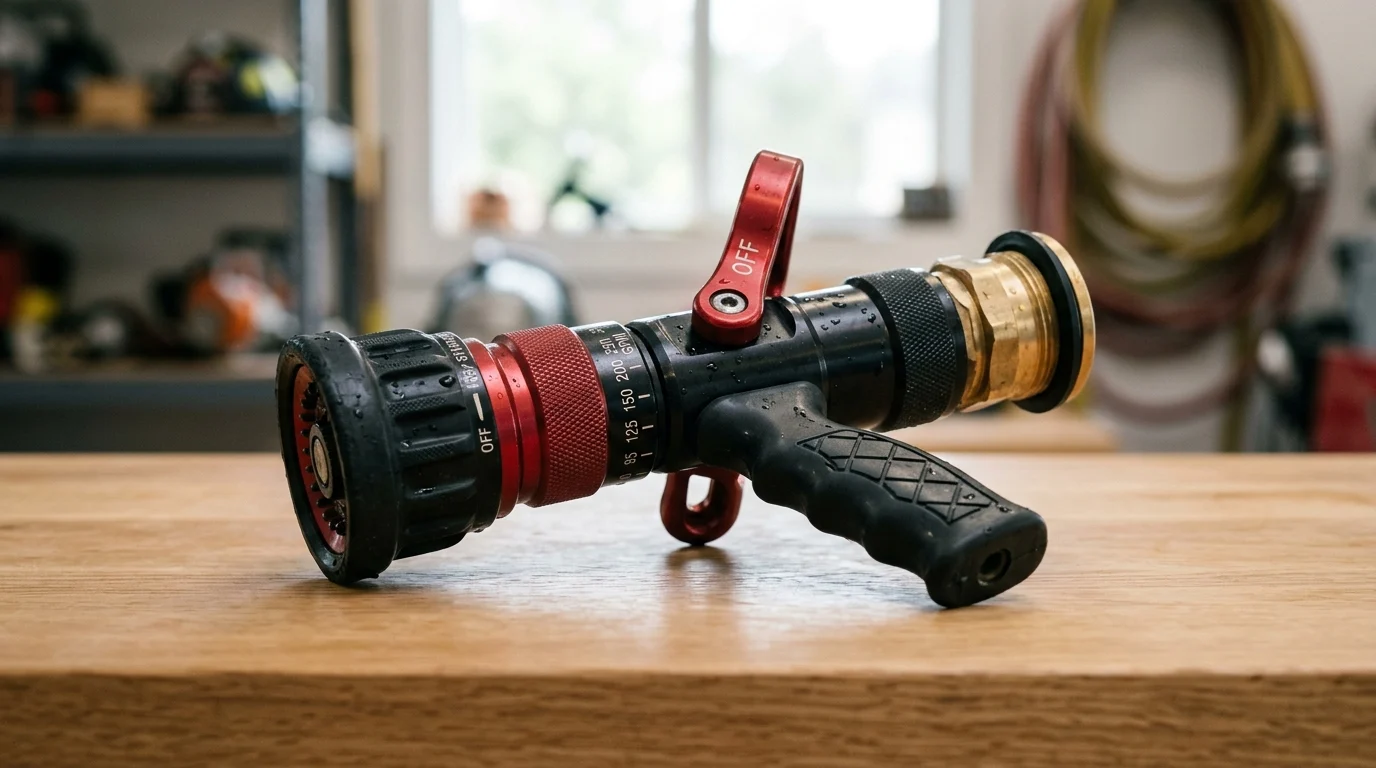
When an adjustable fire nozzle sticks during active use, the problem is more than an equipment annoyance—it can immediately change stream shape, reduce flow, and limit tactical options. Understanding what causes a nozzle to seize, what crews should do in the moment, and how to check the line safely helps prevent a minor mechanical issue from becoming an operational hazard. This article explains the most common sticking points, the immediate response steps to protect water delivery and crew safety, and the inspection and maintenance actions that can reduce the chance of the same failure happening again.
Why a Stuck Adjustable Fire Nozzle Is an Immediate Risk
The reliability of an adjustable fire nozzle is paramount during aggressive interior fire attack and exterior exposure protection. When a nozzle seizes mid-operation, it compromises hydraulic ventilation, thermal layer management, and ultimately, the safety of the attack team.
According to NFPA 1964 standards, nozzles must maintain smooth operability under specific hydrostatic pressures. A sudden mechanical lockup indicates a critical fault in the equipment, its maintenance cycle, or the immediate operational parameters, necessitating an immediate and calculated tactical response.
How a jammed nozzle affects flow and stream control
A jammed pattern selection ring or flow control bale directly impairs the ability to modulate the extinguishing agent. If a nozzle locks in a wide fog pattern (typically around a 100-degree angle), the stream loses the kinetic energy required to penetrate superheated gases, often reducing effective reach to less than 15 feet.
Conversely, a nozzle seized in a straight stream configuration cannot be utilized for hydraulic ventilation or wide-area heat absorption. Furthermore, if the flow control mechanism seizes partially open, the attack line may fail to deliver its rated gallons per minute (GPM), dropping the flow rate below the critical 150 GPM threshold required for standard residential interior attacks.
Operating conditions that commonly cause nozzle sticking
Environmental and hydraulic conditions frequently precipitate mechanical seizing. Operating in sub-freezing temperatures (below 32°F / 0°C) without maintaining continuous water flow can cause rapid ice formation within the micro-clearances of the baffle head.
Additionally, extreme hydraulic forces play a significant role. Operating pressures significantly exceeding the standard 100 psi design threshold can induce excessive radial loads on internal bearings and O-rings. This pressure surge increases friction coefficients across the dynamic seals, causing the pattern selection mechanisms to bind or lock entirely until the pressure is relieved.
Common Failure Modes of Adjustable Fire Nozzles
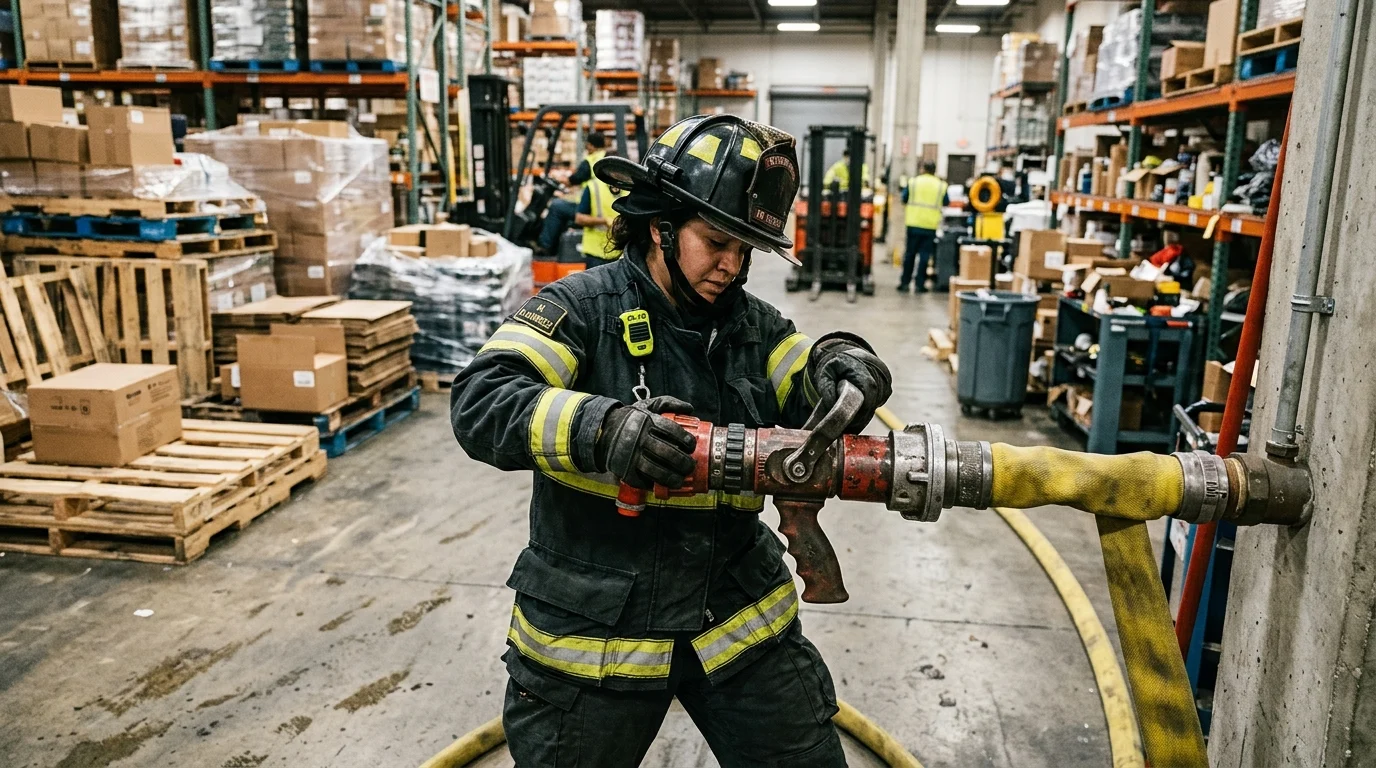
Modern adjustable fire nozzles are complex hydrodynamic tools engineered with tight internal tolerances. Understanding the root cause of a mid-operation failure requires an examination of the specific failure modes that plague these devices over their service life.
Failures are rarely spontaneous; they are typically the culmination of progressive component degradation, environmental exposure, or the ingestion of particulate matter during suppression activities.
Internal components that typically seize or fail
The internal architecture of an adjustable fire nozzle relies heavily on precision-machined components. The pattern selection ring, detent ball bearings, and the main shutoff ball valve are the most frequent points of failure. The detent mechanisms, which utilize small stainless steel ball bearings to lock the nozzle into specific flow rates or patterns, operate within tight tolerances (often around 0.005 inches).
When the primary ball valve seizes, it is frequently due to the degradation of the trunnion bearings or the polymeric valve seats. Continuous exposure to high-velocity water shear forces can erode these seats, allowing the ball to shift out of alignment and wedge against the aluminum housing.
How maintenance history and water quality contribute
Maintenance intervals and the chemical composition of the municipal or drafted water supply heavily influence nozzle longevity. Hard water scaling, primarily calcium and magnesium carbonate deposits, can build up on the baffle stem and selector ring tracks. Lack of routine lubrication exacerbates this friction.
Water pH levels outside the optimal neutral range further accelerate degradation.
| Water Source Condition | pH Range | Primary Risk to Nozzle Internals | Accelerated Wear Rate |
|---|---|---|---|
| Acidic / Industrial Runoff | < 6.5 | Pitting of aluminum components, premature O-ring failure | High (Rebuild needed < 2 years) |
| Hard Municipal Water | 7.5 – 8.5 | Mineral scaling on baffles and detent bearings | Moderate (Requires bi-annual descaling) |
| Coastal / Brackish Drafting | > 8.0 | Galvanic corrosion between dissimilar metals | Severe (Requires immediate flushing) |
Mechanical, corrosion, and debris-related failure differences
Differentiating between the root causes of failure dictates both the field response and the long-term repair strategy. Mechanical failures typically result from blunt force trauma, such as dropping the nozzle from heights exceeding 3 feet onto concrete, which can push the aluminum barrel out-of-round and permanently bind the rotating elements.
Corrosion-related failures develop insidiously. Galvanic corrosion occurs when dissimilar metals (e.g., brass internal components against an aluminum body) interact in the presence of an electrolyte, fusing the parts together. Debris-related failures, by contrast, are acute. When drafting from static water sources, sand or silt particles larger than 2mm in diameter can bypass inadequate pump strainers, lodging directly into the cam tracks and causing an immediate, hard mechanical stop.
What Crews Should Do First When a Nozzle Gets Stuck
When an adjustable fire nozzle seizes during an active fire attack, the priority shifts immediately from suppression to personnel safety and hazard mitigation. Fireground personnel must execute a coordinated response with the pump operator to prevent hose line bursts or loss of thermal protection.
Standard operating guidelines dictate a specific sequence of actions to stabilize the hydraulic environment before attempting any corrective measures on the hardware.
Safe field steps to stabilize the situation
The first step is to establish communication with the pump operator to notify them of the equipment malfunction. If the nozzle is stuck open or in an ineffective pattern, personnel should attempt to gate down the line using the shutoff bale, provided the bale itself is not the seized component.
If the pattern sleeve is jammed due to debris, the nozzle operator should request the pump operator to reduce the pump discharge pressure (PDP) to approximately 50 psi. Lowering the pressure relieves the hydrostatic radial load on the internal O-rings and bearings, often allowing the operator to safely manipulate the pattern sleeve and flush the obstruction without fighting the hydraulic force of a fully pressurized 150 psi line.
When to troubleshoot on scene versus remove from service
Field troubleshooting must be strictly time-limited. If a simple pressure reduction and manual flush do not clear the jam within 15 to 30 seconds, the nozzle must be considered compromised. Prolonged attempts to fix the equipment in an immediately dangerous to life or health (IDLH) environment jeopardize the crew.
In such cases, the incident commander should immediately order a replacement line to be stretched to the sector. The defective nozzle and its attached hose should be backed out of the hazard zone, gated off at the pump panel, and unequivocally removed from service until a certified technician can perform a diagnostic teardown.
Emergency fixes that create bigger safety or compliance risks
Under the stress of an active incident, personnel may attempt to force a seized pattern ring or bale using heavy tools like a Halligan bar or spanner wrench. This emergency fix presents a severe safety risk.
Striking a pressurized nozzle can micro-fracture or deform the 6061-T6 aluminum body. If the structural integrity of the casting is compromised while containing pressures exceeding 150 psi, it risks a catastrophic blowout. Furthermore, applying blunt force to the nozzle violates NFPA 1962 care protocols, instantly voiding manufacturer warranties and creating significant compliance liabilities for the department.
How to Inspect, Repair, or Replace a Stuck Nozzle
Once a compromised adjustable fire nozzle has been removed from service, it must undergo a rigorous inspection protocol before it can be trusted on the fireground again. Post-incident diagnostics require specialized testing equipment to evaluate both the mechanical integrity and the hydraulic performance of the unit.
Maintenance personnel must adhere strictly to the manufacturer’s teardown guidelines and NFPA 1962 standards for the inspection, care, and use of fire hose, couplings, and nozzles.
Inspection criteria after a sticking incident
The inspection process begins with a meticulous visual and dimensional assessment. Technicians must check the nozzle body for out-of-roundness; a deformation exceeding 0.01 inches on the main barrel will perpetually cause binding and necessitates immediate replacement of the housing.
Following the mechanical teardown, cleaning, and reassembly, the unit must undergo hydrostatic flow testing. The nozzle must be tested at its rated pressure (typically 100 psi or 75 psi) to verify that the gallonage output matches the selector ring setting. The flow accuracy must fall within a strict tolerance of +10% to -0% of the rated GPM. Any deviation indicates internal baffle damage or a compromised spring mechanism.
How to decide between repair and replacement
Deciding whether to rebuild a seized nozzle or procure a new unit depends on a calculated cost-benefit analysis and the extent of the internal damage. Minor debris impaction often requires only a basic clean and O-ring replacement, whereas severe corrosion or blunt force trauma complicates the decision.
| Assessment Criteria | Indicator for Repair | Indicator for Replacement |
|---|---|---|
| Age of Nozzle | Under 5 years in service | Over 10 years in service |
| Cost Threshold | Repair cost < 30% of new unit | Repair cost > 50% of new unit (e.g., >$400 on an $800 nozzle) |
| Component Damage | Replaceable O-rings, bearings, or polymer seats | Deformed aluminum body, scored primary ball valve |
| Warranty Status | Covered under active factory warranty | Out of warranty, parts obsolete or discontinued |
If the repair costs exceed the 50% threshold of a new unit’s procurement cost, industry best practice dictates retiring the nozzle. Furthermore, if a nozzle has suffered repeated sticking incidents despite proper maintenance, it should be permanently decommissioned, as microscopic wear on the cam tracks may be beyond the scope of standard repair kits.
How to Prevent Adjustable Fire Nozzle Sticking
Preventing an adjustable fire nozzle from seizing mid-operation requires a proactive approach that bridges daily operational habits, rigorous maintenance schedules, and strategic procurement. Relying solely on reactive repairs guarantees eventual failure on the fireground.
Departments that implement strict standard operating guidelines for post-incident nozzle care experience drastically lower failure rates and extended equipment lifecycles.
Preventive maintenance and flow-testing practices
Preventive maintenance must be habitual. After every use, particularly when drafting or operating in environments with heavy particulate matter, nozzles should be thoroughly flushed with clean municipal water while rotating through all pattern and flow settings. Moving internal parts should be lubricated exclusively with manufacturer-approved silicone grease; the use of hydrocarbon-based lubricants (like WD-40) will rapidly degrade internal O-rings and rubber bumpers.
Annual flow testing is a mandatory compliance step under NFPA 1962. During these tests, technicians should measure the exact force required to actuate the bale and the selector ring. A baseline actuation force should be established when the nozzle is new; an increase of more than 15% in the required pounds-force (lbf) during annual testing is a leading indicator of internal friction and impending failure, prompting a preemptive rebuild.
Procurement choices that improve reliability
Reliability begins during the specification and procurement phase. Departments operating in coastal regions or areas with highly corrosive industrial runoff should specify nozzles manufactured with hard-coat anodized aluminum (Type III, MIL-A-8625 compliance) or marine-grade stainless steel internal components to prevent galvanic corrosion.
Additionally, procurement committees should evaluate the debris clearance specifications of the nozzle models. Specifying nozzles with a minimum internal debris clearance of 1/4-inch ensures that standard organic matter and small pebbles can pass through the baffle head without jamming the flow mechanism. Investing in robust internal architectures reduces the frequency of seized nozzles and minimizes long-term maintenance liabilities.
Key Takeaways
- The most important conclusions and rationale for Adjustable fire nozzle
- Specs, compliance, and risk checks worth validating before you commit
- Practical next steps and caveats readers can apply immediately
Frequently Asked Questions
What should I do first if an adjustable fire nozzle gets stuck during use?
Keep control of the line, alert the crew, and switch tactics immediately. If safe, relieve pressure, check for debris, ice, or overpressure, and replace the nozzle rather than forcing the selector ring.
What usually causes an adjustable fire nozzle to seize mid-operation?
Common causes include debris ingestion, mineral scale, corrosion, damaged O-rings, freezing conditions, or operating above the nozzle’s rated pressure. Poor maintenance history also increases the risk.
Can I force a stuck pattern ring or shutoff bale back into position?
No. Forcing it can damage the valve seat, bearings, or housing. Isolate the nozzle, reduce line pressure, inspect it, and send it for proper service or replacement.
How can I prevent my adjustable fire nozzle from sticking again?
Flush after use, especially after brackish or dirty water; dry and lubricate approved parts; inspect O-rings and detents; and test smooth operation during routine maintenance under rated pressure.
Where can buyers source certified replacement nozzles or parts for adjustable fire nozzles?
Industrial and distribution buyers can contact NBWorldFire for certified fire hose nozzles, couplings, valves, and related fire protection equipment suited to global market compliance needs.
Post time: May-25-2026