

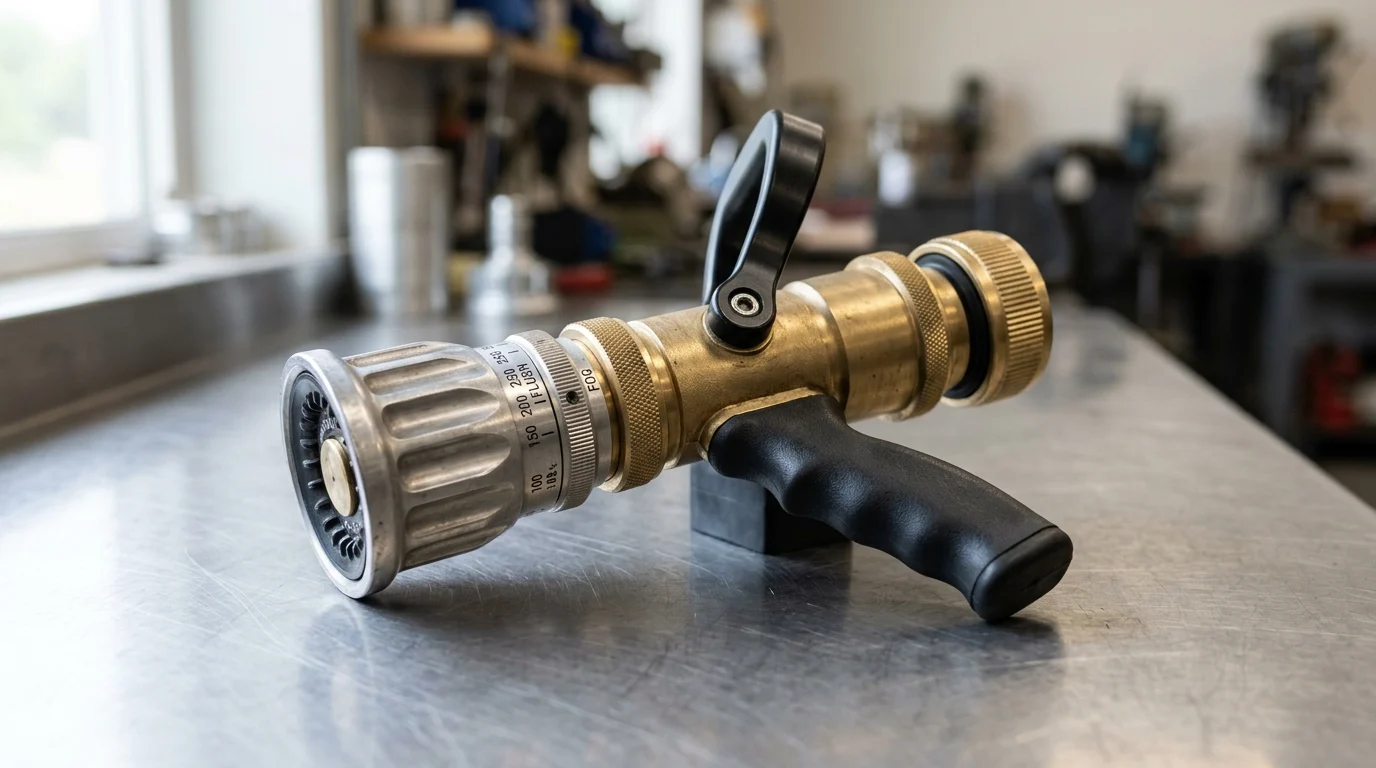
Introduction
Choosing an OEM/ODM fire nozzle factory is not just a sourcing decision; it directly affects product performance, certification speed, cost control, and how well your lineup fits real firefighting needs. The most valuable partners go beyond basic manufacturing by contributing fluid design expertise, testing capability, materials knowledge, and practical engineering support throughout development. This article explains how to identify factories with genuine innovation capacity, what technical and commercial criteria to evaluate, and how to structure collaboration so custom nozzle programs move from concept to compliant production with fewer delays and less risk.
Why Partner with an OEM/ODM Fire Nozzle Factory
Procuring life-safety equipment requires a stringent approach to manufacturing partnerships. As the global fire protection market expands, reliance on standard off-the-shelf nozzles is shifting toward specialized Original Equipment Manufacturer (OEM) and Original Design Manufacturer (ODM) collaborations. Partnering with a factory that possesses inherent engineering and innovation capabilities allows brands to differentiate their product lines, optimize fluid dynamics, and meet stringent regional compliance mandates.
Strategic value of OEM and ODM programs
OEM models execute buyer-owned blueprints with high precision, while ODM models leverage the factory’s internal research and development to co-create proprietary solutions. Engaging an ODM with advanced engineering capabilities typically accelerates the product development lifecycle from an industry average of 8 to 12 months down to 4 to 6 months. Furthermore, utilizing overseas production hubs for these models can yield unit cost reductions of 15% to 30% compared to domestic Western manufacturing, without compromising the hydraulic performance required for critical firefighting operations.
Buyer profiles that benefit most
Not all procurement entities require the depth of an OEM/ODM partnership. The primary beneficiaries are municipal fire apparatus manufacturers, large-scale industrial distributors, and specialized petrochemical safety contractors who require custom flow characteristics or proprietary ergonomic designs. These partnerships require capital commitment; factories with genuine engineering capabilities typically enforce Minimum Order Quantities (MOQs) ranging from 500 to 1,000 units for custom-tooled components to amortize the high costs of CNC programming, mold creation, and initial prototype validation.
Define Requirements for an OEM/ODM Fire Nozzle Project
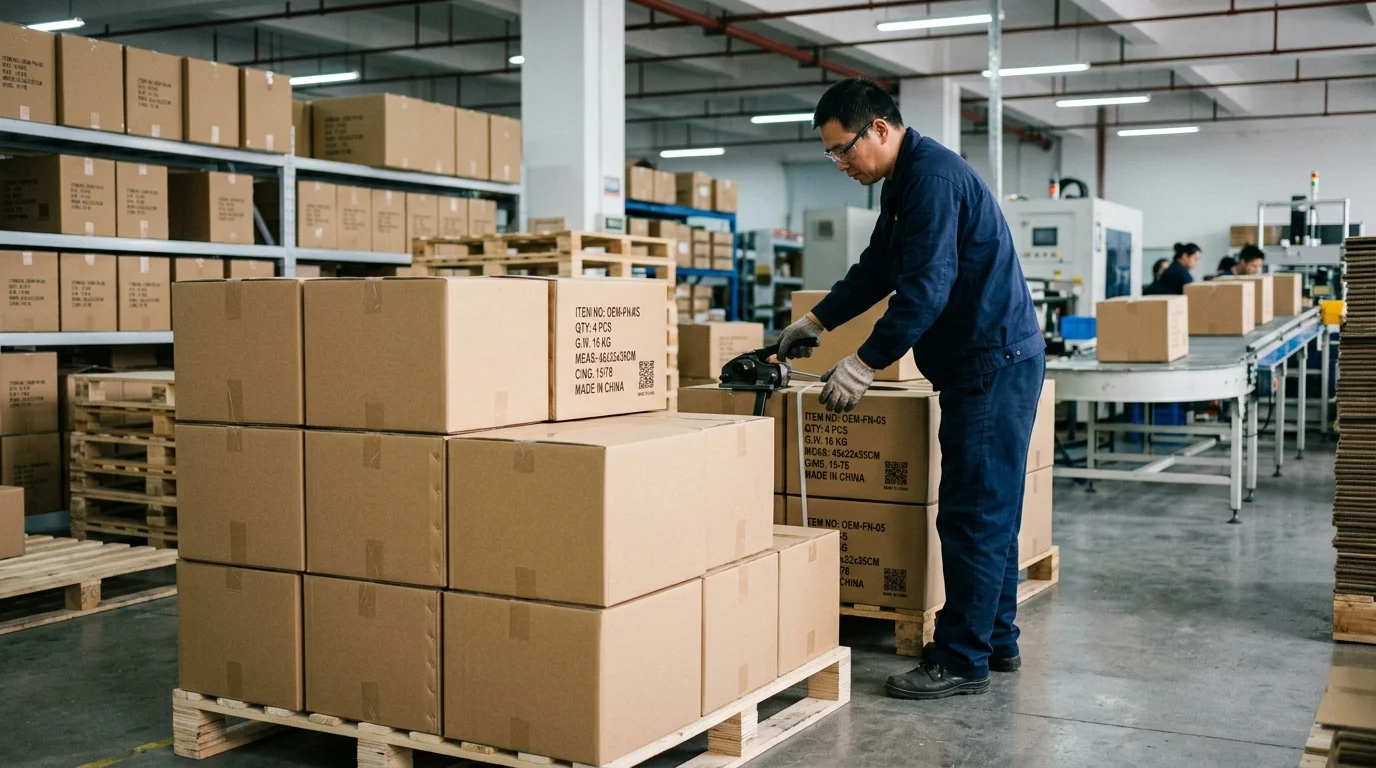
Transitioning a fire nozzle concept into mass production requires an exhaustive technical dossier. Ambiguity in the initial requirements phase inevitably leads to tooling modifications, certification failures, and prolonged lead times. Buyers must define both the hydraulic performance parameters and the commercial boundaries before issuing a Request for Quotation (RFQ).
Key technical and commercial specifications
Technical specifications must dictate the exact operational envelope. Critical parameters include target flow rate ranges (e.g., selectable 30-125 GPM or automatic 70-200 GPM), nominal operating pressures (standard 100 PSI or low-pressure 50-75 PSI variants), and material composition. High-grade applications typically demand hard-anodized 6061-T6 aluminum or 316 stainless steel for marine environments. Commercial specifications must align with these technical demands, explicitly outlining target unit costs, packaging requirements, and acceptable production lead times—typically baselined at 45 to 60 days for established designs.
How to compare performance and manufacturability
Evaluating manufacturability involves analyzing the complexity of the nozzle’s internal geometry against the factory’s machining capabilities. Complex automatic nozzles require precision-calibrated baffle springs and tight-tolerance slide valves, increasing the risk of assembly defects if the factory lacks automated calibration equipment.
| Nozzle Type | Manufacturing Complexity | Typical Defect Tolerance | Optimal Flow Range (GPM) |
|---|---|---|---|
| Smooth Bore | Low (Single waterway) | < 0.1% | 50 – 150 |
| Selectable Gallonage | Medium (Multiple flow settings) | < 0.5% | 30 – 200 |
| Automatic | High (Dynamic pressure regulation) | < 1.0% | 70 – 250 |
| Piercing / Applicator | Medium (Specialized structural integrity) | < 0.2% | 50 – 100 |
Comparing these parameters helps procurement engineers align the product design with the factory’s documented defect rates and assembly line sophistication.
Verify Factory Engineering and Execution Capability
Distinguishing a capable engineering partner from a mere assembly operation or trading company is the most critical phase of supplier vetting. In the fire protection industry, the margin for mechanical failure is zero. A factory’s capability must be proven through its infrastructure, workforce, and technological investments.
Evidence of real engineering strength
Genuine engineering strength is evidenced by the presence of advanced simulation and machining technology. Competent OEM/ODM partners utilize Computational Fluid Dynamics (CFD) software to simulate water trajectories, friction loss, and spray pattern density before cutting any metal. On the production floor, this translates to 4-axis and 5-axis CNC machining centers capable of maintaining dimensional tolerances as tight as ±0.01 mm. Furthermore, the presence of in-house rapid prototyping, such as industrial 3D printing, indicates a factory committed to iterative design and rapid mechanical validation.
Cross-functional execution across R&D and production
Innovation must seamlessly transition from the R&D laboratory to the production floor. Cross-functional execution requires that the engineering team directly oversees the creation of tooling, injection molding for thermoplastic components like bumper rings and pistol grips, and the automated anodizing lines. When a factory controls these processes internally, it eliminates the dimensional discrepancies that frequently occur when sub-components are outsourced to secondary vendors. This integration typically ensures a First Pass Yield (FPY) exceeding 98% during initial pilot runs.
Warning signs of a trading-only supplier
Procurement teams must remain vigilant against trading companies masking as manufacturers. Red flags include the inability to provide raw material Mill Test Reports (MTRs), an absence of ISO 9001:2015 certification specific to manufacturing, or vague responses regarding CNC machine park capacity. Additionally, if standard design iterations require lead times exceeding 90 days, or if the supplier insists on outsourcing core processes like hard-coat anodizing without transparent quality agreements, the entity is likely acting as an intermediary rather than a direct manufacturer.
Control Compliance, Quality, and Supply Chain Risks
Fire nozzles are highly regulated life-safety devices subject to rigorous international standards. An OEM/ODM partner must not only manufacture the product but also enforce a comprehensive Quality Management System (QMS) that mitigates legal, operational, and supply chain risks.
Certification, standards, and traceability
Compliance with global standards such as NFPA 1964, EN 15182, or FM Global approvals is mandatory for market entry. A capable factory will design products with these certification thresholds in mind, ensuring adequate hydrostatic burst strength and structural drop-test resilience. Traceability is equally vital; premium factories implement laser-etched serialization and batch coding on every nozzle body, allowing buyers to trace a specific unit back to its exact aluminum extrusion batch and assembly date up to 10 years post-production.
Quality control and sourcing checkpoints
Robust quality control checkpoints must be embedded throughout the production cycle. Incoming material inspection should utilize optical emission spectrometers to verify the chemical composition of aluminum alloys. In-process QC requires continuous dimensional checks using Coordinate Measuring Machines (CMM). Final testing must be 100% comprehensive, subjecting every assembled nozzle to operational hydrostatic testing at 100 PSI to verify flow patterns and leak resistance, alongside sample testing for burst pressure resilience up to 900 PSI.
Pilot orders, audits, and technical reviews
Risk mitigation culminates in structured pilot orders and rigorous auditing. Before authorizing mass production, buyers should initiate a pilot run of 50 to 100 units. This batch undergoes a First Article Inspection (FAI) and Factory Acceptance Testing (FAT) to validate the tooling and assembly procedures. Third-party technical audits during this phase can verify that the factory’s documented QMS is actively enforced on the shop floor, ensuring that the transition to volumes of 5,000+ units will not dilute product quality.
Select and Manage the Right OEM/ODM Partner
Establishing a successful OEM/ODM relationship extends beyond the initial purchase order. It requires a structured partnership model built on transparent metrics, shared risk, and continuous improvement protocols to ensure long-term manufacturing stability.
Supplier selection criteria
Selecting the optimal partner requires a quantitative approach to supplier evaluation. Procurement teams should utilize a weighted matrix to objectively score candidate factories across multiple disciplines, preventing an over-reliance on unit cost as the sole deciding factor.
| Evaluation Category | Weight | Key Metrics | Minimum Acceptable Standard |
|---|---|---|---|
| Engineering & R&D | 35% | CFD capability, CNC technology, Patent portfolio | In-house 4-axis CNC, CAD/CAM proficiency |
| Quality Assurance | 30% | ISO certification, testing lab, FPY rate | ISO 9001:2015, 100% hydrostatic testing |
| Commercial & Cost | 20% | Tooling cost, unit price, payment terms | Transparent BOM pricing, Net 30 terms |
| Supply Chain & Delivery | 15% | Lead time adherence, raw material sourcing | >95% On-Time Delivery (OTD) history |
Factories that score highly across these weighted metrics demonstrate the operational maturity required to support complex, multi-year product lifecycles.
Partnership model from RFQ to mass production
The partnership model must follow a disciplined trajectory from the Request for Quotation (RFQ) through to mass production. Following the RFQ, the factory’s engineering team should provide a comprehensive Design for Manufacturing (DFM) report. Once approved, custom tooling typically requires 30 to 45 days. The subsequent First Article Inspection (FAI) phase takes approximately 15 days for rigorous testing and client approval. Only after sign-off does mass production commence, usually spanning 45 to 60 days. To sustain this model, buyers should establish strict Service Level Agreements (SLAs) mandating defect rates below 0.2% and requiring comprehensive 8D reports for any non-conformities discovered in the field.
Key Takeaways
- The most important conclusions and rationale for OEM/ODM Fire Nozzle
- Specs, compliance, and risk checks worth validating before you commit
- Practical next steps and caveats readers can apply immediately
Frequently Asked Questions
What should I include in an OEM/ODM fire nozzle RFQ?
List flow range, operating pressure, nozzle type, material, certifications needed, target price, packaging, and lead time. Clear RFQs reduce redesigns and certification delays.
How can I verify a fire nozzle factory has real engineering capability?
Ask for CFD analysis samples, CNC capacity details, prototype workflow, tolerance control records, and test reports. A true factory should show R&D and production evidence, not only catalogs.
Which certifications matter when sourcing custom fire nozzles?
Match certifications to your market, such as UL/FM, LPCB, MED, BSI, or TUV. Confirm the factory can support compliance from design through testing and production.
What MOQ should I expect for a custom OEM/ODM fire nozzle project?
Custom projects often start around 500 to 1,000 units, especially when new tooling or special components are required. Confirm tooling costs and sample terms early.
Why consider NBWorldFire for OEM/ODM fire nozzle cooperation?
NBWorldFire combines R&D, manufacturing, and global certification support, with ISO 9001:2015 and products approved for multiple markets. This helps buyers manage quality, compliance, and delivery in one supply partner.
Post time: Jun-03-2026