

Introduction
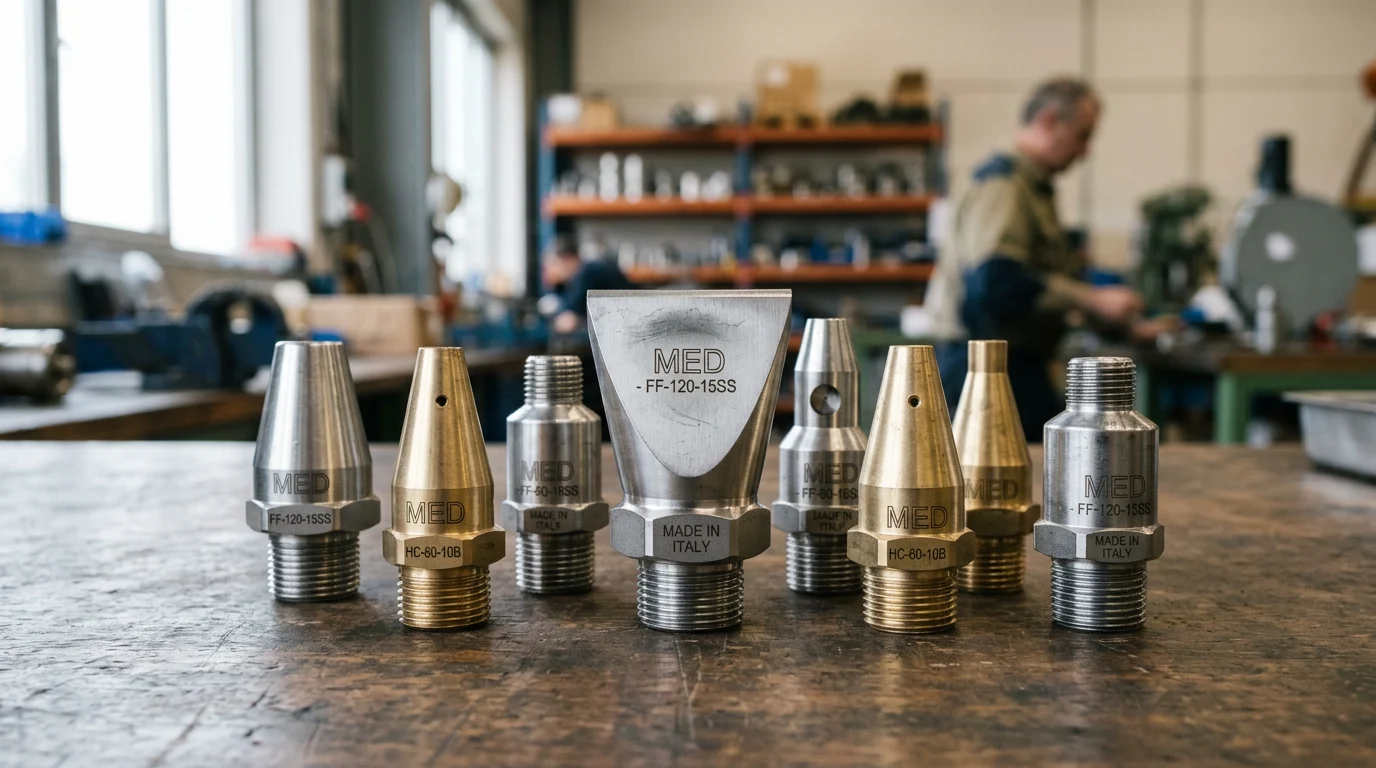
For ship chandlers, choosing MED nozzle suppliers in Asia is not just a pricing decision; it affects compliance, delivery reliability, and vessel turnaround. The region offers strong manufacturing capacity, competitive costs, and access to major shipping routes, but supplier quality can vary widely. This article explains how to identify dependable MED nozzle manufacturers, verify certifications and production controls, assess lead times and communication, and reduce sourcing risk before orders are placed. By the end, readers will have a practical framework for comparing Asian suppliers and building a procurement process that supports both regulatory requirements and fast port-call service.
Why Source MED Nozzles from Asia
Ship chandlers operate in a highly time-sensitive and heavily regulated environment, where supplying the right maritime equipment at the exact moment a vessel docks is critical. Among the most essential safety items are fire hose nozzles certified under the Marine Equipment Directive (MED). As global shipping fleets expand and regulatory scrutiny tightens, sourcing reliable MED nozzle suppliers has become a strategic priority. Sourcing these components from Asia offers substantial advantages, provided chandlers can navigate the complexities of international procurement and quality assurance.
Cost and supply advantages
The primary driver for shifting procurement to Asian manufacturing hubs is the compelling balance of cost efficiency and scalable supply. Countries such as China, Vietnam, and India have developed robust industrial ecosystems dedicated to maritime safety equipment. By leveraging advanced casting technologies and economies of scale, Asian manufacturers can typically offer cost reductions ranging from 15% to 30% compared to traditional European suppliers. Furthermore, data from global trade statistics indicates a steady year-over-year increase in the export volume of maritime safety gear from these regions, underscoring the maturity and capacity of the supply base to handle large, continuous orders without bottlenecks.
Lead times and port-call support
Beyond unit cost, geographic proximity to major maritime chokepoints and mega-ports provides a distinct logistical advantage. Ship chandlers must frequently fulfill orders within tight port-call windows. Sourcing from regional hubs in Asia allows for standard production lead times of 14 to 21 days, compared to the 45-day or longer cycles often experienced when importing from Western markets. For vessels docking in Singapore, Shanghai, or Busan, regional suppliers can dispatch emergency inventory via expedited regional freight, ensuring that critical firefighting equipment reaches the deck before the vessel departs.
Technical and Compliance Checks
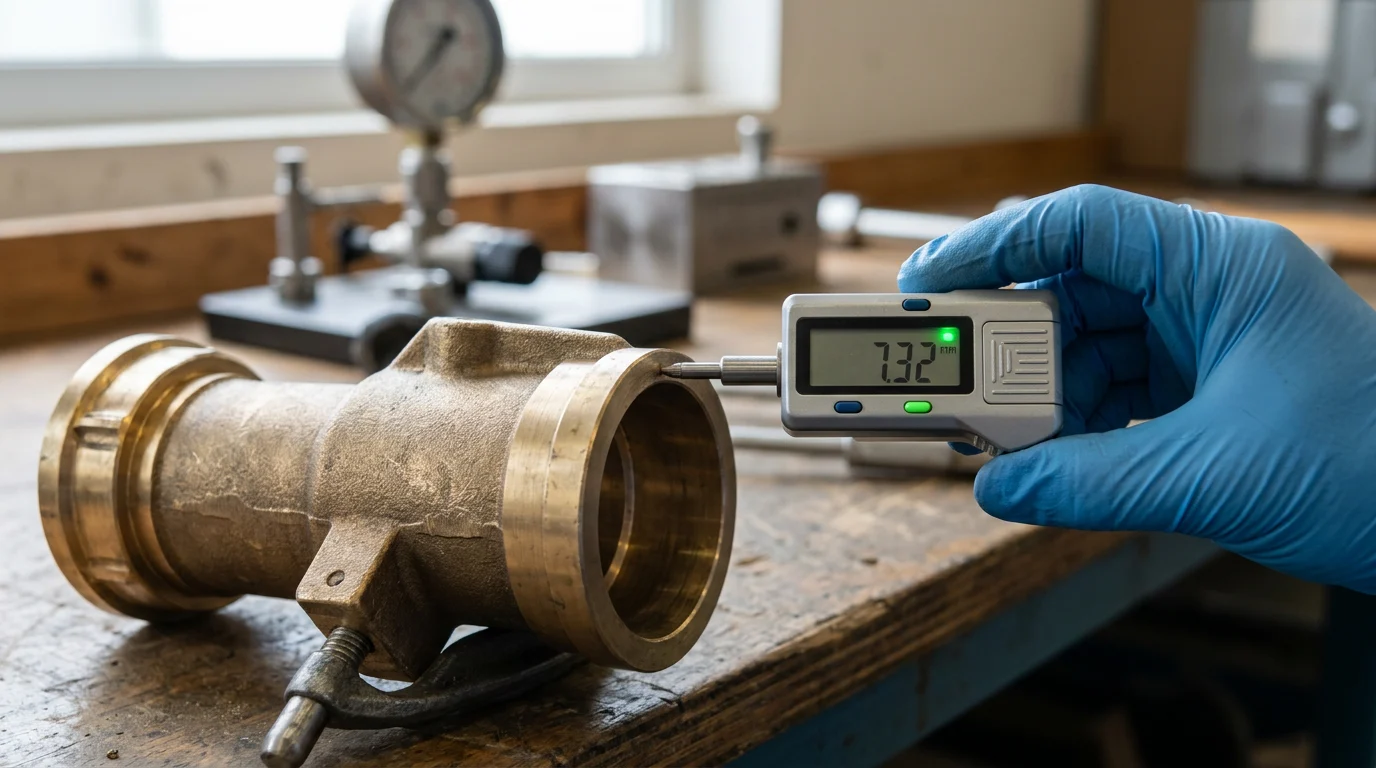
Procuring firefighting equipment requires strict adherence to international maritime safety regulations. An MED nozzle is not a standard industrial component; it is a life-saving device that must perform flawlessly under extreme conditions. Consequently, ship chandlers must conduct rigorous technical and compliance evaluations before onboarding any new supplier.
Key product specifications
A reliable MED nozzle must meet precise hydraulic and mechanical specifications to ensure compatibility with standard marine fire hoses. Suppliers must demonstrate the ability to manufacture dual-purpose nozzles that seamlessly transition between jet and spray modes. Key performance indicators include a standard operating pressure range of 0.2 to 0.6 MPa and maximum flow rates reaching up to 400 liters per minute. Furthermore, the throw range of the water jet must consistently exceed 12 meters at standard pressure to comply with basic marine firefighting protocols. Evaluating these metrics ensures the product will perform adequately during a real onboard emergency.
MED certification and traceability
The cornerstone of European maritime compliance is the “Wheelmark” certification, which verifies that the equipment meets the Marine Equipment Directive requirements. Ship chandlers must verify that the Asian supplier holds valid Module B (EC Type Examination) and Module D (Production Quality Assurance) certificates issued by a recognized Notified Body. Traceability is equally critical; every nozzle must feature clear, indelible markings including the Wheelmark, the Notified Body number, and the year of manufacture. Suppliers should also operate under strict ISO standards, specifically ISO 9001, to guarantee that lot numbers can be traced back to the original raw material batches.
Material and performance comparison
The harsh marine environment demands materials that resist severe saltwater corrosion while remaining manageable for the crew. Suppliers typically offer nozzles in brass, bronze, or aluminum alloy, each presenting distinct trade-offs in durability and cost.
| Material Type | Corrosion Resistance | Weight Profile | Estimated Cost Index |
|---|---|---|---|
| Standard Brass | Moderate | Heavy (approx. 1.5 kg) | 1.0 (Baseline) |
| Marine Bronze | Excellent | Heavy (approx. 1.6 kg) | 1.45 |
| Aluminum Alloy | Moderate (Anodized) | Light (approx. 0.8 kg) | 1.15 |
Chandlers must align the material selection with the operational profile of the end-user’s fleet, balancing the longevity of bronze against the ergonomic advantages of lightweight aluminum.
How to Qualify Suppliers
Identifying a manufacturer capable of producing MED-certified nozzles is only the first step; qualifying them as a long-term, reliable partner requires systematic vetting. The Asian market features a vast spectrum of vendors, ranging from world-class automated foundries to small, unverified assembly workshops. Implementing a strict qualification protocol mitigates the risk of supply chain disruptions.
Supplier screening criteria
Initial screening must rely on quantifiable business metrics to filter out high-risk entities. A robust supplier should possess a minimum of 5 years of dedicated experience in exporting maritime safety equipment. Additionally, chandlers should look for suppliers with an annual export volume exceeding $2 million in the marine sector, indicating a stable financial footing and established international logistics capabilities. Evaluating the supplier’s primary export markets is also revealing; a strong footprint in European or North American markets generally correlates with higher baseline quality standards.
Audits, samples, and references
Before placing commercial orders, chandlers must validate supplier claims through physical evidence and independent verification. Requesting production samples allows for independent hydraulic testing to verify flow rates and spray patterns against the provided technical data sheets. Furthermore, commissioning third-party factory audits provides objective insights into the supplier’s manufacturing capabilities, worker safety, and internal quality control processes. Requesting and verifying at least three references from international maritime clients can uncover hidden issues regarding post-sale support or warranty fulfillment.
Direct manufacturer vs trading company
Ship chandlers must carefully decide whether to source directly from the factory or utilize an intermediary trading company. Direct manufacturers offer superior transparency regarding production schedules and typically provide the lowest unit costs. However, trading companies often maintain pre-certified inventory and can consolidate diverse maritime products into a single shipment. While trading companies may apply a markup of 10% to 15%, their ability to handle complex export documentation and bypass factory Minimum Order Quantities (MOQs) can be highly advantageous for chandlers requiring mixed-item container loads.
Commercial, Logistics, and Quality Control
Once technical competence is established, the focus shifts to operational execution. The commercial terms, logistical agility, and quality control frameworks defined during this phase will directly impact the chandler’s profitability and ability to serve their maritime clients effectively.
Quote and MOQ evaluation
Evaluating a quotation involves analyzing the total landed cost rather than just the ex-works price. Chandlers must assess packaging costs, inland transportation to the departure port, and export customs clearance fees. Simultaneously, negotiating the Minimum Order Quantity (MOQ) is critical for cash flow management. Standard MOQs for custom-machined brass MED nozzles typically range from 50 to 200 units. Chandlers should negotiate tiered pricing structures that allow for lower initial MOQs during the trial phase, scaling up to larger, more cost-effective volumes as demand dictates.
Urgent delivery planning
Maritime logistics are notoriously unpredictable, and vessels often require immediate replenishment during brief port calls that last only 24 to 48 hours. Suppliers must demonstrate the capability to execute urgent delivery plans. This includes maintaining a buffer stock of finished goods or semi-finished castings to bypass the standard 21-day production cycle. Chandlers must establish clear protocols with the supplier for transitioning from standard sea freight to expedited air freight, ensuring that documentation and packaging comply with international air transport regulations to prevent customs delays.
Incoming inspection and scorecards
To maintain a pristine reputation with ship owners, chandlers must implement rigorous incoming inspection protocols. Utilizing the Acceptable Quality Limit (AQL) methodology ensures statistical confidence in each batch. A standard industry benchmark for life-saving equipment dictates an AQL of 1.0 for major defects (such as thread mismatch or failed valve seals) and an AQL of 2.5 for minor defects (such as cosmetic surface scratches). Tracking these metrics over time in a supplier scorecard allows chandlers to objectively measure performance, penalize recurring failures, and reward consistent excellence with larger contract volumes.
Final Supplier Selection
The culmination of the sourcing process is the final supplier selection. This decision must elevate objective data above subjective impressions, ensuring that the chosen partner aligns with the chandler’s strategic goals for cost, reliability, and regulatory compliance.
Decision framework
To eliminate bias, chandlers should utilize a weighted scoring matrix to evaluate shortlisted candidates. This framework assigns specific importance to various performance categories based on the chandler’s unique operational priorities.
| Evaluation Criteria | Weight (%) | Supplier A Score (1-10) | Supplier B Score (1-10) | Weighted Winner |
|---|---|---|---|---|
| MED Compliance & Traceability | 35% | 9 | 10 | Supplier B |
| Unit Price & Tooling Costs | 25% | 8 | 6 | Supplier A |
| Lead Time & Logistics Agility | 25% | 7 | 8 | Supplier B |
| Communication & Support | 15% | 8 | 7 | Supplier A |
By systematically applying this framework, procurement teams can clearly identify the supplier that offers the most balanced and resilient partnership.
Balancing price, compliance, and service
Ultimately, the final selection rests on calculating the Total Cost of Ownership (TCO) rather than the lowest initial bid. A nominal 5% saving on the upfront unit price is rapidly negated if the supplier exhibits a defect rate exceeding 2%, or if rigid production schedules cause the chandler to miss critical port delivery windows. By prioritizing verified MED compliance, robust quality control, and logistical flexibility, ship chandlers can secure a reliable supply chain from Asia that protects both their profit margins and the safety of the vessels they serve.
Key Takeaways
- The most important conclusions and rationale for MED Nozzle Suppliers
- Specs, compliance, and risk checks worth validating before you commit
- Practical next steps and caveats readers can apply immediately
Frequently Asked Questions
What MED documents should a nozzle supplier provide?
Ask for valid Module B and Module D certificates from a recognized Notified Body, plus Wheelmark marking details on each nozzle and batch traceability records.
How can ship chandlers verify nozzle performance before ordering?
Request test reports showing 0.2–0.6 MPa operating pressure, up to 400 L/min flow, and jet throw above 12 meters with jet/spray switching.
Which nozzle material is best for marine use?
Marine bronze gives the best saltwater corrosion resistance, aluminum alloy reduces weight for crews, and brass is the lower-cost standard option.
How fast can Asian MED nozzle suppliers usually deliver?
Standard production often runs 14–21 days, with faster regional dispatch for ports like Singapore, Shanghai, or Busan when emergency stock is available.
Can nbworldfire.com help source MED-compliant fire nozzles?
Yes. nbworldfire.com offers marine firefighting products and can help you review nozzle specifications, compatibility with fire hoses, and certification requirements before purchase.
Post time: May-27-2026