

Why fire hose reel systems matter in commercial fire protection
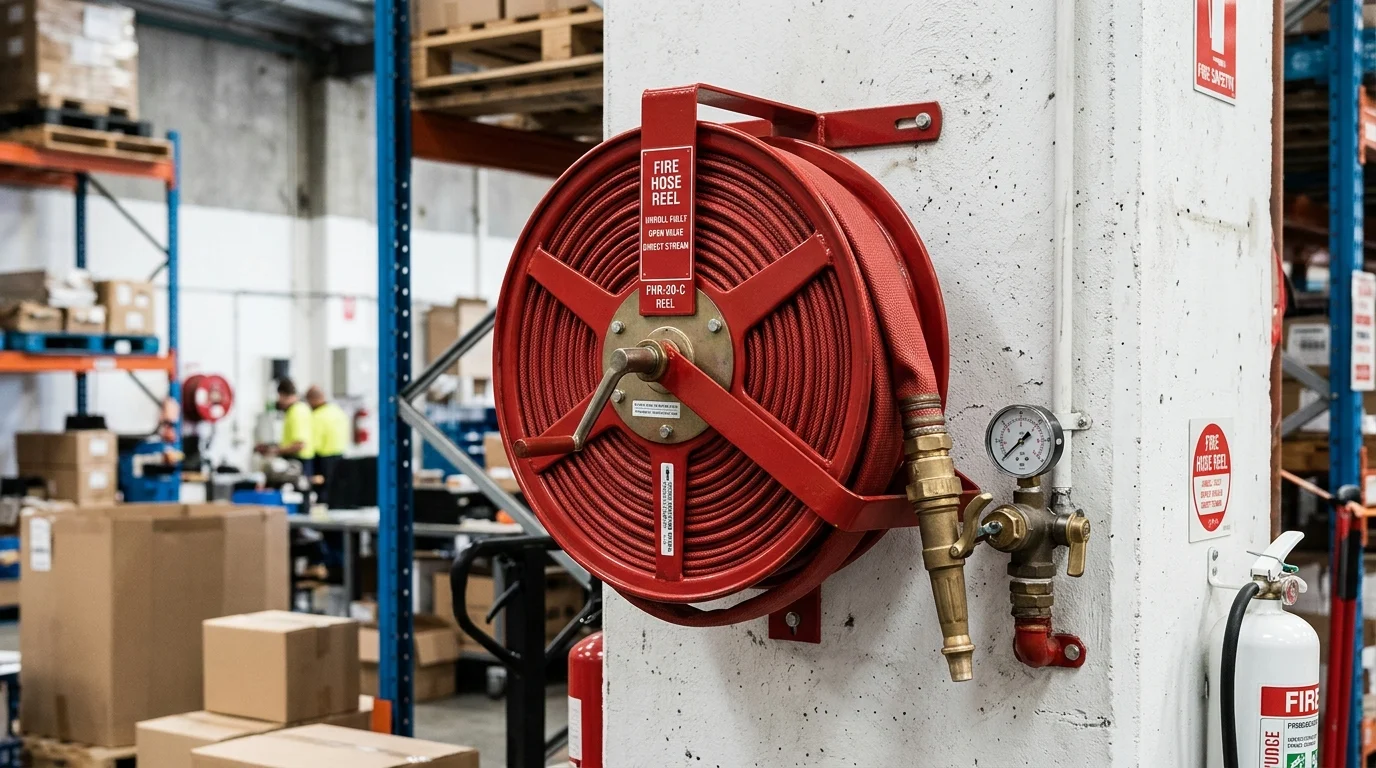
Commercial fire protection relies on accessible suppression tools that bridge the gap between fire detection and emergency service arrival. Stationary suppression systems play a critical role in mitigating property damage and ensuring occupant safety. For procurement professionals and facility managers, understanding What is a fire hose reel system? is the first step in designing a robust, code-compliant infrastructure.
These systems provide a continuous, pressurized water supply to tackle Class A fires (ordinary combustibles like wood, paper, and textiles). Unlike standard fire extinguishers with limited discharge times, a connected reel system offers a theoretically infinite water supply as long as the water mains remain operational, making them indispensable in high-risk environments.
For wholesale buyers, distributors, and engineering, procurement, and construction (EPC) contractors, sourcing the correct suppression equipment ensures strict legal compliance. Selecting the right systems helps commercial buildings pass rigorous municipal fire inspections, avoiding costly occupancy delays and liability issues.
Code-compliant first-response use cases
In commercial settings, these systems are deployed as first-response tools for building occupants before the fire department arrives. Fire codes like BS EN 671-1 or AS/NZS 1221 mandate their installation in large open-plan buildings, multi-story structures, and industrial warehouses. Compliance requires strategic placement so the hose length and water stream cover every square meter of the designated floor area.
Key buyer segments and applications
Primary B2B buyers include commercial real estate developers, industrial facility managers, and specialized fire protection distributors. Applications range from retail malls and schools to manufacturing plants and logistics hubs. Each sector requires specific configurations: a heavy industrial plant may need a ruggedized, marine-grade stainless steel unit, while an upscale hotel might require a recessed cabinet model.
Commercial selection factors
When evaluating systems for bulk procurement, buyers prioritize total cost of ownership (TCO), durability, and ease of maintenance. Key factors include replacement part availability, drum bearing quality, and hose UV resistance. Distributors must balance initial unit costs against system longevity, as frequent maintenance failures can erode profit margins and damage vendor reputations.
How fire hose reel systems work
The mechanics of these suppression systems are designed for rapid deployment under high-stress conditions. A standard fire hose reel consists of a cylindrical drum holding a continuous, non-collapsible hose. The drum connects to the building’s pressurized water supply via a specialized rotary joint, allowing water to flow while the hose is unrolled.
This continuous flow distinguishes reel systems from lay-flat hoses, which must be fully deployed before water pressure is introduced. The design ensures untrained occupants can grab the nozzle, pull out the required length, and immediately fight a localized fire without unspooling the entire hose.
Reliability is engineered through robust valving and pressure-rated components. The internal waterway is constructed from corrosion-resistant metals, typically brass or specialized alloys, ensuring functionality even after years of dormancy.
Working principle and water flow
The working principle relies on maintaining static water pressure up to the control valve. In manual systems, users open a gate or ball valve adjacent to the drum before pulling the hose. In automatic systems, pulling the hose rotates the drum, mechanically opening an internal valve for instant water flow. Water travels through the rotary hub, into the hose, and is controlled by an interlocking nozzle.
Core components and functions
A complete assembly comprises the backplate or mounting bracket, rotary drum, waterway hub, semi-rigid hose, adjustable nozzle, and hose guide arm. The guide arm is particularly important, preventing the hose from snagging or kinking as it is pulled in various directions.
Main reel types and applications
The market categorizes these units into fixed and swinging types, alongside manual and automatic configurations. Fixed reels rotate on a single axis, suitable for open areas where users pull the hose straight out. Swinging reels mount on a hinge, allowing the drum assembly to pivot outward, making them ideal for recessed cabinets or narrow corridors requiring sharp deployment angles.
Specifications buyers should compare
Procurement teams must conduct detailed technical comparisons when sourcing suppression systems. Relying solely on price can lead to acquiring non-compliant or structurally inferior products. A thorough evaluation requires analyzing the physical dimensions, hydraulic performance, and material composition of the semi rigid hose reel system.
Buyers should request technical datasheets, paying close attention to burst pressure ratings and rotary joint manufacturing tolerances. High-quality systems feature precision-machined brass waterways that prevent leaks, whereas cheaper alternatives often use inferior alloys prone to galvanic corrosion.
Distributors often utilize specification matrices to compare OEM capabilities. Below is a standard comparison table used by B2B buyers to evaluate baseline technical requirements.
| Specification | Standard Commercial Range | High-Hazard / Industrial Range |
|---|---|---|
| Hose Diameter | 19mm (3/4″) | 25mm (1″) |
| Hose Length | 30 meters | 36 – 40 meters |
| Working Pressure | 12 Bar | 15 Bar |
| Burst Pressure | 42 Bar | >50 Bar |
| Nozzle Flow Rate | 27 L/min (at 2 Bar) | >35 L/min (at 2 Bar) |
Key technical specifications
Critical specifications include hose diameter, length, and working pressure. Standard commercial buildings typically utilize 19mm hoses at 30-meter lengths, while industrial environments require 25mm hoses for higher flow rates. Working pressure must align with the building’s plumbing network, usually requiring components rated for 12 to 15 bar, with burst pressures exceeding 40 bar to ensure safety during surges.
Material and finish options
Material selection dictates system lifespan. Standard indoor models are typically constructed from mild steel and finished with a red epoxy powder coating (RAL 3000) to resist impacts and humidity. For harsh environments like chemical plants or coastal facilities, buyers must source units made entirely of 304 or 316-grade stainless steel to prevent rapid degradation.
Model comparison criteria
When comparing models, buyers evaluate drum rigidity, rotary hub smoothness under pressure, and nozzle ergonomics. Assembly weight is also a significant factor; heavier units may require specialized mounting hardware or structural wall reinforcement, increasing overall deployment costs.
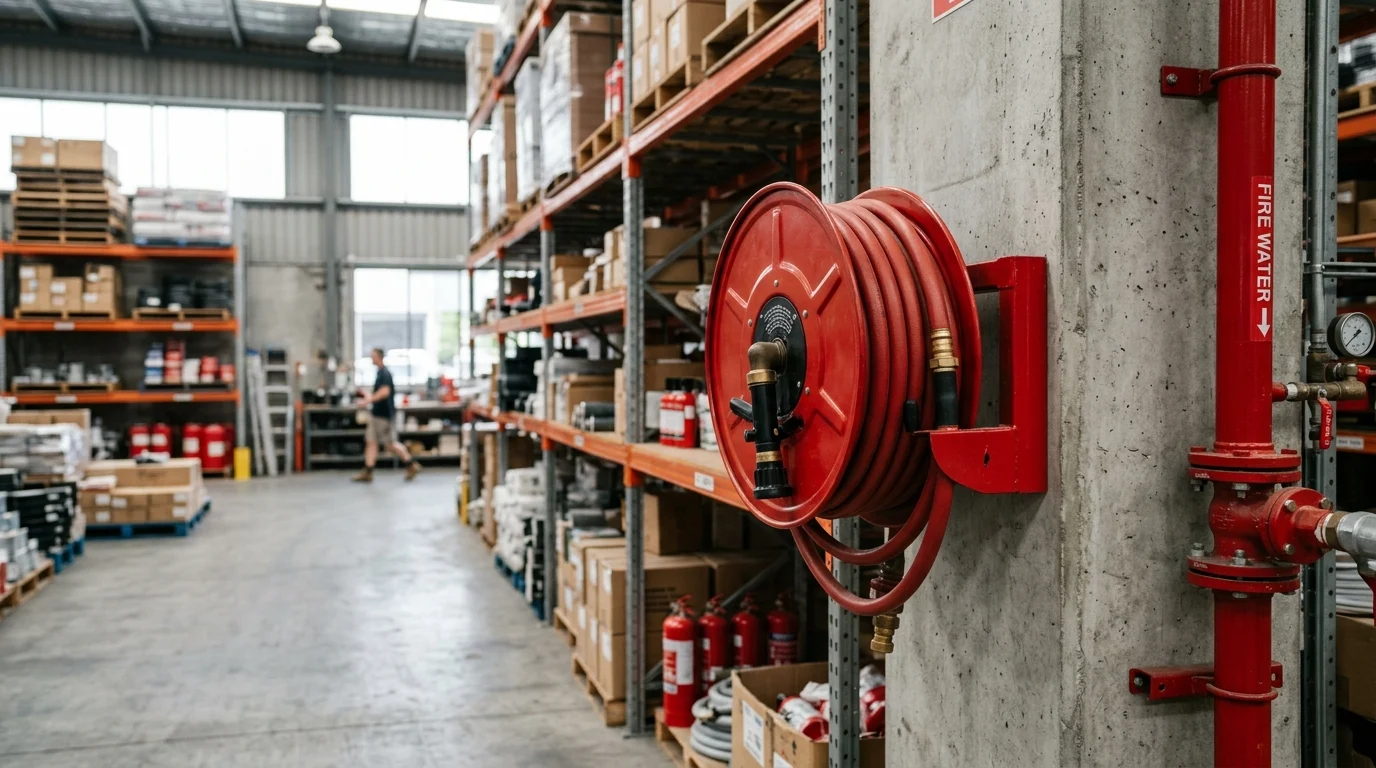
Installation requirements and common mistakes
Proper installation is as crucial as manufacturing quality. Even the highest-grade equipment will fail during an emergency if improperly mounted or connected to an inadequate water supply. Manufacturers and distributors must provide comprehensive installation manuals to EPC clients to mitigate liability and ensure functional integrity.
Installation parameters are strictly governed by local building codes, dictating mounting heights, clearances, and equipment visibility. Procurement teams must ensure imported products meet the dimensional and functional installation requirements of their target markets.
Failure to adhere to installation guidelines compromises safety and frequently voids the manufacturer’s warranty. Distributors often deal with claims traced back to improper on-site handling or incorrect plumbing connections rather than manufacturing defects.
Pre-installation site checks
Contractors must perform rigorous site checks before installation. This includes verifying the wall’s load-bearing capacity to support a fully water-laden system (often exceeding 40 kg). Additionally, static and residual water pressure tests on supply lines guarantee the minimum required flow rate at the nozzle.
Installation and commissioning steps
Installation begins by securing the backplate or cabinet using heavy-duty anchors. The rotary drum is mounted, and the internal waterway connects to the isolation valve. Commissioning involves fully unrolling the hose, pressurizing the system, and checking the hub and nozzle for leaks. A flow test verifies the discharge meets local regulatory standards.
Errors that create compliance risk
Common installation errors include mounting the unit too high, rendering it inaccessible, or burying it behind doors or temporary structures. Another frequent mistake is failing to install the hose guide arm correctly, causing the semi-rigid hose to kink when pulled around corners, severely restricting water flow.
Compliance and certification for export markets
For manufacturers and international distributors, navigating fire safety certifications is a challenging aspect of global trade. Fire protection equipment is heavily regulated, and products cannot legally be installed in most jurisdictions without proof of compliance with recognized safety standards.
Importing uncertified systems into strict markets like the EU, UK, or North America results in customs seizures, rejected inspections, and legal penalties. Procurement teams must verify that suppliers hold valid certifications from accredited third-party testing laboratories.
Certifications must also be maintained. Distributors should audit suppliers annually to ensure factory certifications have not lapsed and no unapproved changes have been made to product designs or materials.
Relevant standards and approvals
Globally recognized standards include BS EN 671-1 for European and UK markets (often requiring CE marking and LPCB or Kitemark approval), and AS/NZS 1221 for Australia and New Zealand. In regions following North American codes, UL or FM approvals are mandatory. Buyers must explicitly state the required standard in purchasing contracts.
Factory quality control and inspections
Reputable manufacturers implement stringent in-house quality control, including 100% hydrostatic pressure testing of every rotary hub and hose assembly before packaging. Advanced factories conduct batch testing for hose UV resistance and salt spray testing on powder-coated steel components. B2B buyers should request documented standard operating procedures (SOPs) for these QC processes.
Required shipment documentation
To facilitate customs clearance and local compliance, shipments must include specific documentation: the Certificate of Conformity (CoC), detailed factory test reports, commercial invoices, and packing lists. If the product is CE marked, a Declaration of Performance (DoP) must also be provided to the importer.
How distributors source from manufacturers
Strategic sourcing in the fire protection industry requires balancing cost efficiency with uncompromising quality. Distributors typically engage in long-term partnerships with overseas manufacturers, moving from transactional purchasing toward integrated supply chain management through rigorous vetting of factory partners.
Procurement teams conduct factory audits to evaluate production capacity, tooling quality, and raw material sourcing. A manufacturer’s ability to consistently produce high-quality brass waterways and durable hoses depends heavily on their internal supply chain and machinery.
Logistics play a significant role in the landed cost of these bulky items. Distributors must work closely with manufacturers to optimize packaging and container loading, ensuring freight costs do not erase profit margins gained through competitive unit pricing.
Supplier evaluation criteria
Key supplier evaluation criteria include ISO 9001 certification, production facility scale, and export history to regulated markets. Buyers should assess in-house tooling capabilities; factories controlling their own molds and machining generally offer better quality consistency and faster turnaround times for customized orders.
Packaging and shipping cost factors
Due to their shape and weight, these systems are challenging to ship efficiently. Manufacturers must use robust, reinforced cardboard packaging—often palletized and shrink-wrapped—to prevent heavy drums from shifting and damaging valves during transit. Optimizing cubic meter (CBM) utilization inside shipping containers is vital for keeping per-unit freight costs competitive.
Pricing and channel strategy
Pricing negotiations often revolve around volume commitments and raw material indices (like global copper and steel prices). Distributors also negotiate channel strategies, seeking regional exclusivity agreements to protect margins. In return, manufacturers may require minimum annual purchasing volumes to grant sole distributorship rights in specific territories.
Common B2B buyer questions
During the Request for Quotation (RFQ) phase, B2B buyers consistently raise specific operational and commercial questions. Addressing these concerns early builds trust and streamlines the procurement cycle. Buyers are inherently risk-averse when dealing with life-safety equipment, making clarity paramount.
Questions typically focus on order size flexibility, localized branding capabilities, and lifecycle support availability. Because commercial buildings expect these systems to last 10 to 15 years, the after-sales strategy is as important as the initial purchase.
Clear communication regarding lead times, payment terms, and warranty conditions sets the foundation for successful international trade relationships in this sector.
MOQ and customization options
Minimum Order Quantities (MOQs) typically range from 100 to 500 units, depending on customization levels. Buyers frequently request OEM services, such as custom cabinet colors to match architectural designs, branded instruction labels, or specific nozzle types required by local municipal codes.
Spare parts and after-sales planning
Distributors must plan for long-term maintenance. Common questions involve the availability and pricing of spare parts kits, which usually include replacement nozzles, O-rings, rotary joints, and hoses. Procuring a percentage of spare parts alongside the main order is standard B2B practice to ensure immediate local support.
Checks before repeat orders
Before placing repeat volume orders, buyers typically review the initial batch’s performance. This includes checking for end-user complaints regarding leaks or paint chipping, verifying the manufacturer has not substituted cheaper materials, and ensuring all third-party compliance certificates remain active and valid.
Key takeaways for supplier selection
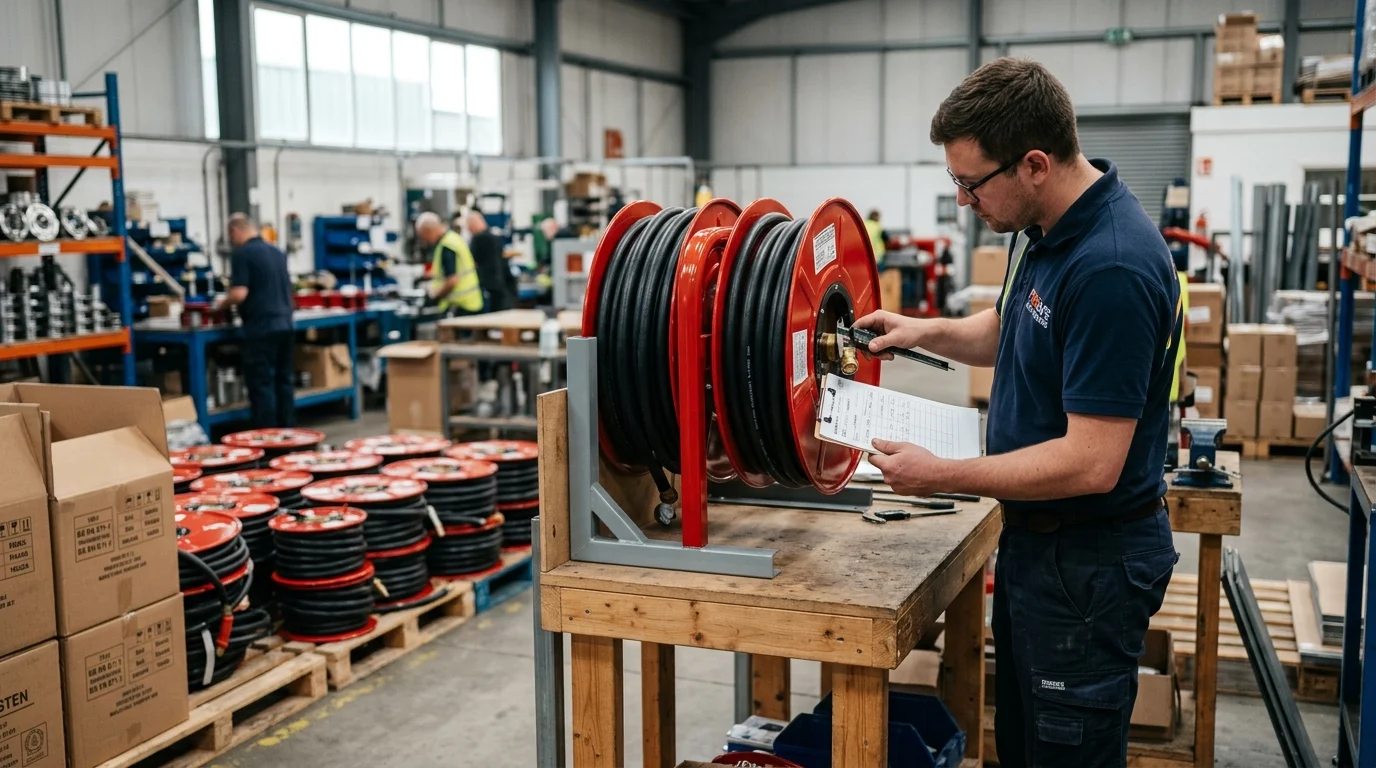
Selecting a manufacturing partner for suppression systems is a high-stakes decision impacting a distributor’s legal liability and market reputation. Successful procurement requires a holistic approach evaluating technical competence, regulatory adherence, and logistical efficiency.
By prioritizing transparency and establishing strict quality parameters, B2B buyers can build resilient supply chains. The focus must remain on acquiring equipment that functions flawlessly in emergencies while providing a favorable return on investment through durability and ease of maintenance.
Ultimately, successful distributors view their manufacturers not merely as vendors, but as integral compliance partners in the highly regulated fire safety industry.
Final technical and compliance checklist
Before finalizing a contract, buyers should utilize a strict checklist: verify exact hose dimensions and pressure ratings, confirm waterway material grades, demand verifiable third-party compliance certificates (e.g., CE, LPCB, UL), and ensure the manufacturer’s ISO 9001 status is current.
Balancing cost, certification, and installation
Procurement teams must resist selecting suppliers based solely on the lowest unit price. Cheap systems frequently lack proper certification, utilize inferior materials that leak prematurely, and feature poor mounting designs that increase installation time and labor costs, ultimately resulting in a higher total cost of ownership.
Risk reduction framework for bulk purchasing
To mitigate financial and operational risks, bulk buyers should implement a phased procurement framework. This includes testing sample units, hiring independent third-party inspection agencies (like SGS or Intertek) for pre-shipment factory inspections, and structuring payment terms that link final payment to successful quality control sign-offs.
Related reading: fire hose reel
Key Takeaways
- Wholesale sourcing and supply-chain implications for fire hose reel
- Specifications, compliance, and commercial terms buyers should validate
- Actionable recommendations for distributors and procurement teams