

Why Fire Extinguisher Type Selection Matters for B2B Sourcing

For B2B buyers and distributors, sourcing the right fire extinguisher portfolio is a critical strategic decision. The market demands specific equipment tailored to distinct environmental risks, regulations, and budgets. Failing to stock the appropriate mix causes missed tenders, compliance failures, and reduced margins.
Procurement teams must evaluate products based on total cost of ownership, regional certifications, and client risk profiles. A well-curated inventory balancing specialized units with high-volume models ensures distributors effectively serve diverse sectors.
Understanding the nuances between carbon dioxide, foam, and powder models helps importers negotiate better terms and optimize shipping. Because pressurized cylinders face strict dangerous goods rules, ordering the right mix in optimal container loads directly improves landed costs and competitiveness.
Impact on tender fit and product portfolio
Government and corporate tenders rarely request generic devices; they specify exact agents, capacities, and certifications. Maintaining a diverse portfolio ensures distributors can bid comprehensively on large-scale infrastructure, healthcare, and educational contracts without relying on secondary suppliers.
Buyer priorities by extinguisher type
Downstream buyers prioritize different metrics based on the agent. For powder units, upfront cost and multi-class versatility drive decisions. Conversely, buyers seeking carbon dioxide units prioritize clean discharge and asset protection, accepting higher initial costs to prevent secondary damage to sensitive electronics.
Positioning for industrial, commercial, and institutional accounts
Industrial accounts typically require heavy-duty, high-capacity units for complex chemical or fuel fires. Commercial and institutional accounts, like retail spaces and hospitals, prioritize lower toxicity and minimal post-discharge cleanup, making foam and clean-agent models highly preferred.
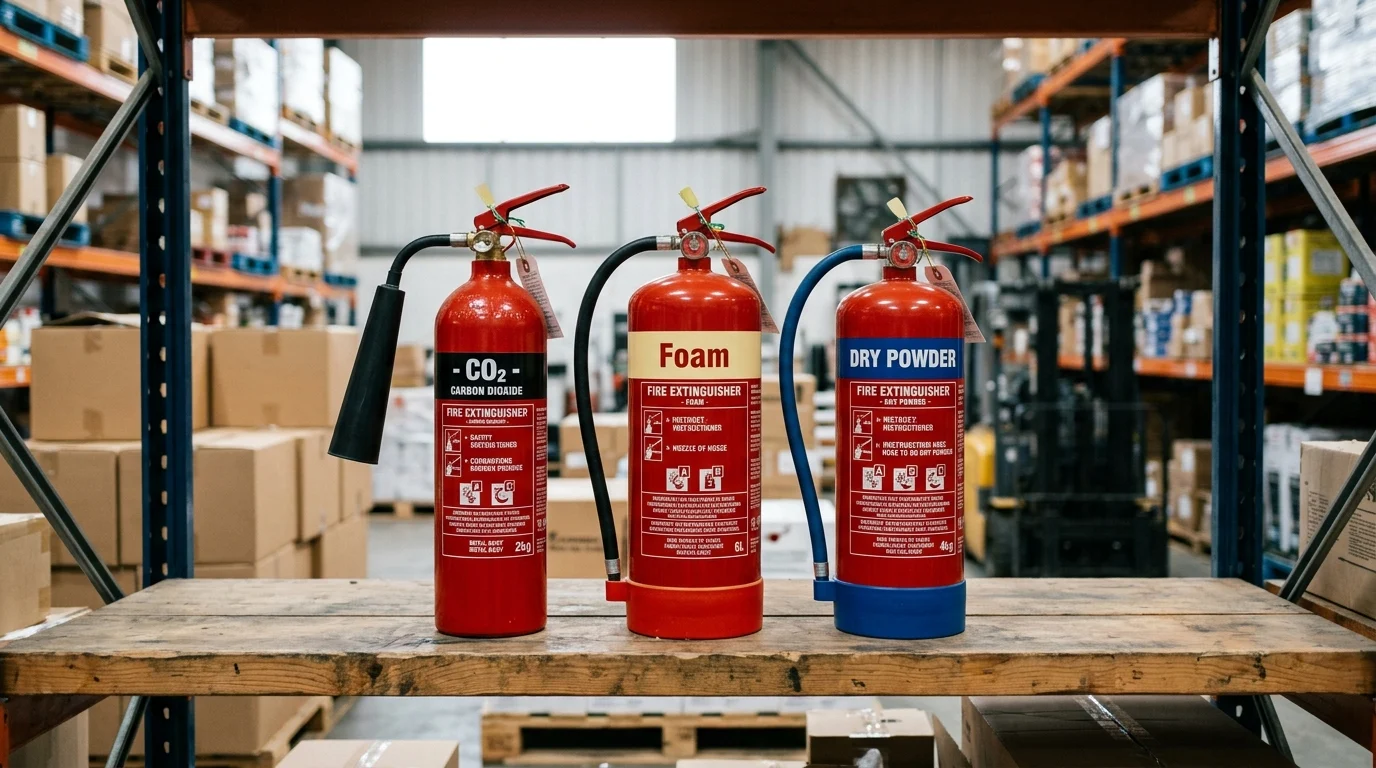
Core Specifications of CO2, Foam, and Dry Powder Extinguishers
Structural and chemical specifications dictate manufacturing processes, safety limits, and application suitability. Carbon dioxide units operate at extremely high pressures, necessitating seamless steel or aluminum alloy cylinders. Conversely, foam and powder models operate at lower pressures, allowing the use of deep-drawn, welded carbon steel cylinders.
Valve assemblies, pressure gauges, and hoses also vary. Foam and powder units require standard brass or aluminum valves with visual pressure gauges. Carbon dioxide models omit gauges, relying on gross weight checks to verify the charge, and require specialized frost-free horns to prevent user injury during rapid, freezing discharge.
Understanding these differences is vital for importers, as cylinder material, wall thickness, and valve quality directly influence lifespan, pressure equipment compliance, and overall factory cost.
| Extinguisher Type | Cylinder Construction | Operating Pressure | Primary Fire Classes |
|---|---|---|---|
| Carbon Dioxide | Seamless Steel / Aluminum | 55 to 60 bar | Class B, Electrical |
| Foam (AFFF) | Welded Carbon Steel | 12 to 15 bar | Class A, Class B |
| Dry Powder (ABC) | Welded Carbon Steel | 14 to 15 bar | Class A, B, C, Electrical |
Agent, pressure, cylinder, and size differences
Carbon dioxide units typically come in 2kg to 5kg portable sizes, requiring heavy, thick-walled seamless cylinders for high-pressure liquid gas. Foam and powder models span a broader range, typically 1kg to 9kg or 9L, utilizing lighter welded cylinders pressurized by nitrogen.
Fire class coverage and exclusion risks
Powder models offer the broadest coverage for Class A (combustibles), B (liquids), and C (gases). Foam effectively handles Class A and B fires but poses electrocution risks on live electrical equipment unless tested with a dielectric nozzle. Carbon dioxide exclusively suits Class B and electrical fires, lacking the cooling capacity to prevent Class A reignition.
Capacity, discharge time, and refill cycle comparison
Discharge times vary by agent density and valve design, typically ranging from 8 to 15 seconds for standard portables. Refill cycles dictate maintenance costs: foam units often require agent replacement every five years due to chemical degradation, while powder and carbon dioxide units need annual servicing and mandatory hydrostatic testing every ten years.
Performance, Maintenance, and Lifecycle Cost Comparison
Evaluating lifecycle costs requires analyzing upfront procurement alongside long-term maintenance, refilling, and collateral damage expenses. While some agents offer low initial costs, their deployment can cause substantial secondary financial losses for end-users, shifting the value proposition.
Routine maintenance impacts total cost of ownership. B2B buyers must account for replacement part availability, specialized refilling equipment, and annual inspection labor. Products requiring frequent hydro-testing or expensive chemical recharges may ultimately cost more over a ten-year lifespan despite a lower initial price.
Distributors must educate clients on these trade-offs, ensuring selected products align with the facility’s operational budget and maintenance capabilities.
CO2 for electrical and clean environments
A CO2 extinguisher represents a higher initial investment due to seamless cylinder manufacturing. However, it offers exceptional long-term value in server rooms and laboratories by leaving zero residue, completely eliminating costly downtime and equipment replacement associated with post-fire cleanup.
Foam value for Class A and Class B risks
Foam units provide excellent value for facilities facing mixed solid and liquid fire risks. Aqueous film-forming foam (AFFF) creates a vapor-sealing blanket over flammable liquids, preventing reignition. While initial costs are moderate, buyers must factor in the strict five-year agent replacement cycle required to maintain chemical efficacy.
Dry powder trade-offs in versatility and cleanup
The dry powder extinguisher remains the most cost-effective and versatile option. However, the fine, corrosive powder infiltrates machinery and electronics, often causing more financial damage than the fire itself. This makes it ideal for outdoor or industrial use, but highly problematic for clean indoor environments.
Compliance and Certification Checks for Importers and Distributors
International trade in pressurized fire safety equipment is heavily regulated. Importers must navigate regional standards, ensuring every batch meets stringent safety, performance, and environmental criteria. Importing non-compliant units risks severe legal liabilities, customs seizures, and catastrophic field failures.
Procurement teams must verify manufacturers hold valid certificates from recognized third-party testing laboratories. Factory-issued declarations of conformity are insufficient for life safety products; independent validation of cylinder burst pressure, fire rating efficacy, and valve integrity is mandatory.
Furthermore, environmental regulations regarding per- and polyfluoroalkyl substances (PFAS) are rapidly changing. Importers must ensure foam models comply with the latest regional restrictions on fluorinated chemicals to avoid dead stock and fines.
Key standards and approvals
Global markets demand specific certifications: EN3 and CE (PED) for Europe, UL 299 for North America, and MED for marine applications. B2B buyers must ensure products are explicitly tested and approved under these exact standards to guarantee legal market entry.
How to verify test reports and traceability
Importers should request complete test reports from accredited bodies like BSI, LPCB, or VdS. Traceability is critical; buyers must cross-reference batch numbers, cylinder heat stamps, and ISO 9001 audit reports to ensure mass-produced units match the laboratory-tested golden sample.
Labeling and documentation risks
Customs authorities frequently reject shipments due to incorrect labeling. Extinguishers must feature specific silk-screened or decaled information, including temperature ranges, fire ratings, approval logos, and propellant details. Missing safety documentation or incorrect language translations on operational instructions can halt distribution.
How to Evaluate Manufacturers and Supply Terms
Selecting a reliable manufacturing partner requires rigorous factory auditing. Because fire extinguishers are life-saving devices, consistency in welding, powder coating, and pressure sealing is non-negotiable. Importers must evaluate a supplier’s production automation, quality control checkpoints, and raw material sourcing.
Supply terms are heavily influenced by global raw material costs, particularly steel and aluminum. Buyers should negotiate terms that protect against sudden material price fluctuations while ensuring the factory can scale production to meet seasonal demand spikes.
Establishing clear terms for warranty claims and defect replacement is essential. Reputable manufacturers offer guarantees on cylinder integrity and pressure retention, providing necessary financial protection for the importer.
Factory assessment criteria
Auditors should look for highly automated deep-drawing and welding lines to ensure cylinder consistency. Critical quality control stations, such as 100% helium leak detection for valves and hydrostatic burst testing chambers for cylinders, must be operational and properly calibrated.
MOQ, lead time, and sample policies
Because pressurized extinguishers are dangerous goods, minimum order quantities (MOQs) typically start at one 20-foot container to justify complex shipping logistics. Lead times generally range from 30 to 45 days. Sample policies often require units to be shipped empty to bypass strict air freight restrictions.
Private label and margin opportunities
Distributors can significantly increase profit margins through private labeling (OEM). Upgrading standard components—such as specifying higher-grade brass valves, UV-resistant paint, or heavy-duty thermoplastic hoses—allows importers to position private label products as premium offerings against established domestic brands.
Logistics and Packaging Factors That Affect Import Cost
Shipping fire extinguishers internationally is complex and costly due to their hazardous materials classification. Proper logistics planning is crucial to maintain competitive landed costs. Importers must work closely with freight forwarders specializing in dangerous goods to secure vessel space and navigate port regulations.
Packaging specifications directly impact container utilization and transit safety. Poorly packaged cylinders can suffer cosmetic damage, like chipped paint, which leads to rust and renders units unsellable. Strategic packaging maximizes units per pallet while ensuring compliance with international shipping standards.
Inventory forecasting must account for extended transit times associated with hazardous cargo. Delays at customs or port terminals are common, requiring distributors to maintain adequate safety stock to prevent stockouts during peak demand.
Dangerous goods and export handling requirements
Pressurized fire extinguishers are classified under UN 1044, Class 2.2 (Non-flammable, non-toxic gases). Shippers must provide dangerous goods declarations, specific material safety data sheets (MSDS), and ensure shipping containers are properly placarded to comply with the International Maritime Dangerous Goods (IMDG) Code.
Carton, pallet, and label specifications
Units should be individually packed in double-corrugated export cartons to prevent valve damage. Pallets must be ISPM-15 certified for international trade and shrink-wrapped tightly. Proper UN 1044 hazard labels must be clearly visible on all outer packaging to facilitate smooth customs clearance.
Inventory planning by channel demand
Importers must align shipping schedules with channel demand and shelf-life constraints. Because powder and foam agents have specific expiration timelines, over-ordering can lead to degraded inventory. Phased container shipments ensure a continuous supply of freshly manufactured units for B2B clients.
Best Fire Extinguisher Types for B2B Use Cases
Advising downstream clients on correct product applications is a key value-add for B2B distributors. Recommending the wrong unit can lead to disastrous consequences during an emergency. By understanding the specific environmental risks of various industries, suppliers can offer tailored fire safety packages.
Providing comprehensive solutions requires understanding the entire facility. For example, a single manufacturing plant may require all three agent types: powder for the loading dock, foam for the chemical storage area, and carbon dioxide for the server room.
When evaluating fire extinguisher types for industry, wholesale buyers must map inventory acquisitions to the dominant commercial sectors in their target region, ensuring high turnover rates for stocked items.
When to choose CO2 models
Carbon dioxide models are the mandatory choice for server rooms, telecommunications centers, medical imaging facilities, and commercial kitchens. Their ability to extinguish electrical and liquid fires without leaving residue protects sensitive equipment from secondary chemical damage.
Where foam models fit best
Foam units are ideal for office buildings, educational institutions, and fuel storage areas. The AFFF agent provides rapid knockdown of common combustible fires (paper, wood) while offering essential protection against flammable liquid spills, making them highly versatile for general commercial spaces.
Why dry powder remains widely used
Despite cleanup challenges, dry powder remains the undisputed choice for heavy industry, construction sites, and transport vehicles. Its unmatched ability to rapidly suppress mixed-class fires in open, well-ventilated areas makes it the most reliable tool for rugged, high-risk environments.
Key Takeaways for Choosing the Right Product Mix
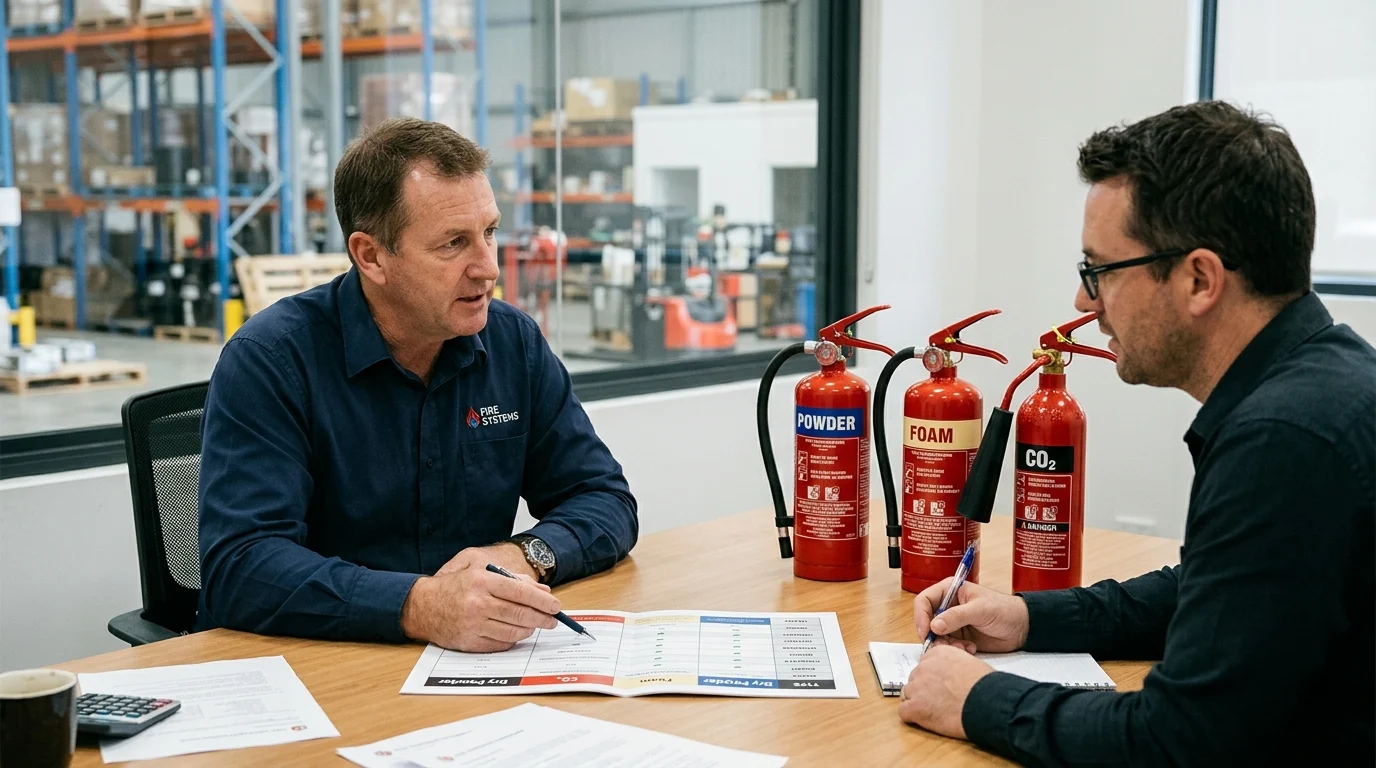
Building a profitable and compliant fire extinguisher portfolio requires a strategic balance of technical knowledge, regulatory awareness, and supply chain optimization. B2B buyers must move beyond price-centric purchasing and evaluate manufacturers based on quality control infrastructure and certification scope.
A well-planned product mix anticipates the diverse needs of commercial and industrial clients, providing specialized solutions like carbon dioxide alongside high-volume powder units. By mastering dangerous goods shipping logistics and optimizing container loads, importers can significantly reduce landed costs.
Ultimately, successful sourcing relies on rigorous due diligence. Verifying third-party test reports, auditing factory processes, and understanding specific use cases for each extinguishing agent ensures distributors deliver safe, reliable, and highly profitable products to the market.
Balancing compliance, application fit, and margin
Procurement teams must balance the costs of certified, premium units with the margin requirements of their distribution business. Selecting products that fit the exact risk profile of the target market prevents over-engineering while maintaining strict adherence to local life-safety regulations.
Comparing MOQ and certification scope
Buyers must align factory MOQs with their required certification scope. A factory might offer low MOQs but lack necessary CE or UL approvals for the buyer’s region. Ensuring the manufacturer’s certifications cover the specific extinguisher sizes and agents ordered is critical for legal compliance.
Common sourcing mistakes to avoid
Major pitfalls include underestimating dangerous goods freight costs, failing to verify cylinder wall thickness, and ignoring regional PFAS regulations regarding foam agents. Overlooking these factors can result in blocked shipments, product recalls, and severe financial losses.
Related reading: CO2 extinguisher
Key Takeaways
- Wholesale sourcing and supply-chain implications for fire extinguisher
- Specifications, compliance, and commercial terms buyers should validate
- Actionable recommendations for distributors and procurement teams