

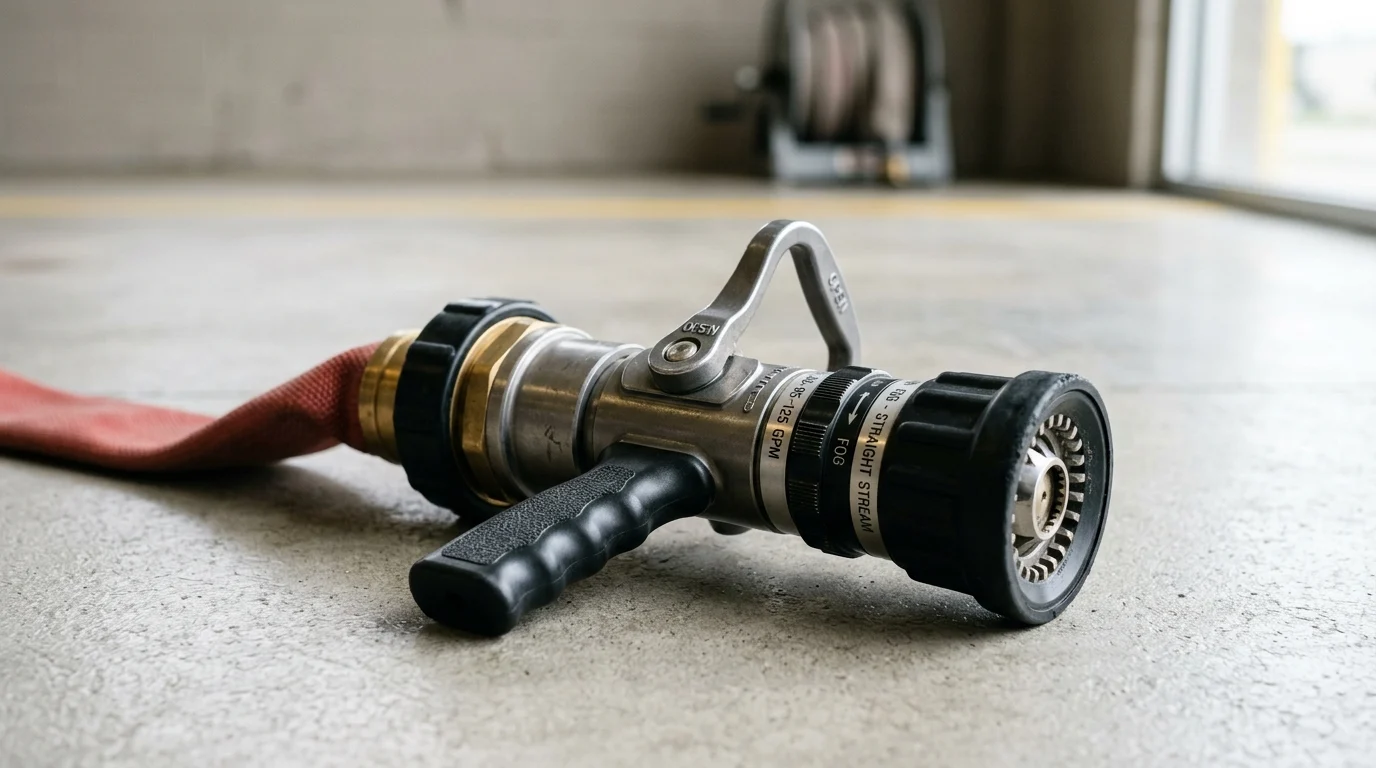
How B2B Buyers Should Frame Brass vs. Aluminum Fire Hose
Procuring fire hose nozzles for commercial, industrial, or municipal distribution requires balancing immediate capital expenditure with long-term operational reliability. Among the most critical decisions procurement teams face is selecting the appropriate primary material: brass or aluminum. While both metals serve the fundamental purpose of shaping and directing water or foam at high pressures, their distinct metallurgical properties fundamentally alter the supply chain dynamics, lifecycle expectations, and end-user performance.
For B2B buyers, framing the brass versus aluminum debate is not merely a matter of technical preference, but a strategic calculation of total cost of ownership (TCO). With global metal commodity prices fluctuating, understanding the specific use-cases, maintenance requirements, and replacement cycles of these materials is essential for protecting distributor margins and ensuring compliance with stringent life-safety regulations.
Why nozzle material affects total cost of ownership
The total cost of ownership for a fire hose nozzle extends far beyond the initial factory gate price. Aluminum nozzles typically offer a lower upfront cost due to the lower raw material price of aluminum alloys compared to copper-heavy brass. However, TCO calculations must incorporate the expected operational lifespan. A standard hard-anodized aluminum nozzle may have a functional lifecycle of 5 to 10 years in active municipal service before thread wear or galling necessitates replacement.
Conversely, forged brass nozzles, despite carrying a 30% to 50% premium in initial procurement costs, routinely exceed 15 to 20 years of continuous service. Brass naturally resists galvanic corrosion and thread degradation without the need for secondary surface treatments. Buyers must weigh the lower acquisition cost and shipping expenses of aluminum against the extended replacement cycles and lower maintenance overhead of brass.
Which applications favor brass or aluminum nozzles
The operational environment dictates material suitability. High-mobility applications heavily favor aluminum. Municipal fire departments, wildland firefighting units, and high-rise rapid response teams require lightweight equipment to minimize firefighter fatigue; an aluminum nozzle can reduce the weight at the end of a hose line by up to 60%.
Brass nozzles remain the undisputed standard in stationary, highly corrosive, or heavy-duty industrial applications. Marine vessels, offshore oil platforms, petrochemical refineries, and coastal port facilities mandate brass or bronze alloys. The inherent resistance of brass to saltwater corrosion and its ability to withstand severe mechanical impacts without catastrophic fracturing make it the required specification for harsh industrial deployments.
Key Fire Hose Nozzle Performance Specifications for Procurement
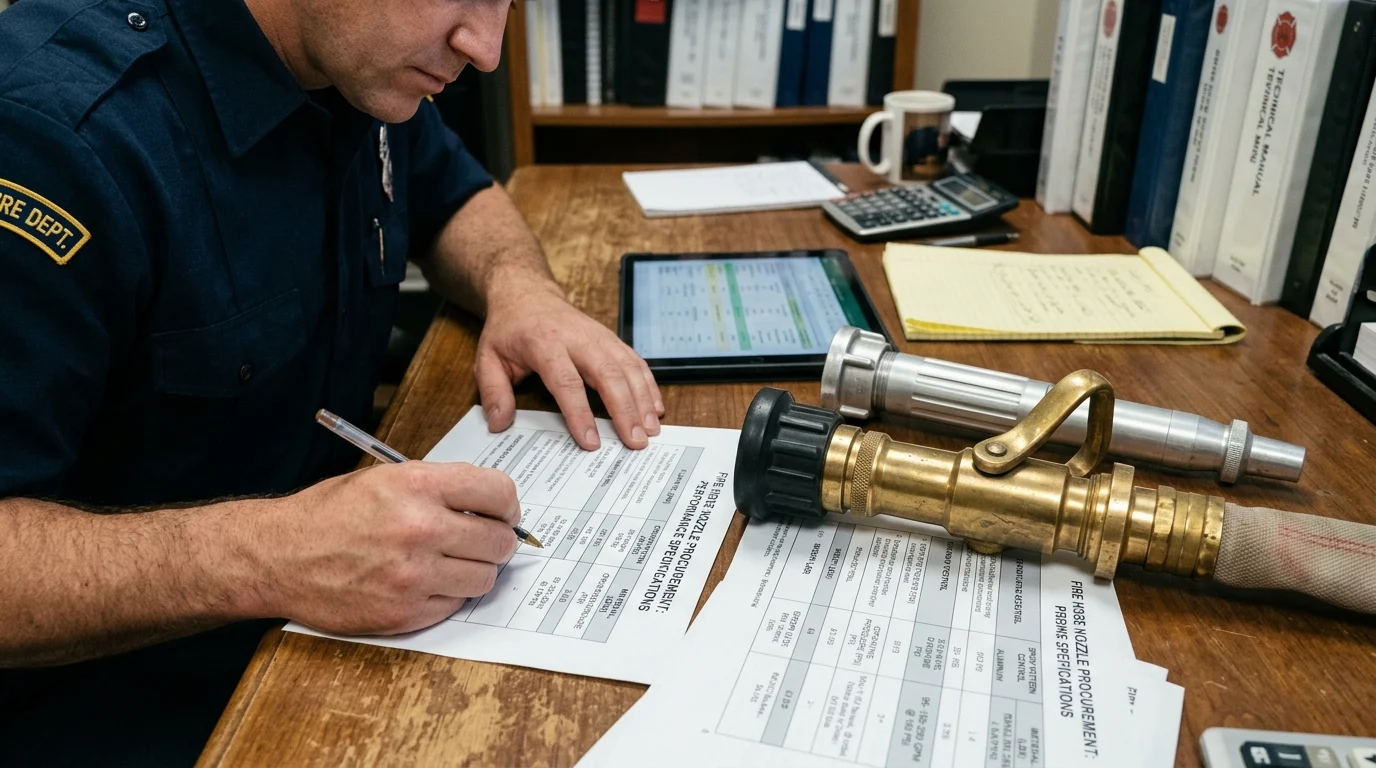
Establishing rigorous performance specifications is the foundation of a reliable procurement strategy. B2B buyers must move beyond generic catalog descriptions and mandate specific metallurgical grades, pressure tolerances, and dimensional standards. A standard fire hose nozzle must operate flawlessly under dynamic pressures ranging from 100 PSI to 250 PSI (7 to 17 bar), demanding strict engineering tolerances regardless of the chosen material.
How brass and aluminum nozzles compare on performance
The performance parameters of brass and aluminum dictate their maximum operational thresholds. Forged brass (commonly C36000 or CW614N) offers superior tensile strength and impact resistance, maintaining structural integrity under extreme pressure spikes. Aluminum nozzles (typically aerospace-grade 6061-T6) provide excellent strength-to-weight ratios but rely heavily on their surface treatments for durability.
| Specification | Forged Brass (e.g., C36000) | Hard-Anodized Aluminum (6061-T6) |
|---|---|---|
| Density / Weight Profile | ~8.4 g/cm³ (Heavy duty) | ~2.7 g/cm³ (Lightweight) |
| Typical Tensile Strength | 330 – 450 MPa | 290 – 310 MPa |
| Corrosion Resistance | Excellent (Inherent) | Good (Dependent on coating) |
| Standard Operating Pressure | Up to 250 PSI (17 Bar) | Up to 200 PSI (14 Bar) |
| Best Suited Environment | Marine, Petrochemical | Municipal, Wildland, High-Rise |
What buyers should verify in drawings and samples
When evaluating pre-production samples and engineering drawings, procurement teams should verify dimensional tolerances strictly within ±0.1mm. Thread compatibility is paramount; buyers must ensure the supplier can accurately machine regional standards such as National Hose (NH/NST) for North America, BSP for Europe, or instantaneous couplings like Storz and Machino.
Furthermore, flow rate accuracy is a critical verification point. If a nozzle is rated for 150 gallons per minute (GPM) at 100 PSI, the sample must consistently deliver this flow within a 5% margin of error. Buyers should request computational fluid dynamics (CFD) data or physical flow-test reports from the manufacturer to validate the internal waterway design.
Which durability, weight, and maintenance factors matter
Durability in aluminum nozzles is intrinsically linked to the quality of its anodizing. Buyers must specify Type III hard-coat anodizing with a minimum thickness of 50 microns to prevent surface abrasion and galvanic corrosion when connected to dissimilar metals. If the anodized layer is breached, the underlying aluminum will rapidly degrade in harsh environments.
For brass nozzles, weight is the primary trade-off for durability. A standard 1.5-inch brass nozzle can weigh between 3.5 to 5.0 lbs (1.6 to 2.2 kg), compared to a similarly sized aluminum nozzle at 1.5 to 2.0 lbs (0.7 to 0.9 kg). Maintenance factors also differ; brass requires periodic polishing if aesthetic standards are to be maintained, whereas aluminum requires careful inspection of the anodized coating and immediate retirement if deep gouges expose the raw alloy.
Compliance, Certifications, and Supplier Qualification Requirements
In the life-safety equipment sector, regulatory compliance is non-negotiable. Importing non-certified fire hose nozzles exposes distributors to severe liability, product recalls, and exclusion from lucrative government or municipal tenders. A robust supplier qualification process must prioritize verifiable quality management systems and region-specific product certifications.
Which certifications matter for target markets
Target markets dictate the required certification matrix. For the North American market, Underwriters Laboratories (UL) and Factory Mutual (FM) approvals are critical benchmarks for commercial viability. In the European Union, the Marine Equipment Directive (MED) “Wheelmark” is mandatory for maritime applications, while EN 15182 compliance governs hand-held branchpipes for fire service use.
Distributors targeting the Middle East or Commonwealth nations often require BSI Kitemark or LPCB certifications. Procuring nozzles with these certifications ensures the product has undergone rigorous third-party testing for hydrostatic pressure, salt spray corrosion, and continuous flow performance.
How to assess ISO 9001 and supplier capability
A supplier claiming ISO 9001:2015 certification is a baseline requirement, but buyers must dig deeper into the actual capability of the manufacturing facility. Effective supplier assessment involves auditing the factory’s Quality Control Plan (QCP).
Buyers should verify if the manufacturer conducts 100% hydrostatic testing on the assembly line or relies on statistical batch sampling. For life-safety equipment, 100% testing at 1.5 times the maximum working pressure (e.g., testing a 200 PSI nozzle at 300 PSI) should be an uncompromising standard. Additionally, assessing the supplier’s in-house tooling capabilities and raw material traceability protocols provides insight into their long-term reliability.
What documentation should accompany bulk orders
To mitigate import risks and ensure seamless customs clearance, bulk orders must be accompanied by comprehensive documentation. Minimum requirements include Material Test Reports (MTRs) validating the chemical composition of the brass or aluminum alloys, and EN 10204 3.1 certificates detailing the specific batch test results.
Furthermore, a Certificate of Origin (COO) is essential for calculating accurate import tariffs. Depending on the destination port, buyers should also mandate pre-shipment inspection reports from recognized third-party agencies (such as SGS, TUV, or Bureau Veritas) to confirm that the shipped goods perfectly match the approved golden sample.
Sourcing, MOQ, Packaging, and Logistics Considerations
Transitioning from technical specifications to supply chain mechanics involves optimizing Minimum Order Quantities (MOQs), packaging protocols, and freight logistics. The physical weight disparity between brass and aluminum significantly impacts shipping economics, requiring tailored logistical strategies to maintain healthy gross margins.
How MOQ, tooling, private labeling, and finishes affect sourcing
Manufacturing MOQs vary significantly based on the material and production method. Standard forged brass nozzles typically command MOQs of 200 to 500 units, as forging dies require substantial setup time. Aluminum nozzles, particularly those CNC-machined from extruded billet, may allow for lower MOQs (100 to 300 units) due to faster setup times.
Customization also impacts sourcing costs. Buyers requiring private labeling via laser engraving or custom anodized colors (e.g., red or blue for specific municipal departments) should expect a 10% to 15% increase in unit cost and higher MOQs. Tooling costs for bespoke internal waterways or custom thread profiles can range from $1,500 to $4,000, which must be amortized across the purchase order.
Which packaging and carton marking standards reduce damage
Heavy brass nozzles require stringent packaging standards to prevent transit damage. If heavy brass units collide inside a carton during ocean freight, the precision-machined threads can easily deform, rendering the product useless. Each nozzle must be individually wrapped in bubble film or housed in custom EPE foam inserts.
Outer packaging must utilize five-layer corrugated export cartons. Crucially, buyers must enforce strict carton weight limits; no single carton should exceed 20 to 25 kg (44 to 55 lbs) to ensure safe manual handling at the destination warehouse. Carton markings should clearly indicate gross weight, net weight, SKU, thread type, and include recognized handling pictograms.
How to calculate freight impact, lead time, and import risk
The weight difference between materials drastically alters container economics and freight impact. Ocean freight is constrained by both volume (CBM) and maximum payload weight. Because brass is exceptionally dense, a container will hit its maximum weight limit long before it is physically full.
| Logistics Metric | 1.5″ Standard Brass Nozzle | 1.5″ Standard Aluminum Nozzle |
|---|---|---|
| Average Unit Weight | 1.8 kg (4.0 lbs) | 0.7 kg (1.5 lbs) |
| Units per 20kg Export Carton | ~11 units | ~28 units |
| 20ft Container (TEU) Capacity | Weight constrained (~11,000 units max) | Volume constrained (~25,000 units max) |
| Freight Cost Allocation | Higher per unit | Lower per unit |
This dynamic means the freight cost per unit for brass nozzles is substantially higher. Lead times for both materials typically range from 30 to 45 days post-deposit, but buyers should add an extra 10 days for aluminum nozzles requiring third-party hard anodizing. Accurately calculating these lead times and freight impacts is vital for maintaining appropriate safety stock levels.
How Buyers Should Choose Between Brass and Aluminum Nozzles
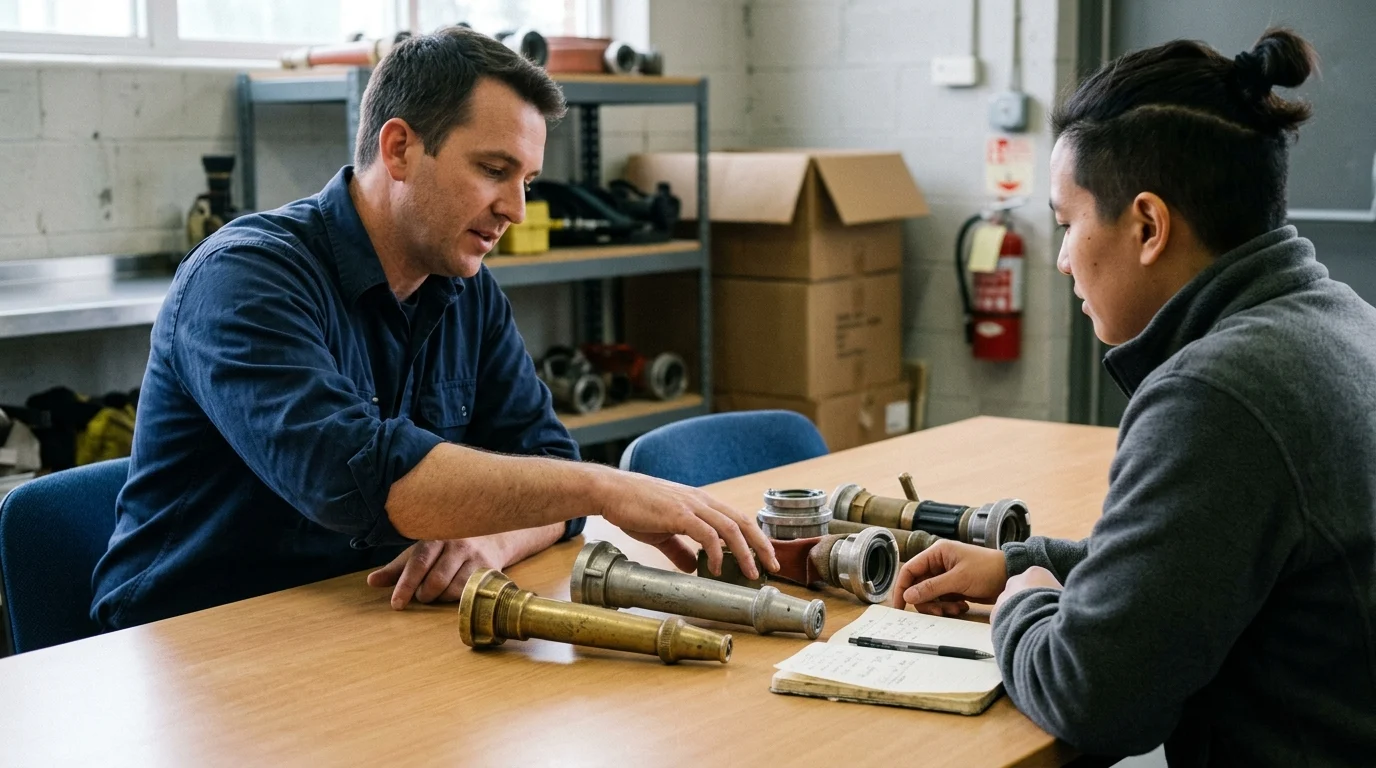
Ultimately, the choice between brass and aluminum fire hose nozzles is not a binary decision of one material being universally superior. Instead, it is a strategic alignment of product capabilities with specific end-user demands. Distributors and procurement teams must analyze their customer base to make informed purchasing decisions that maximize both safety and commercial viability.
When brass is the stronger commercial choice
Brass remains the stronger commercial choice when supplying industries where durability trumps mobility. If a distributor’s primary clients are in the maritime, offshore oil and gas, heavy manufacturing, or chemical processing sectors, brass is the only viable option. Its inherent resistance to salt spray and harsh environmental degradation ensures compliance with maritime safety codes.
Commercially, while brass requires a higher initial capital outlay, the premium pricing translates to higher revenue per unit. Furthermore, the longevity of brass nozzles results in fewer warranty claims and a stronger reputation for reliability in unforgiving industrial environments.
When aluminum is better for weight-sensitive projects
Aluminum dominates when supplying municipal fire departments, wildland fire services, and aviation crash-rescue teams. In these scenarios, the physical exertion of the end-user is a critical factor. Shaving several pounds off the end of a charged fire hose significantly reduces firefighter fatigue, improving response times and operational safety.
For weight-sensitive projects, aluminum’s lower unit cost also allows municipal departments with constrained budgets to equip more vehicles and personnel. Distributors targeting government tenders will find that modern municipal specifications increasingly mandate lightweight, hard-anodized aluminum solutions.
How to build a dual-material nozzle sourcing strategy
Forward-thinking B2B buyers rarely restrict themselves to a single material. Building a dual-material sourcing strategy allows a distributor to capture both the industrial and municipal markets. A common inventory ratio is 70/30, heavily weighted toward the specific distributor’s primary market focus.
To optimize this strategy, buyers
Key Takeaways
- Wholesale sourcing and supply-chain implications for Fire Hose Nozzle
- Specifications, compliance, and commercial terms buyers should validate
- Actionable recommendations for distributors and procurement teams
Frequently Asked Questions
Which material is better for high-pressure fire hose nozzles?
Brass is usually better for sustained high-pressure duty, typically up to 250 PSI, with stronger impact and thread durability. Aluminum suits lighter-response use, often up to 200 PSI.
When should buyers choose aluminum fire hose nozzles?
Choose aluminum when low weight matters most, such as municipal response, wildland use, or high-rise operations. It reduces hose-end fatigue and often lowers freight and purchase cost.
Why are brass fire nozzles preferred in marine or corrosive sites?
Brass naturally resists saltwater corrosion and thread wear better than coated aluminum. It is a practical choice for ships, offshore platforms, ports, and petrochemical facilities.
What specifications should B2B buyers confirm before ordering from NBWorldFire?
Confirm operating pressure, material grade, thread standard, coupling type, dimensional tolerance, and certification needs. For export orders, specify NH/NST, BSP, Storz, or Machino clearly.
How can buyers reduce total cost of ownership for fire hose nozzles?
Match material to the application. Aluminum lowers upfront and shipping costs, while brass often lasts 15–20 years with less maintenance, reducing replacement frequency in demanding environments.
Post time: Apr-20-2026