

Introduction
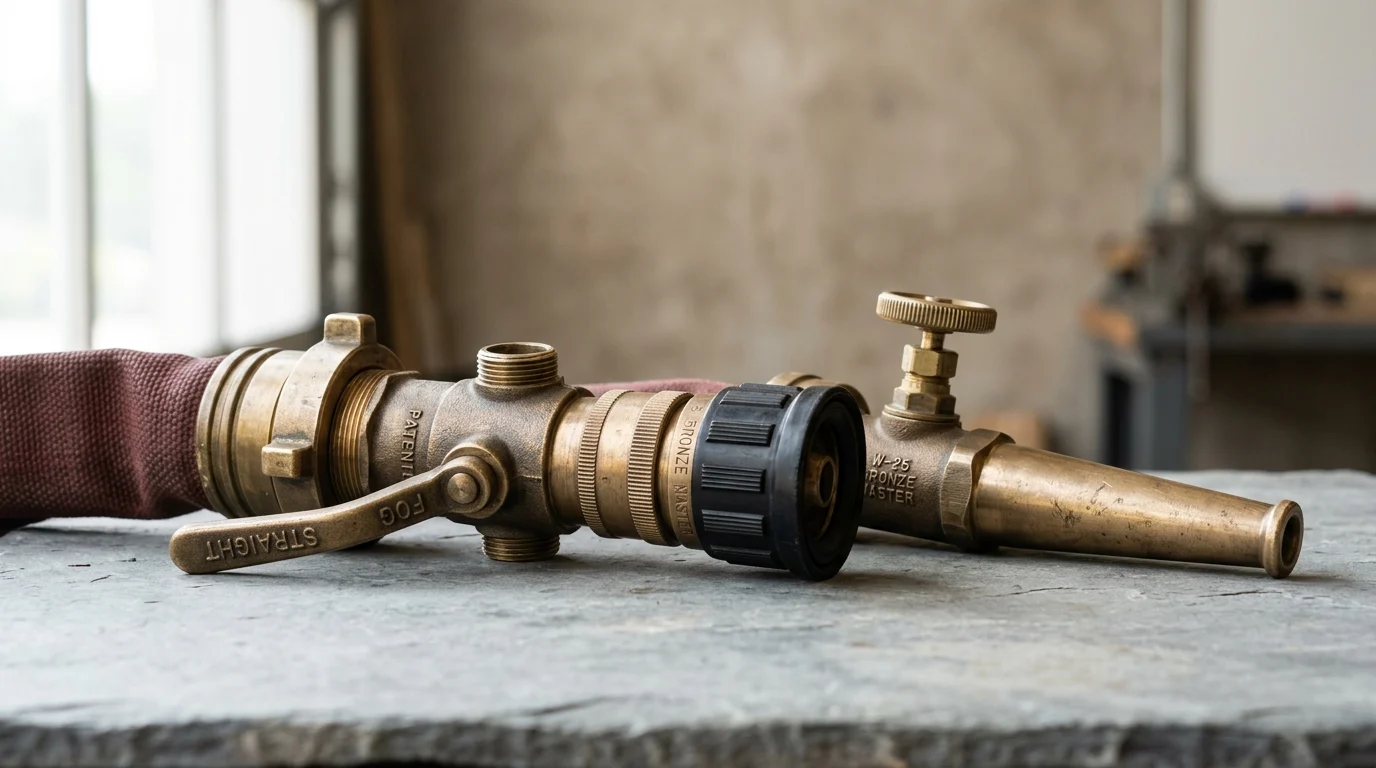
On ships, offshore platforms, and coastal facilities, fire nozzles face constant chloride exposure from salt spray, seawater washdowns, and humid marine air. In these conditions, material choice directly affects corrosion resistance, response reliability, and maintenance cost. This article explains why bronze fire nozzles remain a preferred option, how their performance compares with SS316 stainless steel, and which corrosion mechanisms matter most in real service. Readers will gain a practical understanding of how bronze resists dezincification, pitting, and general deterioration under high-salinity exposure, helping connect material properties to longer service life and dependable fire protection in marine and offshore systems.
Why Bronze and SS316 Fire Nozzles Matter
Marine and offshore environments present some of the most aggressive atmospheric conditions for fire protection equipment. In these settings, fire suppression hardware must maintain constant operational readiness despite relentless exposure to corrosive elements. The selection of materials for primary suppression tools, particularly fire hose nozzles, dictates both the reliability of emergency response and the overall lifecycle cost of the safety system.
Engineers and procurement specialists consistently specify Bronze Fire Nozzles and SS316 (Type 316 Stainless Steel) variants for these applications. Unlike standard municipal firefighting equipment, which operates in relatively benign environments, marine nozzles must survive continuous atmospheric salinity that averages 35,000 parts per million (ppm), alongside extreme UV radiation and heavy mechanical abuse.
Salt spray, seawater, and washdown exposure
The offshore environment introduces a triad of environmental stressors: aerosolized salt spray, direct seawater deluge, and aggressive chemical washdowns. Equipment mounted on weather decks or offshore platforms is continuously coated in a thin film of chloride-rich moisture. During rough seas or standard operational washdowns, nozzles are subjected to direct seawater impact, acting as a highly conductive electrolyte that accelerates galvanic and pitting corrosion on susceptible metals.
Operational risks of corrosion
When sub-standard materials are deployed in marine settings, the operational risks compound rapidly. Corrosion mechanisms lead to the seizure of internal moving parts, such as the ball valves and the rotating teeth or bumper rings used to adjust spray patterns from straight jet to wide fog. A standard aluminum nozzle can exhibit severe pitting and mechanical binding within 6 to 12 months of offshore deployment. This degradation reduces the internal flow coefficient, potentially dropping water delivery rates by up to 30% and compromising the hydraulic calculations of the vessel’s fire main system.
Where these nozzles are commonly used
Heavy-duty corrosion-resistant nozzles are mandated across a wide spectrum of maritime infrastructure. They are standard fixtures in the fire hose cabinets of Floating Production Storage and Offloading (FPSO) units, offshore drilling rigs, and commercial shipping vessels ranging from bulk carriers to chemical tankers. Additionally, coastal petrochemical refineries and desalination plants rely on these materials to protect waterfront loading terminals where atmospheric salinity mirrors offshore conditions.
Material Basics and Performance Criteria
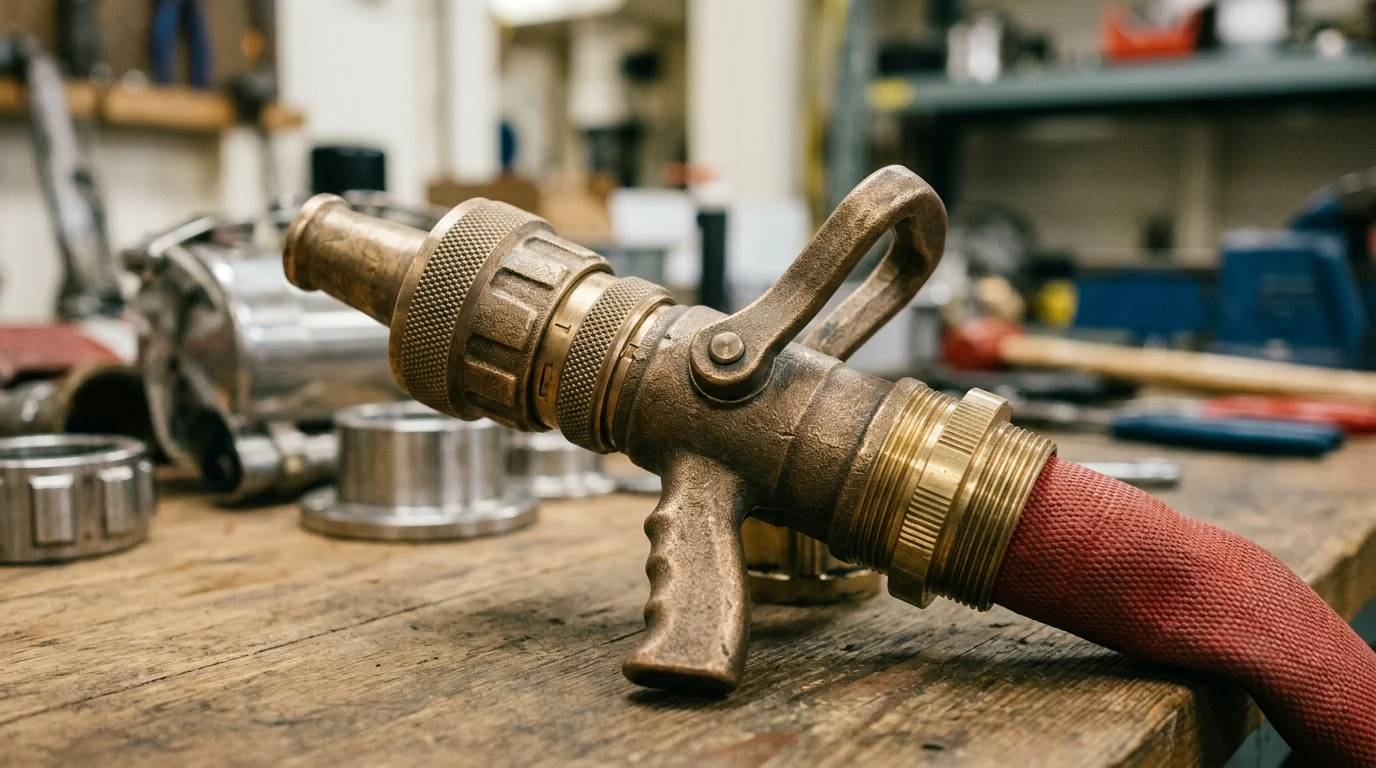
The metallurgical composition of a fire nozzle determines its structural integrity under high-pressure water flow and its resistance to environmental degradation. Understanding the base mechanical and chemical properties of both bronze and austenitic stainless steel is essential for specifying the correct equipment for marine fire mains.
Bronze vs SS316 fire nozzles
Bronze Fire Nozzles are typically cast from alloys such as Gunmetal (LG2) or Nickel Aluminum Bronze, which combine copper, tin, zinc, and occasionally lead or nickel. This matrix provides excellent castability and inherent resistance to seawater. In contrast, SS316 is an austenitic chromium-nickel stainless steel containing between 16% and 18% chromium, 10% to 14% nickel, and crucially, 2% to 3% molybdenum, which differentiates it from standard 304-grade steel by significantly enhancing its resistance to chlorides.
Key mechanical and corrosion properties
Mechanically, SS316 offers superior tensile strength, boasting a yield strength of approximately 205 MPa compared to the 130-150 MPa typical of standard cast bronzes. This allows stainless steel nozzles to withstand higher impact forces and extreme hydrostatic pressures without deformation. However, corrosion resistance is the primary performance metric. SS316 relies on a Pitting Resistance Equivalent Number (PREN) typically ranging from 23 to 28, offering robust protection against localized chloride attack, provided the surface remains oxygenated to maintain its passive chromium oxide layer.
| Property | Bronze (Gunmetal LG2) | Stainless Steel (SS316) |
|---|---|---|
| Density | 8.7 g/cm³ | 8.0 g/cm³ |
| Yield Strength | ~130 – 150 MPa | ~205 MPa |
| Pitting Resistance | Inherent (Patina formation) | High (PREN 23-28) |
| Sparking Risk | Non-sparking (ATEX suitable) | Low sparking |
| Impact Resistance | Moderate | High |
Thermal, maintenance, and lifecycle factors
From a lifecycle perspective, Bronze Fire Nozzles offer a distinct advantage in maintenance due to their natural lubricity. The copper-tin matrix is highly anti-galling, meaning threaded connections and moving valve balls are less likely to seize under friction. SS316, while highly durable, is susceptible to thread galling if not properly machined or lubricated. Thermally, both materials easily withstand the radiant heat of shipboard fires, maintaining structural integrity at temperatures exceeding 800°C, far surpassing the melting point of standard aluminum alloys.
Corrosion Resistance in Marine Environments
Corrosion in the marine environment is an electrochemical process driven by the presence of water, oxygen, and chloride ions. The ability of a fire nozzle to interrupt or withstand this process dictates its functional lifespan on a vessel’s fire main.
How bronze and SS316 resist salt exposure
Bronze resists marine corrosion by developing a stable, adherent patina of cuprous oxide upon initial exposure to the elements. This microscopic layer acts as a barrier, significantly slowing further oxidation. Furthermore, the inherent toxicity of copper alloys to marine organisms prevents biofouling, keeping the nozzle’s orifices clear. SS316 tackles salt exposure differently; it relies on passivation. The chromium in the alloy reacts with atmospheric oxygen to form an invisible, self-healing chromium oxide film. The addition of molybdenum specifically fortifies this film against the aggressive penetrating action of chloride ions found in seawater.
Where lower-grade materials fail
Materials frequently utilized in municipal firefighting, such as extruded aluminum or standard brass, fail catastrophically in offshore environments. Aluminum, even when hard-coat anodized, suffers from galvanic corrosion if coupled with dissimilar metals (like a brass hydrant valve) and rapid chloride pitting once the anodized layer is scratched. Standard brass alloys containing greater than 15% zinc are highly susceptible to dezincification in seawater—a process where the zinc selectively leaches out of the alloy, leaving behind a porous, fragile copper sponge that fractures under the 10 to 12 bar pressures typical of marine fire pumps.
Performance trade-offs between bronze and SS316
When evaluating performance trade-offs, engineers must balance weight, cost, and specific environmental hazards. Bronze is denser (8.7 g/cm³) than SS316 (8.0 g/cm³), making bronze nozzles noticeably heavier for operators dragging hoses across wet decks. However, bronze is generally more cost-effective to cast and machine. SS316 offers a higher strength-to-weight ratio and superior resistance to a broader spectrum of harsh chemicals, making it preferable on chemical tankers, though it carries a higher upfront manufacturing cost.
Specification and Sourcing
Procuring marine-grade fire nozzles requires strict adherence to international maritime regulations and rigorous quality control. Specification goes beyond merely selecting a material; it involves verifying that the manufactured product can perform flawlessly under emergency parameters.
Relevant standards and certifications
Marine fire equipment must comply with the Safety of Life at Sea (SOLAS) convention and often requires Marine Equipment Directive (MED) “Wheelmark” certification for use on European-flagged vessels. Standards such as EN 15182 and NFPA 1964 dictate the performance metrics, including spray patterns, droplet size, and flow rates. For example, a standard marine branchpipe nozzle must consistently deliver minimum flow rates ranging from 115 to 475 Liters per minute (L/min) at a nominal operating pressure of 6 bar, without the spray pattern degrading.
Inspection and quality verification steps
To ensure metallurgical integrity, quality verification steps are paramount during the sourcing phase. Buyers should require Positive Material Identification (PMI) reports to guarantee that SS316 nozzles contain the requisite minimum of 2.0% molybdenum. Additionally, hydrostatic testing is a critical inspection step. A nozzle rated for a standard 15 bar maximum working pressure should be hydrostatically proof-tested by the manufacturer to at least 22.5 bar (1.5 times the working pressure) for a minimum of 60 seconds to ensure the casting contains no microscopic porosities or structural defects.
Lead time, manufacturing route, and spare parts
Logistical considerations, including lead times and manufacturing routes, heavily influence procurement. High-quality Bronze Fire Nozzles and SS316 variants are typically produced via investment casting to ensure smooth internal waterways that minimize friction loss. This complex manufacturing route means lead times for bulk offshore orders can range from 6 to 8 weeks. Buyers must also consider Minimum Order Quantities (MOQs), which often sit between 50 and 100 units when specifying custom international thread profiles such as Storz, Nakajima, or BSP.
How to Choose the Right Nozzle
Selecting the optimal nozzle requires a holistic assessment of the vessel’s operational profile, the specific hazards present, and the physical constraints of the firefighting crew. A mismatched nozzle can severely hamper manual fire suppression efforts during a critical incident.
Selection by vessel type and operating zone
The operating zone and vessel type heavily influence material selection. For offshore installations operating in hyper-saline environments, such as the Red Sea or the Persian Gulf where salinity can exceed 40,000 ppm, the superior chloride resistance of SS316 is often mandated by the operator’s engineering standards. Conversely, for coastal tugs, inland waterway barges, and standard commercial cargo vessels operating in standard oceanic conditions, Bronze Fire Nozzles remain the industry standard due to their excellent balance of cost, durability, and anti-sparking properties.
Application-based decision framework
An application-based decision framework must account for the physical handling of the equipment. A heavy bronze nozzle on the end of a 2.5-inch water-filled hose requires significant physical exertion to maneuver. If crew fatigue is a primary concern, particularly on rapid-response vessels, lighter SS316 nozzles or specialized marine-grade composites might be evaluated, provided they meet the pressure requirements.
| Vessel / Installation Type | Primary Hazard Profile | Recommended Material | Typical Working Pressure |
|---|---|---|---|
| FPSO / Offshore Platform | Extreme salinity, continuous exposure | SS316 | 7 – 16 bar |
| Commercial Cargo / Tanker | High salinity, regular washdowns | Bronze Fire Nozzles | 5 – 12 bar |
| Coastal Port Facilities | Moderate salinity, industrial fumes | Bronze or SS316 | 5 – 10 bar |
Specification checklist for buyers
When drafting the final procurement specification, buyers should utilize a stringent checklist. This includes verifying the exact coupling compatibility (e.g., matching a Machino receptacle to a Machino nozzle base), confirming the nozzle’s certified working pressure (typically 5 to 16 bar), and ensuring the flow settings match the hydraulic capacity of the onboard fire pumps. Finally, buyers must confirm the availability of replaceable internal components, such as molded rubber bumper rings and Delrin valve seats, to ensure the nozzle can be serviced onboard rather than discarded.
Key Takeaways
- The most important conclusions and rationale for Bronze Fire Nozzles
- Specs, compliance, and risk checks worth validating before you commit
- Practical next steps and caveats readers can apply immediately
Frequently Asked Questions
Why are bronze fire nozzles preferred in marine and offshore areas?
Bronze resists seawater and salt spray well, helping nozzles avoid seizure and pitting on decks, rigs, and terminals. It also offers reliable long-term operation with low maintenance.
When should I choose SS316 instead of bronze fire nozzles?
Choose SS316 when higher strength, impact resistance, or lighter weight is important. It performs well in chloride exposure and suits demanding marine fire main systems.
What certifications should marine fire nozzles have for export projects?
For global B2B procurement, look for project-required approvals such as MED, LPCB, BSI, TUV, or UL/FM where applicable. NBWorldFire supports certified product supply for multiple markets.
How can buyers reduce corrosion-related nozzle failure offshore?
Specify bronze or SS316, avoid mixed-metal galvanic contact where possible, rinse after chemical washdowns, and inspect moving parts regularly to keep shutoff and spray adjustment smooth.
Can NBWorldFire supply bronze fire nozzles with other marine fire equipment?
Yes. NBWorldFire offers hose nozzles plus hydrants, landing valves, couplings, reels, cabinets, and related fire protection products for coordinated marine and industrial procurement.
Post time: Jun-02-2026