

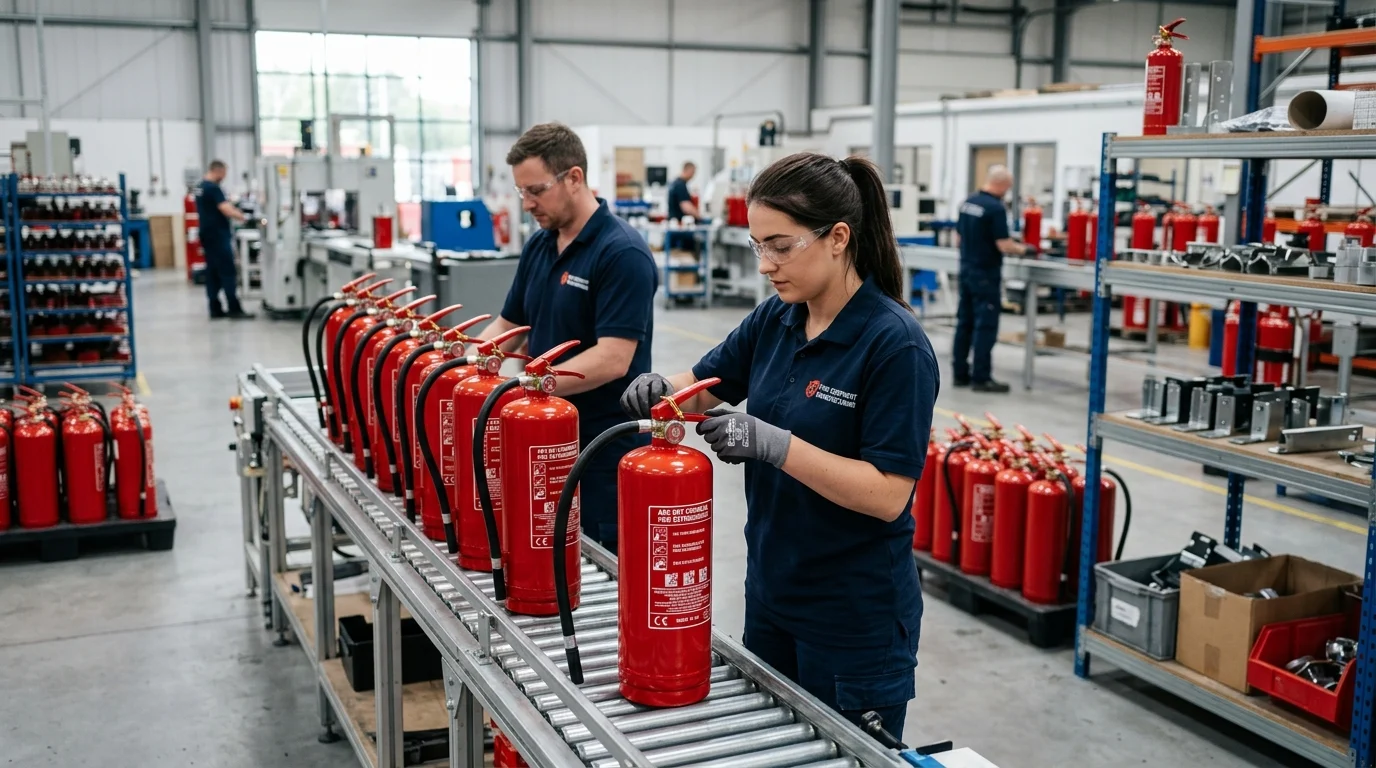
Framing OEM Cooperation with a Fire Equipment Factory
Initiating an Original Equipment Manufacturer (OEM) partnership with a fire equipment factory requires a strategic alignment of manufacturing capabilities, regulatory compliance, and commercial viability. Because fire safety products are strictly regulated life-saving devices, OEM cooperation in this sector extends far beyond traditional contract manufacturing, demanding rigorous oversight from raw material sourcing to final assembly.
Navigating this landscape requires procurement and engineering teams to establish highly structured operational frameworks. From establishing minimum order thresholds to defining intellectual property boundaries, a successful OEM relationship protects the buyer’s brand integrity while leveraging the manufacturer’s economies of scale.
What OEM Cooperation Means
In the fire equipment industry, OEM cooperation involves a specialized factory producing goods according to the buyer’s exact specifications, blueprints, and quality standards, which are then sold under the buyer’s brand. Unlike Original Design Manufacturer (ODM) arrangements where the factory owns the product design, an OEM partnership ensures the purchasing entity retains full control over intellectual property, material selection, and performance parameters.
This distinction is critical when dealing with proprietary valve designs, specialized extinguishing agents, or patented alarm sensor algorithms. The factory acts purely as an extension of the buyer’s production capacity, meaning the ultimate responsibility for field performance and regulatory compliance often rests on the brand owner’s technical diligence.
When OEM Cooperation Makes Commercial Sense
Engaging an OEM becomes commercially viable when a brand achieves sufficient sales volume to justify the initial capital expenditure on custom tooling, regulatory certification, and Minimum Order Quantities (MOQs). For example, shifting production of a standard 6kg dry chemical fire extinguisher to an established overseas OEM can yield unit cost reductions of 20% to 35%, provided the buyer can absorb an MOQ of 1,000 to 2,000 units per production run.
OEM models also enable established regional distributors to transition into brand owners. This allows them to capture higher profit margins—often increasing gross margins by 15% to 25%—without investing the $5 million to $15 million in capital expenditure required to build, equip, and staff a dedicated domestic manufacturing facility.
Internal Readiness Checks Before Contacting Factories
Before initiating contact with prospective factories, procurement and engineering teams must conduct comprehensive internal readiness assessments. This involves securing a dedicated budget for pre-production expenses, which typically range from $20,000 to $150,000 for bespoke tooling and mandatory third-party laboratory testing to secure UL, FM, or BSI approvals.
Organizations must also verify that their internal quality assurance personnel possess the technical expertise to evaluate complex fire suppression mechanisms. Furthermore, legal frameworks, including internationally enforceable Non-Disclosure, Non-Use, and Non-Circumvention (NNN) agreements, must be finalized to protect proprietary designs before any technical dossiers are shared.
Defining Products, Specifications, and Compliance Requirements
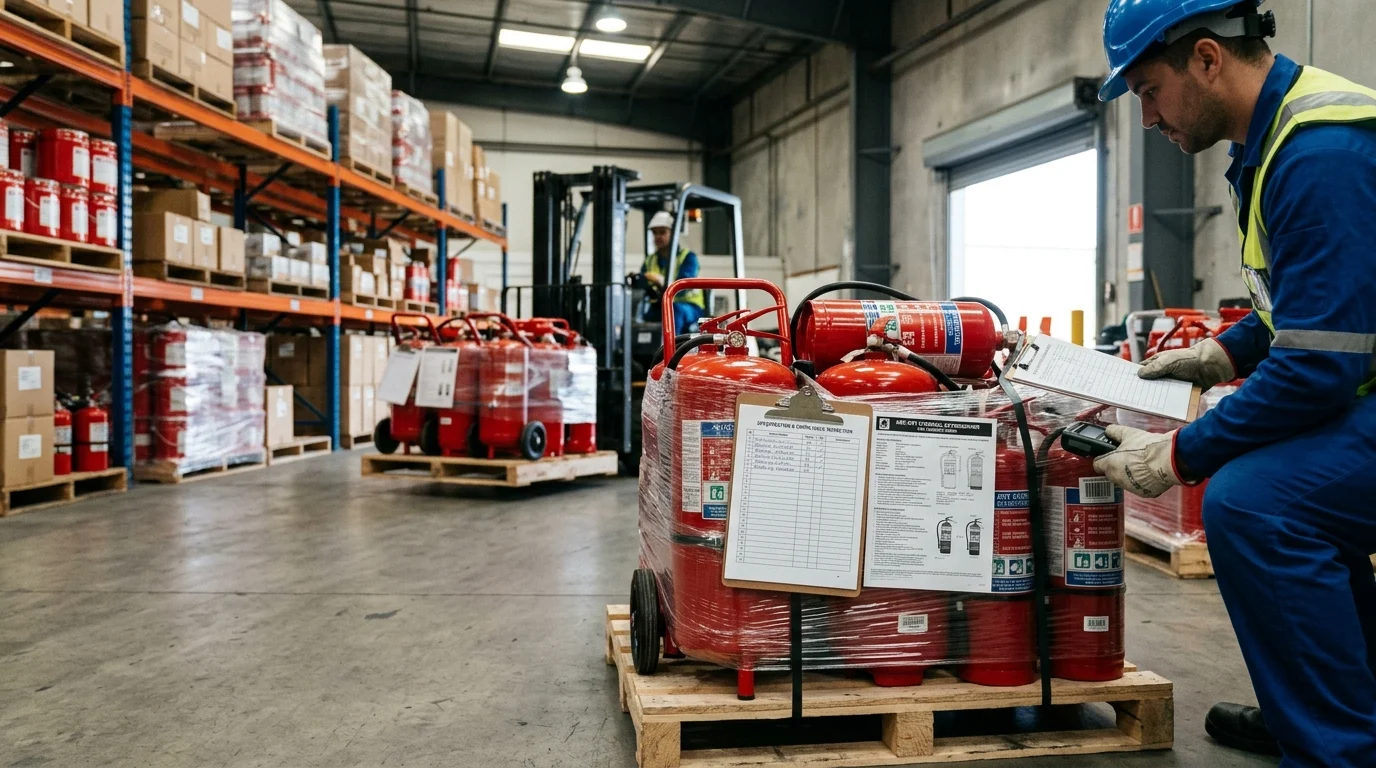
The transition from product concept to mass production relies entirely on the precision of the technical dossier. In the fire equipment sector, ambiguous specifications do not merely result in commercial disputes; they precipitate catastrophic failures during life-threatening emergencies.
Consequently, buyers must translate their operational requirements into quantifiable, engineering-grade metrics. Factories can only guarantee compliance when every material grade, dimensional tolerance, and performance threshold is explicitly documented.
Fire Equipment Categories Requiring Strict Specifications
Certain categories of fire equipment demand exceptionally stringent manufacturing tolerances due to their high-stress operating environments. Pressurized vessels, such as portable extinguishers and engineered suppression cylinders, must withstand rigorous hydrostatic testing. Standard units often require burst pressure thresholds exceeding 4.8 MPa (approximately 700 psi), while heavy-duty CO2 cylinders may require thresholds up to 25 MPa.
Similarly, fire sprinkler heads require precise thermal sensitivity, with glass bulb activation temperatures calibrated to tolerances as tight as ±3°C. Fire hoses must be specified not only by their diameter and length but by their jacket weaving density, synthetic rubber lining thickness, and adhesion strength, which must typically exceed 20 N/mm to prevent delamination under high-pressure flow.
Translating Standards and Certifications into Requirements
Regulatory standards dictate the baseline for all technical specifications. Translating these standards requires embedding specific testing protocols directly into the OEM contract, ensuring the factory understands that compliance is a continuous obligation, not a one-time sample requirement.
| Region / Market | Portable Extinguishers | Fire Detection & Alarms | Sprinkler Systems |
|---|---|---|---|
| North America | UL 299 / UL 711 | UL 268 / NFPA 72 | UL 199 / FM 2000 |
| Europe | EN 3 / CE (PED) | EN 54 | EN 12259 |
| Australia | AS/NZS 1841 | AS 1670 | AS 4118 |
For instance, a product designed for the European market must comply with the EN3 standard for portable extinguishers or EN54 for fire detection systems. Conversely, North American markets mandate strict compliance with NFPA codes and Underwriters Laboratories (UL) or Factory Mutual (FM) certifications.
Technical Documents Needed Before Sample Development
A comprehensive technical package must be finalized before requesting sample development. This dossier must include a detailed Bill of Materials (BOM) specifying exact raw material grades, such as CW617N brass for valves rather than generic alloys, to definitively prevent dezincification and corrosion over a 10-year lifespan.
Engineering teams must provide 2D manufacturing drawings with clear geometric dimensioning and tolerancing (GD&T) to a precision of ±0.05 mm for critical moving parts, alongside 3D CAD models. Furthermore, the dossier should outline acceptable surface finish standards, such as specifying 60-80 microns for UV-resistant polyester powder coating on extinguisher cylinders, to ensure environmental durability.
Evaluating and Comparing Fire Equipment Factories
Selecting a manufacturing partner in the fire safety sector requires looking past polished marketing materials to assess the fundamental engineering and quality control infrastructure of the facility. A rigorous evaluation process separates highly capable industrial partners from mere assemblers.
Because the cost of a product failure is measured in lives and extreme liability, the auditing phase must be uncompromising. Procurement teams must deploy standardized metrics to evaluate potential factories on equal footing.
Key Factory Audit Criteria
A comprehensive factory audit must scrutinize the supplier’s Quality Management System (QMS), verifying active ISO 9001:2015 certification at a minimum. For fire equipment, auditors must focus heavily on in-process quality control (IPQC) rather than relying solely on final, end-of-line inspections.
Critical checkpoints include the calibration frequency of pressure testing rigs (which should occur bi-annually), the presence of automated helium leak detection systems, and the strict traceability of raw material batches. A highly capable fire equipment factory should demonstrate a historical defect rate of less than 0.1% (1,000 PPM) on critical life-safety components and maintain an on-site testing laboratory equipped for salt spray corrosion testing and metallurgical analysis.
Shortlisting Suppliers with a Comparison Table
Creating a structured evaluation matrix allows procurement teams to objectively compare shortlisted suppliers across critical operational metrics, balancing capability against commercial constraints.
| Audit Criteria | Supplier A (Tier 1) | Supplier B (Tier 2) | Supplier C (Tier 3) |
|---|---|---|---|
| Production Capacity | 150,000 units/month | 80,000 units/month | 30,000 units/month |
| In-House Lab Testing | Full Hydro/Metallurgical | Basic Pressure Only | Outsourced |
| Standard MOQ | 2,000 units | 1,000 units | 500 units |
| Defect Rate (PPM) | < 800 PPM | ~ 1,500 PPM | > 3,000 PPM |
| Lead Time (FCL) | 45 Days | 30 Days | 25 Days |
While Supplier C offers lower MOQs and faster lead times, their reliance on outsourced testing and higher defect rates introduce unacceptable risks for life-safety products. This makes Supplier A or B the more viable candidates for long-term OEM cooperation.
Assessing Engineering Support and Quality Systems
Beyond physical infrastructure, the depth of a factory’s engineering support is a critical differentiator. Evaluate the ratio of dedicated R&D engineers to production floor staff; a healthy benchmark in technical manufacturing is roughly 1 engineer for every 15 to 20 production workers.
The factory must demonstrate proficiency in utilizing the Production Part Approval Process (PPAP) and Failure Mode and Effects Analysis (FMEA) to preemptively identify manufacturing risks. Furthermore, robust traceability systems—such as laser-etched batch coding on every single valve and cylinder—are non-negotiable requirements for managing potential product recalls efficiently.
Managing the OEM Process from Inquiry to Approval
The operational execution of an OEM agreement moves the project from theoretical alignment to physical production. This phase demands strict project management to navigate the complexities of sampling, cost negotiation, and intellectual property protection.
Missteps during this intermediary phase often lead to delayed market launches or cost overruns. Both parties must adhere to a tightly managed schedule of deliverables, testing, and commercial validations.
Inquiry, Quotation, Sampling, Testing, and Approval Steps
The process begins with a formal Request for Quotation (RFQ), which typically requires 10 to 14 days for the factory to accurately analyze tooling costs, material yields, and labor times. Once pricing is conditionally approved, the sampling phase commences, with First Article Inspection (FAI) samples usually taking 30 to 45 days to produce.
Crucially, these samples must undergo both internal evaluation and third-party certification testing. For fire equipment, securing regulatory approvals (like UL, FM, or CE) on new OEM designs can extend the timeline by 3 to 6 months, requiring close coordination between the buyer, the factory’s compliance engineers, and the independent testing laboratory.
OEM Pricing Drivers and Trade-Offs
Understanding the cost drivers in fire equipment manufacturing is essential for effective negotiation. Raw material indices, particularly the global commodity prices for copper, zinc, and specialized deep-drawn steel, account for 50% to 70% of the final product cost.
Buyers must navigate engineering trade-offs carefully. For instance, opting for cast brass instead of forged brass for a valve body might reduce unit costs by 12% to 15%, but it introduces higher risks of porosity and micro-leaks under high pressure. Procurement teams should mandate open-book pricing models, where the factory breaks down costs by material weight, machining time, assembly labor, and overhead, allowing for data-driven negotiations.
Contracts, Intellectual Property, Packaging, and Branding
Legal and logistical frameworks must be formalized before mass production begins. Standard Non-Disclosure Agreements (NDAs) are insufficient; buyers must execute NNN agreements that are strictly enforceable in the manufacturer’s local jurisdiction, explicitly stating that all custom tooling, molds, and CNC programs remain the exclusive property of the buyer.
Additionally, packaging specifications must meet international dangerous goods regulations if applicable. Pressurized fire extinguishers require UN-approved corrugated cartons—typically double-wall, 5-ply Kraft paper with a minimum edge crush test (ECT) rating of 44 lbs/in—to withstand the rigors of ocean freight without compromising the integrity of the cylinder valves.
Making the Final Supplier Decision
The culmination of the vetting and sampling process is the final supplier award. This decision must balance commercial objectives with the uncompromising reality that fire safety equipment failures carry severe legal, financial, and moral liabilities.
Choosing the right OEM partner is not merely about securing the lowest unit price; it is about establishing a resilient supply chain capable of scaling alongside the brand’s market expansion while maintaining flawless quality.
Warning Signs of Unacceptable Risk
Procurement teams must remain vigilant for red flags that indicate unacceptable operational risk. A major warning sign is the unauthorized subcontracting of critical processes, such as cylinder welding or valve machining, to unvetted tier-3 workshops to cut overhead costs.
Other disqualifying factors include the inability to produce valid, up-to-date certificates for testing equipment calibration, or a refusal to allow unannounced inspections by independent quality assurance agencies like SGS or Intertek. If a factory exhibits high turnover among its quality control management or relies on outdated manual documentation rather than a digital ERP system, the risk of batch-to-batch inconsistency is critically high.
Balancing Compliance, Cost, and Reliability
The final decision requires navigating the ‘iron triangle’ of compliance, cost, and reliability. In the fire equipment sector, cost must never be prioritized at the expense of compliance. A factory offering a 10% unit cost reduction is not a viable partner if their cost-saving measures increase the field failure rate from 0.05% to just 1.5%.
The total cost of ownership must account for the catastrophic potential costs of product recalls, warranty claims, and brand damage. Therefore, the ideal OEM partner is one that offers transparent, mid-market pricing while demonstrating an unyielding, documented commitment to material integrity and in-process quality control.
Building a Scalable Cooperation Roadmap
A successful OEM partnership is built on a scalable, long-term roadmap rather than a single transactional order. The cooperation should commence with a controlled pilot run—for example, 500 to 1,000 units—to validate the factory’s mass production consistency and logistics handling.
Upon successful delivery and field testing of the pilot batch, order volumes can be confidently scaled to full container loads; a standard 20-foot container typically holds around 3,500 standard 6kg dry powder extinguishers. Establishing quarterly business reviews (QBRs) and setting targets for continuous improvement, such as reducing lead times from 45 days to 35 days over a 12-month period, ensures the factory remains aligned with the buyer’s operational goals.
Key Takeaways
- Start OEM cooperation only after defining exact product specifications, compliance targets, packaging requirements, quality standards, and inspection methods.
- Budget realistically for pre-production costs, as bespoke tooling and third-party testing can require about $20,000 to $150,000 before mass production.
- Confirm that your projected order volume can meet typical MOQs, such as 1,000 to 2,000 units per run for common extinguisher projects.
- Use enforceable NNN or confidentiality agreements before sharing drawings, proprietary valve designs, extinguishing agent formulas, or other technical files.
- Evaluate factories on manufacturing capability, ISO 9001 systems, product certifications, export experience, and their ability to support regulated global markets.
- Treat OEM fire equipment production as a regulated life-safety partnership, not simple contract manufacturing, because compliance and field reliability remain critical.
Frequently Asked Questions
What does OEM cooperation mean in fire equipment manufacturing?
It means a factory produces fire safety products to the buyer’s specifications, drawings, materials, branding, and quality requirements. The buyer usually retains control over design, compliance targets, and brand responsibility.
When is OEM production commercially worthwhile?
OEM production usually makes sense when sales volume can support tooling, certification, and MOQs. For products like 6kg dry chemical extinguishers, savings may reach 20% to 35% if order volumes are sufficient.
What should buyers prepare before contacting a fire equipment factory?
Buyers should prepare technical specifications, target standards, budget, expected MOQ, packaging needs, quality criteria, and legal documents such as NNN or confidentiality agreements before sharing drawings or proprietary data.
Which certifications matter for fire equipment OEM projects?
Relevant certifications depend on the target market and product type. Common requirements include ISO 9001 factory systems and product approvals such as UL/FM, LPCB, BSI, TUV, or MED for global fire protection markets.
What products can NBWorldFire support for B2B fire protection buyers?
NBWorldFire supplies fire hydrants, landing valves, hose nozzles, couplings, connectors, hose reels, cabinets, extinguishers, valves, flanges, pipeline connectors, CO2 accessories, and fire extinguisher parts.

Post time: Jun-24-2026