

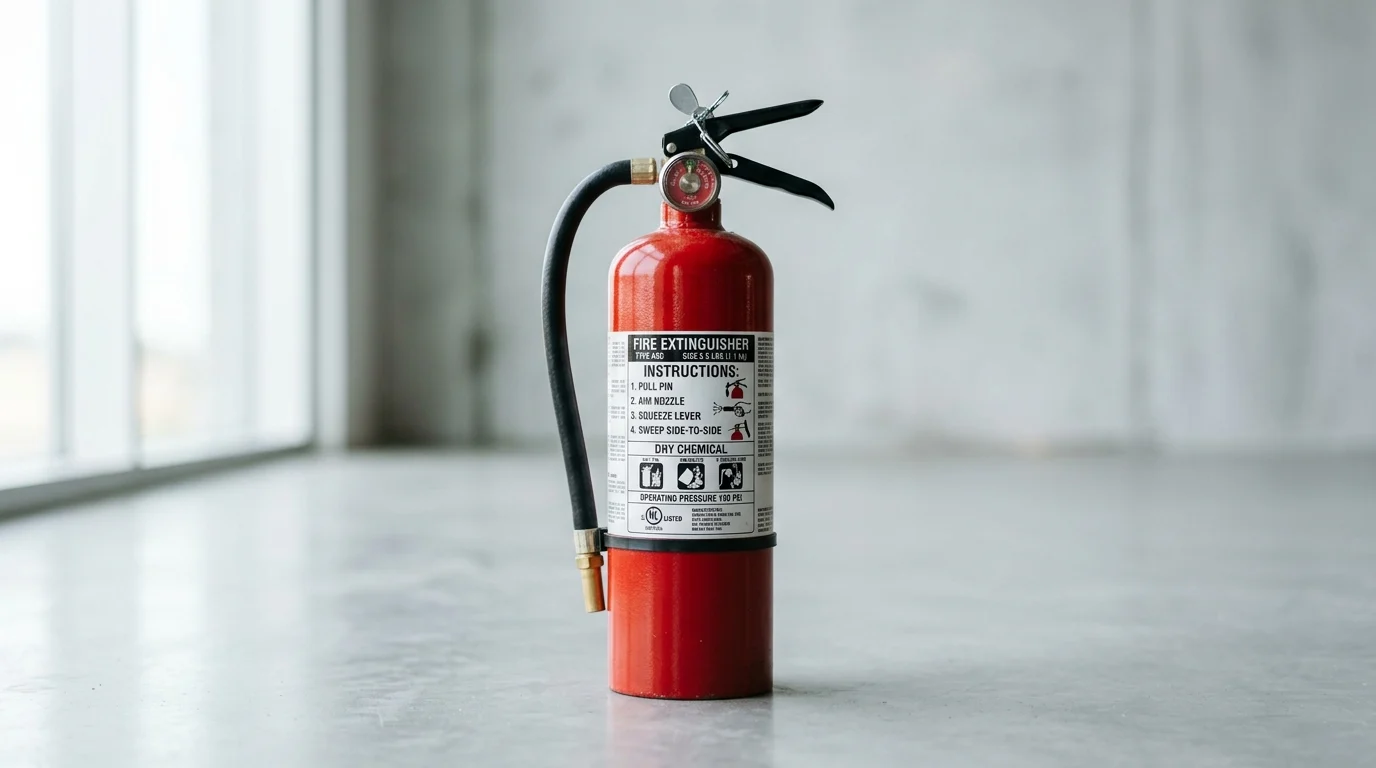
Introduction
Routine flow testing of a MED jet/spray fire hose nozzle confirms that a vessel’s most immediate manual firefighting tool still delivers the pressure, flow, and spray pattern required in service. Onboard conditions, fire main performance, wear, and saltwater exposure can all affect nozzle output, so a simple visual check is not enough. This introduction outlines what a proper onboard flow test is meant to verify, including water delivery, jet reach, spray quality, and compliance with marine safety expectations. It also prepares you for the practical steps, equipment checks, and test criteria used to judge whether the nozzle remains fit for emergency use.
Why Flow Testing a MED Fire Hose Nozzle Matters
Maintaining the operational readiness of marine fire-fighting equipment is a fundamental requirement for maritime safety. A MED jet/spray fire hose nozzle serves as the primary manual firefighting tool onboard commercial vessels. Ensuring these nozzles deliver the correct water volume and spray pattern under emergency conditions is non-negotiable. Regular onboard flow testing verifies that the equipment meets statutory performance baselines and operates reliably under the vessel’s specific fire main pressure.
The International Maritime Organization, operating under the umbrella of the United Nations, mandates strict performance criteria for fire safety systems through the SOLAS convention. Flow testing translates these international mandates into practical, ship-specific readiness, ensuring that critical hydraulic parameters have not degraded due to marine environment exposure, internal scaling, or mechanical wear.
Article scope and testing goals
The primary objective of this guide is to establish a standardized protocol for verifying the performance of MED-certified dual-purpose nozzles in a shipboard environment. Testing goals include validating the volumetric flow rate, confirming the structural integrity of the jet stream, and assessing the uniformity of the protective spray curtain.
Specifically, the process aims to confirm that the nozzle can deliver the statutory minimum throw distance of 12 meters when supplied with the minimum required pressure—typically 0.27 N/mm² (2.7 bar) for cargo ships and 0.32 N/mm² (3.2 bar) for passenger vessels. Achieving these benchmark goals ensures that the firefighting team can maintain a safe standoff distance during an active thermal event.
Who should use this guide
This protocol is designed for maritime professionals directly responsible for vessel safety and maintenance. Chief engineers, safety officers, and designated shipboard personnel will use these procedures to fulfill their planned maintenance system (PMS) obligations efficiently.
Additionally, marine surveyors and third-party safety auditors can leverage these standardized steps to verify compliance during annual statutory surveys. By following a structured approach, all stakeholders can ensure that the vessel’s firefighting capabilities remain uncompromised and fully compliant with maritime directives.
Definitions, Ratings, and Test Criteria to Confirm
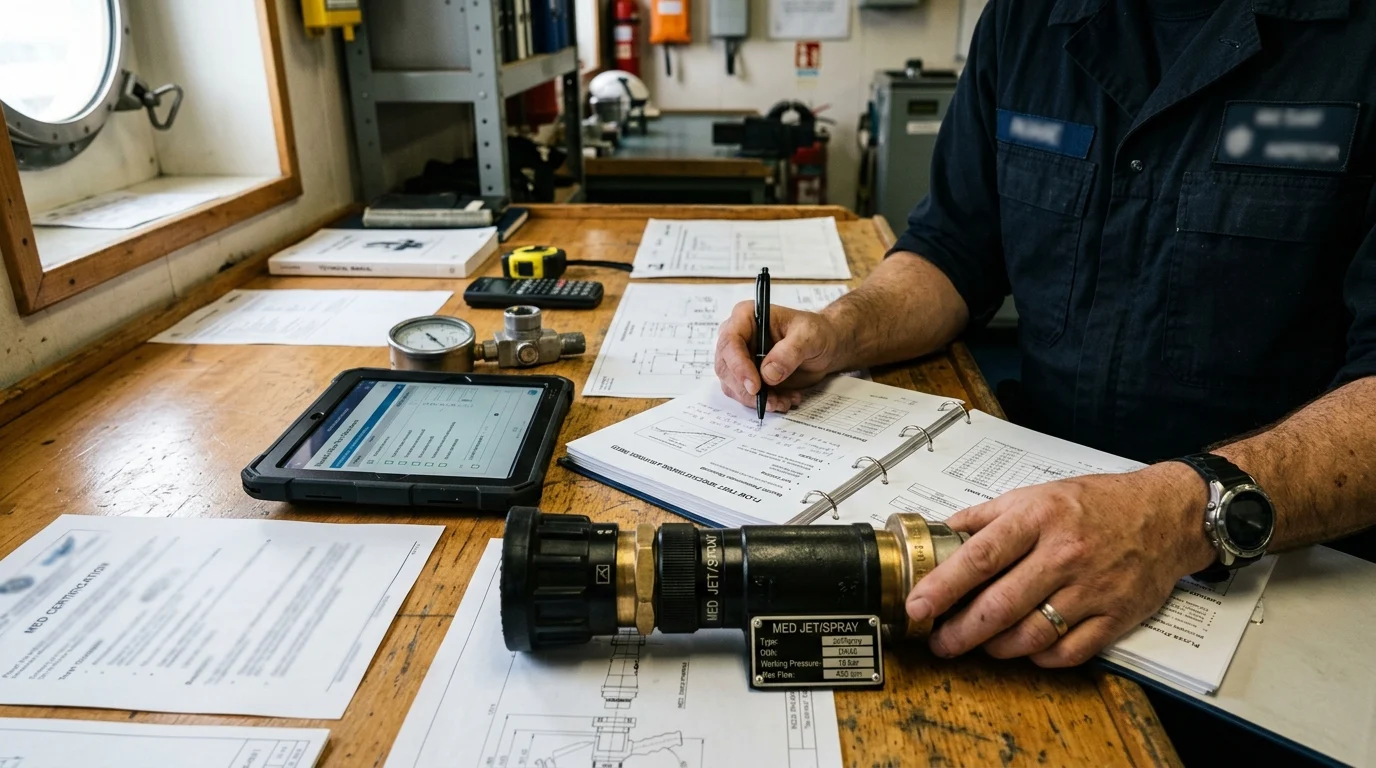
Marine Equipment Directive (MED) compliance relies heavily on rigorous international frameworks, often integrating standards published by organizations like ISO. Before initiating a flow test, operators must understand the specific terminology, certifications, and acceptable performance limits that dictate a successful evaluation.
Familiarity with the nozzle’s baseline ratings prevents false failure reports and ensures that the testing conditions accurately reflect the manufacturer’s certified operational envelope.
Key terms and certifications
A MED-certified nozzle is identifiable by the ‘Wheelmark’ insignia, which guarantees that the equipment has passed stringent prototype testing for marine environments. Key operational terms include the ‘Straight Jet’ mode, designed for maximum reach and penetration, and the ‘Spray’ mode, which creates a protective water curtain with an angle typically ranging from 45 to 90 degrees.
The ‘K-factor’ is a critical metric in these evaluations. It represents the discharge coefficient of the nozzle, allowing operators to calculate the expected flow rate at any given pressure using the formula Q = K * sqrt(P). Verifying the K-factor during testing confirms that the internal waterways of the nozzle are free from obstruction and wear.
Required ratings and acceptance limits
Required ratings for MED fire hose nozzlees](https://www.nbworldfire.com/fire-nozzles/) are dictated by the size of the vessel and the specific fire main installation. However, standard acceptance limits require the nozzle to perform flawlessly across an operating pressure range of 0.2 MPa to 0.6 MPa (2 to 6 bar).
The table below outlines standard performance expectations for a typical 16mm equivalent MED dual-purpose nozzle:
| Nozzle Mode | Minimum Pressure | Target Flow Rate | Minimum Throw Distance |
|---|---|---|---|
| Straight Jet | 0.2 MPa (2 bar) | 140 L/min | 12 meters |
| Straight Jet | 0.6 MPa (6 bar) | 240 L/min | 24 meters |
| Wide Spray (90°) | 0.2 MPa (2 bar) | 150 L/min | N/A (Protective Curtain) |
During the test, the measured flow rate must not deviate by more than ±5% from these certified baseline figures. Any deviation beyond this threshold indicates a potential mechanical issue or a drop in fire main efficiency.
How to Conduct an Onboard Flow Test
Executing an onboard flow test requires careful coordination between the bridge, the engine room, and the deck crew. Because the testing process involves high-pressure water streams and active fire main systems, strict safety controls and proper equipment preparation are paramount.
Testing should ideally be conducted on the open deck, utilizing a clear area where water discharge will not damage cargo, electrical installations, or compromise vessel stability.
Equipment, preparation, and safety controls
To capture accurate data, operators must utilize a calibrated inline flow meter with a minimum accuracy of ±2% and a pressure gauge capable of reading 0 to 10 bar. A measuring tape of at least 30 meters is required to verify the throw distance.
Safety controls must be strictly enforced. Personnel conducting the test must wear appropriate personal protective equipment (PPE), including non-slip safety footwear, high-visibility clothing, and eye protection. Communication via UHF radios must be established with the engine room to instantly secure the fire pump in the event of a hose rupture.
Step-by-step test procedure
Step 1: Connect the inline flow meter and pressure gauge directly behind the nozzle on the selected fire hose. Ensure all couplings are fully engaged and locked.
Step 2: Direct the nozzle safely over the side of the vessel or along an unobstructed deck path. Signal the engine room to start the fire pump and slowly open the fire hydrant to pressurize the line to the baseline 0.27 N/mm² (2.7 bar).
Step 3: Fully open the nozzle in the straight jet setting. Allow the stream to stabilize for 30 seconds to purge all trapped air. Record the dynamic pressure and the flow rate reading from the meter.
Step 4: Deploy the measuring tape and observe the point where the main body of the water jet impacts the deck to determine the throw distance.
Step 5: Transition the nozzle smoothly into the wide spray setting. Verify that the spray angle expands to the required minimum of 45 degrees without dry spots in the water curtain.
Common testing errors to avoid
A common error during onboard testing is conducting the evaluation in adverse weather conditions. Wind speeds exceeding 5 m/s will severely skew throw distance measurements, leading to false failures. Tests should be scheduled during calm conditions or performed on the leeward side of the vessel.
Another frequent mistake is relying on static pressure rather than dynamic pressure. Measurements must be taken while water is actively flowing; closed-valve static pressure will always read higher and invalidate the K-factor calculations. Finally, failing to straighten out kinks in the 15-meter or 20-meter fire hose can introduce excessive friction loss, dropping the pressure at the nozzle below the statutory 0.27 N/mm² minimum.
How to Evaluate Test Results
Once the physical testing phase concludes, operators must systematically evaluate the empirical data against the nozzle’s certified performance parameters. This evaluation determines whether the equipment remains fit for active duty or requires immediate corrective action.
Accurate interpretation of these results ensures compliance with SOLAS regulations and guarantees the safety of the crew during emergency response operations.
Pass or fail decision criteria
A nozzle achieves a passing grade if its measured flow rate falls within a strict ±5% tolerance band of the manufacturer’s specified rating at the tested dynamic pressure. Furthermore, the straight jet must achieve the statutory minimum throw of 12 meters without the water column breaking apart prematurely.
If the flow rate drops more than 10% below the specification, or if the spray pattern exhibits heavy asymmetry, the nozzle fails the evaluation. A failed nozzle must be immediately tagged out of service, as it compromises the hydraulic balance of the fire main and endangers the fire-fighting team.
How to compare results against specifications
To accurately compare empirical data against specifications, operators should reference the manufacturer’s official flow curve chart. If a chart is unavailable, the K-factor formula provides a reliable benchmark. For example, if a nozzle has a certified K-factor of 100 and the dynamic test pressure is 4 bar, the expected flow rate is 200 L/min.
The following troubleshooting matrix helps operators evaluate deviations:
| Observed Result | Deviation Level | Probable Cause | Required Action |
|---|---|---|---|
| Flow rate 3% below spec | Acceptable (±5%) | Normal friction loss | Log as Pass |
| Flow rate 12% below spec | Critical (>10%) | Nozzle blockage or scale | Disassemble and clean |
| Asymmetric spray pattern | Fail | Damaged baffle or debris | Overhaul or replace |
| Throw distance < 12m | Fail | Insufficient fire main pressure | Investigate fire pump output |
By cross-referencing the test data with this matrix, chief engineers can quickly identify whether a performance drop is an issue with the nozzle itself or a symptom of a broader fire main system failure.
What to Do After the Test
The conclusion of the flow test marks the beginning of the maintenance and documentation cycle. Proper post-test procedures are critical for extending the lifespan of the MED fire hose nozzle and maintaining an unbroken record of statutory compliance.
Proactive maintenance based on test results prevents emergency equipment failures and streamlines the auditing process during external safety inspections.
When to clean, recalibrate, overhaul, or replace
If a nozzle demonstrates a flow rate deviation between 5% and 10%, it should be subjected to a deep cleaning process to remove marine growth, salt crystallization, or debris from the internal waterways. If the deviation exceeds the 10% threshold, a full overhaul is mandatory.
Internal rubber components, such as O-rings and ball valve gaskets, are highly susceptible to dry rot and salt degradation. Industry best practices dictate replacing these seals every 3 to 5 years, regardless of test results. If the nozzle body exhibits significant mechanical damage, heavy corrosion, or if an overhaul fails to restore the flow rate to within the 5% tolerance band, the entire unit must be replaced with a new MED-certified equivalent.
Recommended next actions for operators
Following a successful test, operators must thoroughly drain the nozzle of all seawater. Whenever possible, flushing the equipment with fresh water is highly recommended to halt galvanic corrosion and prevent salt binding in the rotating spray head.
Finally, all test parameters—including the date, dynamic pressure, recorded flow rate, throw distance, and the specific location of the fire hydrant—must be logged into the vessel’s Planned Maintenance System (PMS). The nozzle should then be returned to its designated fire station, securely stowed, and visually tagged with the test date to signal its operational readiness to the crew and inspecting surveyors.
Key Takeaways
- The most important conclusions and rationale for https://www.nbworldfire.com
- Specs, compliance, and risk checks worth validating before you commit
- Practical next steps and caveats readers can apply immediately
Frequently Asked Questions
What pressure should I use when testing a MED jet/spray nozzle onboard?
Use the vessel’s applicable minimum pressure: typically 2.7 bar for cargo ships and 3.2 bar for passenger vessels, unless the nozzle nameplate or certificate specifies another certified test point.
How do I confirm the nozzle is MED-certified before testing?
Check for the Wheelmark on the nozzle body and verify the model, size, and certificate details against the vessel’s equipment records or the product data from nbworldfire.com.
What pass criteria should I check during the flow test?
Confirm stable flow, a clear straight jet, an even spray curtain, and at least 12 m throw at the required pressure. Measured flow should stay within about ±5% of the certified value.
What does a low flow result usually indicate?
Low flow often points to nozzle blockage, worn internals, hose kinks, partially closed valves, or weak fire main pressure. Recheck pressure first, then inspect and clean the nozzle.
Where can I find the correct nozzle specifications for comparison?
Use the nozzle nameplate, MED certificate, manufacturer datasheet, and your PMS records. If the unit is from NB World Fire, compare against the fire nozzle specifications on nbworldfire.com.
Post time: Jun-11-2026