


Choosing the right fire hydrant valve is crucial for ensuring safety and compliance in industrial settings. A well-selected industrial fire hydrant valve directly impacts the effectiveness of fire fighting equipment and fire protection systems. Proper valve selection ensures adherence to industry standards, local fire safety codes, and legal requirements. These aspects play a significant role in maintaining operational integrity and avoiding penalties. Decision-makers should consider factors such as valve type, material, and technical specifications to ensure the highest level of fire safety equipment, including UL fire hydrant valves and BS fire hydrant valves, is in place.
Key Takeaways
- Choosing the right fire hydrant valve is essential for safety and compliance in industrial settings.
- Different types of fire hydrant valves, like dry barrel and wet barrel, serve unique purposes based on climate and operational needs.
- Material selection impacts durability; ductile cast iron and stainless steel are top choices for fire hydrant valves.
- Regular maintenance, including inspections and flow tests, ensures fire hydrant valves operate effectively during emergencies.
- Consulting fire protection experts can enhance safety and compliance, ensuring reliable water supply during fire incidents.
Types of Fire Hydrant Valves

Selecting the appropriate type of fire hydrant valve is essential for effective fire protection in industrial settings. Different types of valves serve unique purposes and are designed to meet specific operational needs. Here are the main types of fire hydrant valves commonly used in industrial fire protection systems:
- Dry Barrel Fire Hydrants:
- These hydrants are ideal for cold climates. They prevent freezing by keeping the water supply below the frost line. When activated, only the upper portion of the hydrant fills with water, ensuring reliable operation even in frigid temperatures.
- Wet Barrel Fire Hydrants:
- Suitable for milder climates, wet barrel hydrants feature above-ground valves that remain filled with water. This design allows for immediate access to water, making them effective in areas where freezing is not a concern.
- Pumper Connection Hydrants:
- These hydrants include additional connections specifically designed for fire trucks. They provide firefighters with quick access to a larger water supply, enhancing firefighting capabilities during emergencies.
- Flush Hydrants:
- Designed for high-traffic areas, flush hydrants sit flat with the ground. They minimize obstruction and allow for easy access without interfering with vehicle movement.
In addition to hydrants, various valve types play critical roles in fire safety equipment:
- Gate Valve: This common valve type is reliable and easy to operate. It provides a straightforward on/off function, making it suitable for isolating sections of the water supply.
- Butterfly Valve: This valve controls water flow using a disc mechanism. It is efficient for regulating flow and is often used in larger systems.
- Check Valve: This valve prevents backflow in municipal systems, ensuring that water flows in one direction only. It is crucial for maintaining system integrity.
- Plug Valve: Although less common in firefighting, plug valves are used primarily in wastewater applications. They offer a simple on/off function but are not typically favored for fire protection.
Understanding the differences between these valve types can significantly impact the effectiveness of fire protection systems. For instance, the choice between a globe valve and a gate valve can influence flow control and shut-off performance. Globe valves excel in regulating flow, while gate valves are best for isolation purposes.
| Aspect | Globe Valve | Gate Valve |
|---|---|---|
| Primary Function | Excellent for flow control and throttling | Best for isolation — on/off operation |
| Pressure Drop / Flow Efficiency | Higher pressure drop due to internal design | Low pressure drop when fully open |
| Shut-off Performance | Tight shut-off with good sealing | Effective shut-off when fully closed |
| Maintenance / Operability | Generally easier to service in place | Simpler design but may require more effort |
Choosing the right type of fire hydrant valve is vital for ensuring safety and compliance in industrial environments. Each valve type has its advantages and disadvantages, and understanding these can help decision-makers select the most appropriate option for their specific needs.
Material Considerations for Fire Safety Equipment
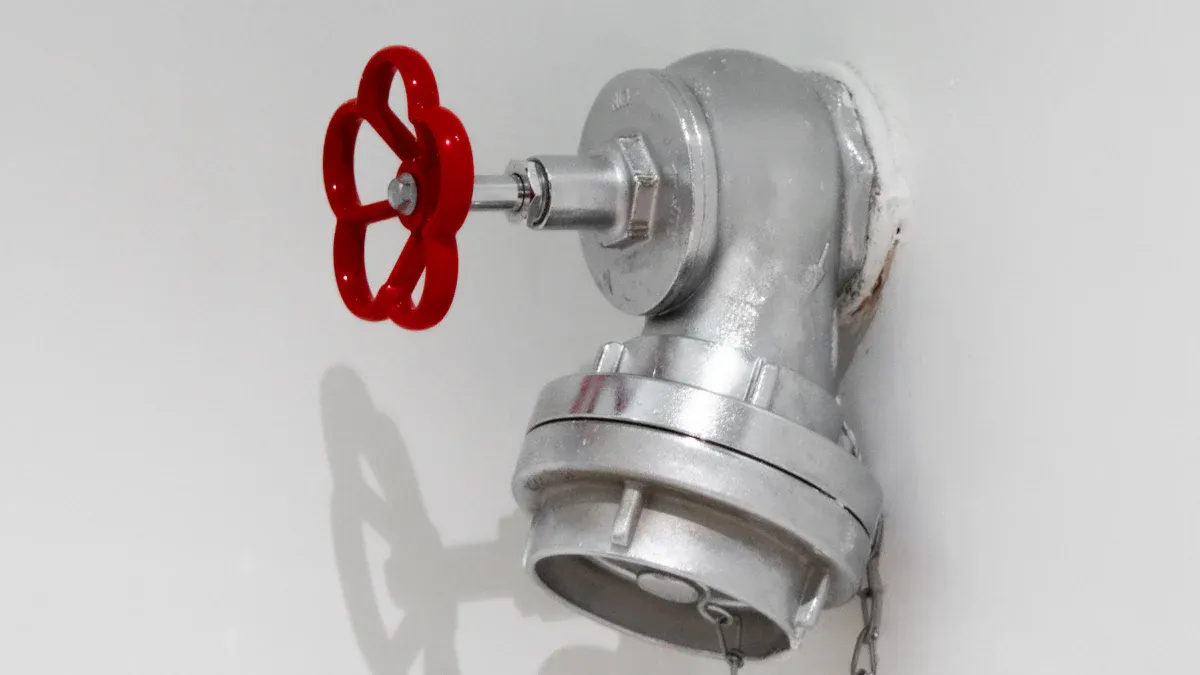
Selecting the right materials for fire hydrant valves is essential for ensuring durability and reliability in industrial fire protection systems. The materials used directly affect the performance, longevity, and safety of the fire safety equipment. Here are some key materials commonly utilized in the manufacturing of fire hydrant valves:
- Ductile Cast Iron: This material is gaining popularity due to its strength and resistance to collisions. It provides excellent durability in high-impact environments.
- Brass: Often used for fittings, brass is cost-effective and offers good corrosion resistance. However, it can be susceptible to dezincification in certain environments.
- Carbon Steel: Known for its strength, carbon steel is often used in applications requiring robust construction.
- Stainless Steel: This material is favored for its high corrosion resistance, especially in harsh environments.
- Cast Iron: A traditional choice, cast iron provides durability but may require protective coatings to enhance its corrosion resistance.
When evaluating materials, corrosion resistance plays a critical role. The following table compares the corrosion resistance of brass and stainless steel, two commonly used materials in fire hydrant valves:
| Material | Corrosion Resistance |
|---|---|
| Brass | Moderate; develops patina and is susceptible to dezincification in chlorides/sulfides. |
| Stainless Steel | High; Type 316 withstands salt spray for over 1,000 hours without rust. |
Environmental factors such as temperature and humidity significantly influence the performance of these materials. For instance, in marine environments, bronze is often preferred over brass due to its superior resistance to salt-induced damage. Bronze, primarily composed of copper and tin, provides natural corrosion resistance, making it ideal for areas with high humidity and salinity.
Additionally, adherence to fire safety standards is crucial when selecting materials for fire hydrant valves. The following table outlines key standards and their focus areas:
| Standard | Focus | Importance |
|---|---|---|
| API | Performance and safety benchmarks | Ensures reliability under high-pressure and high-temperature conditions |
| JIS | Precision and quality | Ideal for applications requiring strict dimensional accuracy |
| BS | Durability and safety | Emphasizes safety in industrial and municipal settings |
| UL | Environmental stress | Validates ability to withstand environmental conditions |
| FM | Fire safety | Ensures functionality in firefighting applications |
| ISO | Quality and consistency | Confirms product quality across diverse markets |
Technical Specifications
When selecting a fire hydrant valve for industrial fire protection systems, understanding technical specifications is vital. These specifications ensure that the chosen valve meets operational requirements and safety standards. Here are key specifications to consider:
| Specification Type | Details |
|---|---|
| Certification Requirements | UL or FM approved valves are often required for fire protection service. |
| Pressure and Temperature | Typical systems operate at 175 PSI, with some requiring 250 PSI or higher. |
| Valve Material | Options include carbon steel and stainless steel based on application. |
| End Connection Type | Wafer, Lug, Grooved, or Flanged based on installation needs. |
| Tamper Switch Requirements | Compatibility with supervisory switches is necessary. |
| Maintenance and Access | Consider ease of operation and clearance for maintenance. |
| Pipe Size and Flow Needs | Larger pipes may require specific designs for optimal flow. |
Flow rates and pressure ratings vary among different fire hydrant valve models. For example, wet barrel hydrants typically have a pressure rating of 100 PSI or higher, allowing for higher flow rates due to their design. In contrast, dry barrel hydrants operate at lower pressures, which may limit flow rates based on operational needs.
| Hydrant Type | Pressure Rating (PSI) | Flow Rate Impact |
|---|---|---|
| Wet Barrel Hydrant | 100+ | Higher flow rates due to design |
| Dry Barrel Hydrant | Lower than wet | Lower flow rates due to operational needs |
Connection types also influence installation and compatibility. Flanged connections handle high pressure and flow, making them suitable for robust systems. Threaded connections allow for quick installation but are limited to lower pressure systems. Grooved connections offer flexibility and fast installation but may not withstand high pressure as effectively.
| Connection Type | Advantages | Disadvantages |
|---|---|---|
| Flanged | Handles high pressure and flow, easy maintenance | More complex installation |
| Threaded | Quick installation, easy maintenance | Limited to lower pressure systems |
| Grooved | Fast installation, flexible, absorbs vibration | May not handle high pressure as well as flanged |
Understanding these technical specifications helps ensure that the selected fire hydrant valve meets the specific needs of the industrial environment, enhancing overall fire safety equipment effectiveness.
Maintenance Requirements
Regular maintenance of fire hydrant valves is crucial for ensuring operational reliability and safety in industrial fire protection systems. A well-maintained valve can significantly enhance the effectiveness of fire safety equipment during emergencies. Here are some key maintenance activities and their recommended frequencies:
| Maintenance Activity | NFPA Frequency | Enhanced Frequency | Key Benefits |
|---|---|---|---|
| Visual Inspection | Annual | Semi-annual | Early problem detection, reduced emergency repairs |
| Flow Test | Every 5 years | Every 3 years | Performance verification, capacity confirmation |
| Operational Test | Annual | Annual | Mechanical function verification, valve operation |
| Lubrication | As needed | Annual | Smooth operation, reduced wear, extended life |
Regular maintenance impacts the operational reliability of fire hydrant valves in several ways:
- Inspection: Regular visual checks help identify faulty hydrants quickly.
- Flow Testing & Exercising: Ensures adequate water supply and identifies issues like reduced flow or pressure.
- Lubrication and Operation: Regular lubrication ensures smooth functioning of moving parts.
- Flagging and Tagging: Helps in quick identification and access during emergencies.
Common maintenance challenges include:
| Maintenance Challenge | Description |
|---|---|
| Cleaning | Prevents debris buildup and corrosion, ensuring unobstructed water flow and extending the valve’s lifespan. |
| Lubrication | Reduces friction between moving parts, preventing wear and tear, and improves sealing to avoid leaks. |
| Testing | Verifies performance and ensures adequate water pressure, confirming the valve’s capacity and functionality. |
| Documentation | Provides a clear history of the valve’s condition, supporting compliance with regulations and reducing penalty risks. |
Best practices for inspecting and servicing fire hydrant valves include:
- Implementing a biannual or annual testing and maintenance program based on hydrant type and climate.
- Exercising the fire hydrant to ensure proper operation.
- Lubricating the hydrant according to manufacturer instructions to prevent corrosion.
- Flushing the hydrant to remove foreign materials that could block the valve.
- Checking for standing water to prevent freezing in cold climates.
A well-maintained fire hydrant valve can last between 25 to 50 years, making regular maintenance a worthwhile investment for industrial facilities.
Selecting the right fire hydrant valve involves several critical factors. Decision-makers must consider valve types, materials, and technical specifications to ensure optimal performance. Safety and compliance remain paramount in industrial settings.
Consulting with fire protection experts offers numerous benefits:
- Ensures reliable water supply during fire incidents
- Helps maintain system pressure and flow balance
- Supports testing, maintenance, and quick isolation
- Enhances safety, compliance, and operational readiness
Avoid common mistakes, such as improper installation and neglecting manufacturer specifications. Engaging with professionals can lead to tailored solutions that enhance fire safety systems.
FAQ
What is the primary function of a fire hydrant valve?
Fire hydrant valves control water flow in fire protection systems. They enable firefighters to access water quickly during emergencies, ensuring effective firefighting efforts.
How often should fire hydrant valves be inspected?
The National Fire Protection Association (NFPA) recommends annual inspections. However, semi-annual checks can enhance reliability and identify potential issues early.
What materials are best for fire hydrant valves?
Ductile cast iron and stainless steel are popular choices. They offer durability and corrosion resistance, essential for maintaining performance in harsh environments.
Are there specific certifications for fire hydrant valves?
Yes, look for UL or FM certifications. These ensure that the valves meet safety and performance standards required for fire protection systems.
How can I ensure proper installation of fire hydrant valves?
Engage qualified professionals for installation. They will follow manufacturer specifications and local codes, ensuring optimal performance and compliance with safety regulations.
Post time: Mar-31-2026