

Introduction
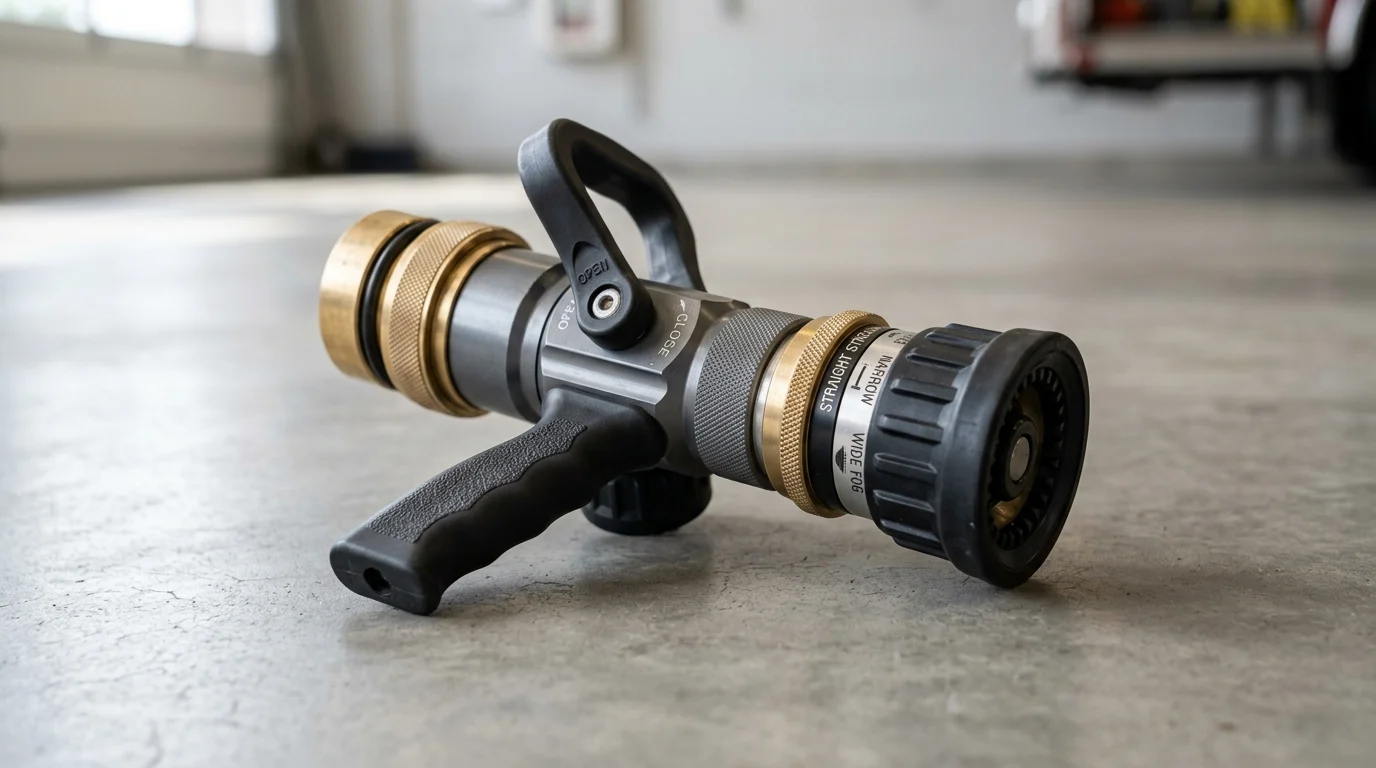
Choosing the right fire nozzle for an industrial setting is not a minor equipment decision; it directly affects reach, flow control, agent distribution, and the ability to suppress high-heat, high-risk fires. Different hazards, from flammable liquid storage to processing equipment and loading areas, demand different stream patterns, pressure ranges, and compatibility with water or foam systems. This article explains the main factors that drive nozzle selection, including application type, discharge performance, operating environment, and system integration. By the end, readers will have a practical framework for matching a fire nozzle to industrial hazards, operational demands, and overall fire protection strategy.
Why Fire Nozzle Selection Matters in Industrial Operations
Industrial fire protection systems rely heavily on the precise application of suppression agents to mitigate catastrophic hazards. While pumps, piping, and detection networks form the infrastructure of a fire protection system, the fire nozzle serves as the critical delivery endpoint. Selecting the correct fire nozzle dictates whether the available water or foam supply will effectively penetrate the thermal plume, cool the fuel source, and achieve extinguishment. Inadequate selection compromises the entire suppression strategy, risking facility destruction, environmental contamination, and severe personnel injury.
Impact on suppression performance
The fundamental purpose of a fire nozzle is to convert the potential energy of pressurized water into kinetic energy, shaping it into a functional stream. Suppression performance hinges on achieving the optimal droplet size, reach, and flow rate. If the droplet size is too small, the water may vaporize prematurely in the thermal draft before reaching the seat of the fire. Conversely, excessively large droplets may lack the surface area required for rapid heat absorption. Industrial operations frequently require high-volume delivery, often utilizing master stream nozzles capable of discharging between 500 and 2,000 gallons per minute (GPM) to overcome the massive heat release rates typical of industrial fuel loads.
High-demand industrial environments
High-demand industrial environments—such as petrochemical refineries, offshore drilling platforms, and heavy manufacturing plants—present unique challenges that dictate nozzle selection. These settings frequently expose equipment to highly corrosive atmospheres, extreme ambient temperatures exceeding 1,000°F during localized blowouts, and severe mechanical impacts. Standard municipal fire nozzles are often inadequate for these conditions. Instead, industrial facilities require specialized metallurgical compositions, such as corrosion-resistant brass or stainless steel, alongside advanced hydraulic designs to maintain continuous operation during prolonged, high-intensity suppression operations.
Fire Nozzle Types and Key Performance Specifications
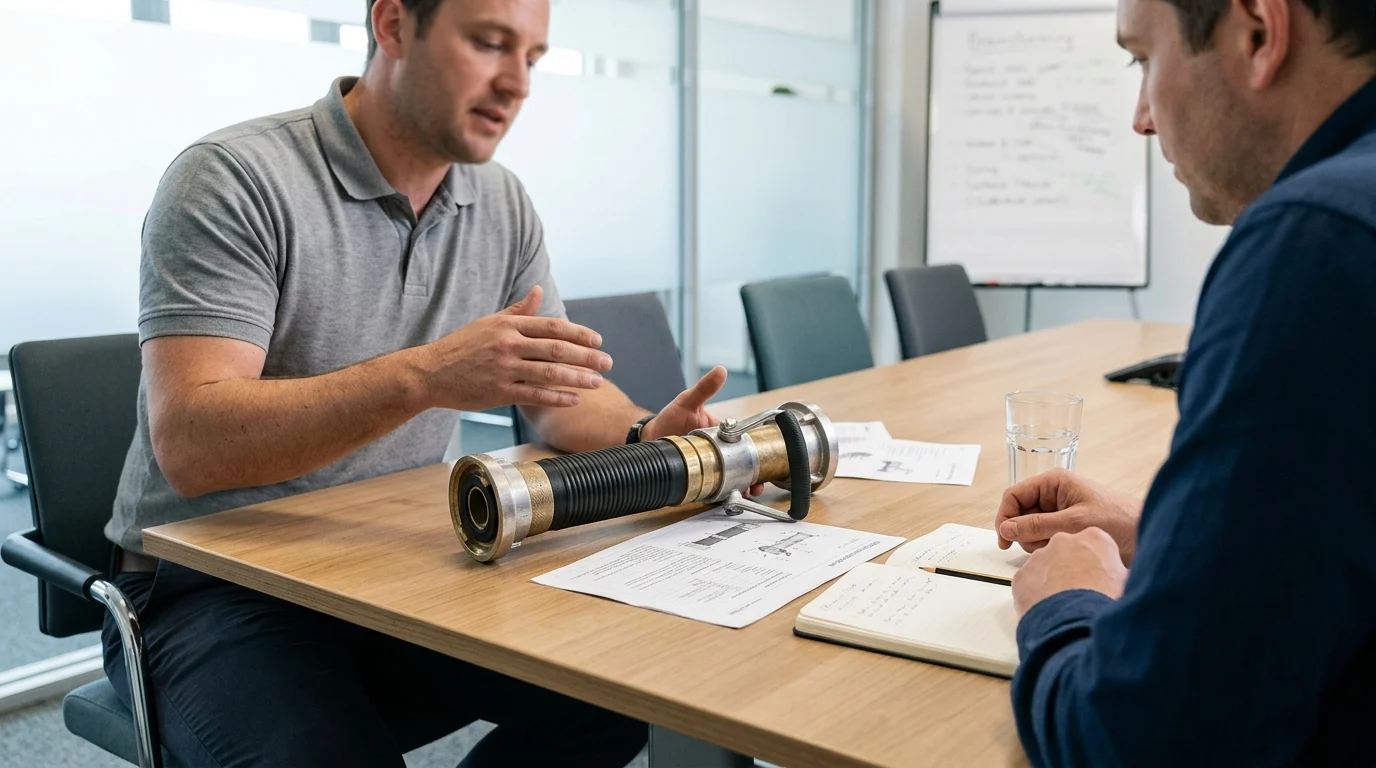
Evaluating fire nozzle types requires a deep understanding of hydraulic specifications and how they align with specific industrial applications. Buyers must navigate a variety of designs, each engineered to manage flow, pressure, and stream geometry differently.
Main nozzle types and use cases
The primary categories of handline and monitor nozzles include smooth bore, fixed gallonage, selectable gallonage, and automatic nozzles. Smooth bore nozzles provide a solid stream with maximum reach and penetration, operating effectively at lower pressures. Fixed gallonage nozzles deliver a specific flow rate at a rated pressure, offering simplicity and reliability. Selectable gallonage nozzles allow operators to manually adjust the flow rate via a rotating bezel while maintaining a constant pressure. Automatic nozzles feature an internal spring-loaded baffle that dynamically adjusts to fluctuating inlet pressures, maintaining a consistent stream reach even when water supply conditions vary.
Core specifications: flow, pressure, pattern
Core specifications revolve around flow (measured in GPM or liters per minute), pressure (measured in PSI or bar), and stream pattern capabilities. Traditional combination nozzles are rated for standard operating pressures of 100 PSI (7 bar). However, to reduce operator fatigue and manage nozzle reaction, many industrial facilities are adopting low-pressure nozzles engineered to operate at 50 or 75 PSI while delivering the same GPM. Stream pattern adjustability—ranging from a straight stream for maximum reach to a wide fog pattern for personnel protection and heat absorption—is also a critical specification for versatile hazard response.
Comparison criteria for industrial buyers
When comparing nozzles, industrial buyers must evaluate hydraulic efficiency, material compatibility, and operational flexibility against the specific hazards of their facility.
| Nozzle Type | Typical Operating Pressure | Flow Control | Primary Industrial Application |
|---|---|---|---|
| Smooth Bore | 50 PSI | Fixed based on tip size | Deep penetration into solid combustibles |
| Fixed Gallonage | 75 – 100 PSI | Factory set | Foam application, predictable flow systems |
| Selectable Gallonage | 100 PSI | Operator adjustable | Variable hazard zones requiring flow flexibility |
| Automatic | 75 – 100 PSI | Dynamic (maintains pressure) | Systems with fluctuating pump pressures |
Matching a Fire Nozzle to Hazard Conditions
A high-performance fire nozzle is only effective if it is correctly matched to the specific hazard profile and the existing hydraulic infrastructure of the facility.
Fuel, occupancy, and ventilation factors
Hazard analysis dictates the required suppression agent and delivery method. Class B hazards involving flammable liquids require nozzles compatible with foam concentrates. The heat release rate (HRR) of the specific fuel determines the critical application rate. For example, extinguishing a hydrocarbon spill fire typically requires a minimum foam application rate of 0.16 GPM per square foot. Furthermore, enclosed occupancies with poor ventilation may necessitate wide fog patterns to rapidly absorb heat and cool gases, whereas outdoor tank farms require straight streams with superior wind resistance and reach.
Hose, pump, water, and foam system fit
The fire nozzle must function seamlessly with the facility’s hoses, pumps, and proportioning systems. Friction loss within the hose lay must be calculated to ensure adequate residual pressure reaches the nozzle inlet. Additionally, the cumulative flow of deployed nozzles cannot exceed the capacity of the fire pump; deploying two 1,000 GPM monitor nozzles simultaneously requires a pump rated well above 2,000 GPM to account for system inefficiencies. When utilizing foam, the nozzle must provide appropriate aeration, typically achieving expansion ratios between 3:1 and 8:1 for non-aspirating nozzles used with modern foam concentrates.
Common selection mistakes
A frequent error in industrial fire protection is neglecting nozzle reaction force, which compromises operator safety. Nozzle reaction is directly proportional to flow and pressure. For instance, flowing 250 GPM at 100 PSI generates approximately 126 pounds of reaction force, significantly exceeding the generally accepted safety threshold of 85 pounds for a single operator. Another common mistake is mismatching thread standards—such as specifying National Hose (NH) threads for a facility plumbed with National Pipe Straight Hose (NPSH) fittings—which prevents deployment during an emergency.
Compliance, Maintenance, and Lifecycle Cost
Beyond initial hydraulic performance, procurement teams must evaluate the total lifecycle cost of fire nozzles, factoring in regulatory compliance, maintenance requirements, and supply chain reliability.
Standards, approvals, and site policies
Industrial fire nozzles must adhere to stringent industry standards and third-party certifications to ensure reliability and satisfy insurance underwriters. NFPA 1964 (Standard for Spray Nozzles) establishes rigorous design, performance, and testing criteria. For example, compliant nozzles must successfully pass a hydrostatic pressure test at 900 PSI without structural failure. Additionally, facilities often require equipment to hold FM Approvals or UL listings, which verify that the nozzles have undergone independent, destructive testing to validate the manufacturer‘s performance claims.
Inspection, training, and durability
Durability directly impacts the maintenance schedule and overall lifecycle cost. Nozzles constructed from hardcoat anodized aluminum (Mil-Spec Type III) offer a lightweight solution suitable for freshwater systems, but they may degrade rapidly in petrochemical environments. Conversely, cast brass or bronze nozzles provide superior resistance to corrosive atmospheres and saltwater, often achieving a 15- to 20-year lifecycle, albeit at a significantly higher weight. Regular inspection and flow testing, mandated annually by NFPA 1962, are essential to ensure internal baffles, spinning teeth, and shutoff valves remain fully operational.
Vendor and sourcing evaluation
Evaluating vendors involves analyzing their manufacturing capabilities, quality assurance processes, and logistical reliability. Industrial buyers should assess the vendor’s warranty terms, availability of replacement parts, and technical support services. Supply chain factors are equally critical; customized industrial monitor nozzles or specific thread configurations may require Minimum Order Quantities (MOQs) or entail lead times ranging from 4 to 12 weeks. Selecting a vendor with localized distribution can drastically reduce downtime when emergency replacements are necessary.
Final Fire Nozzle Selection Process
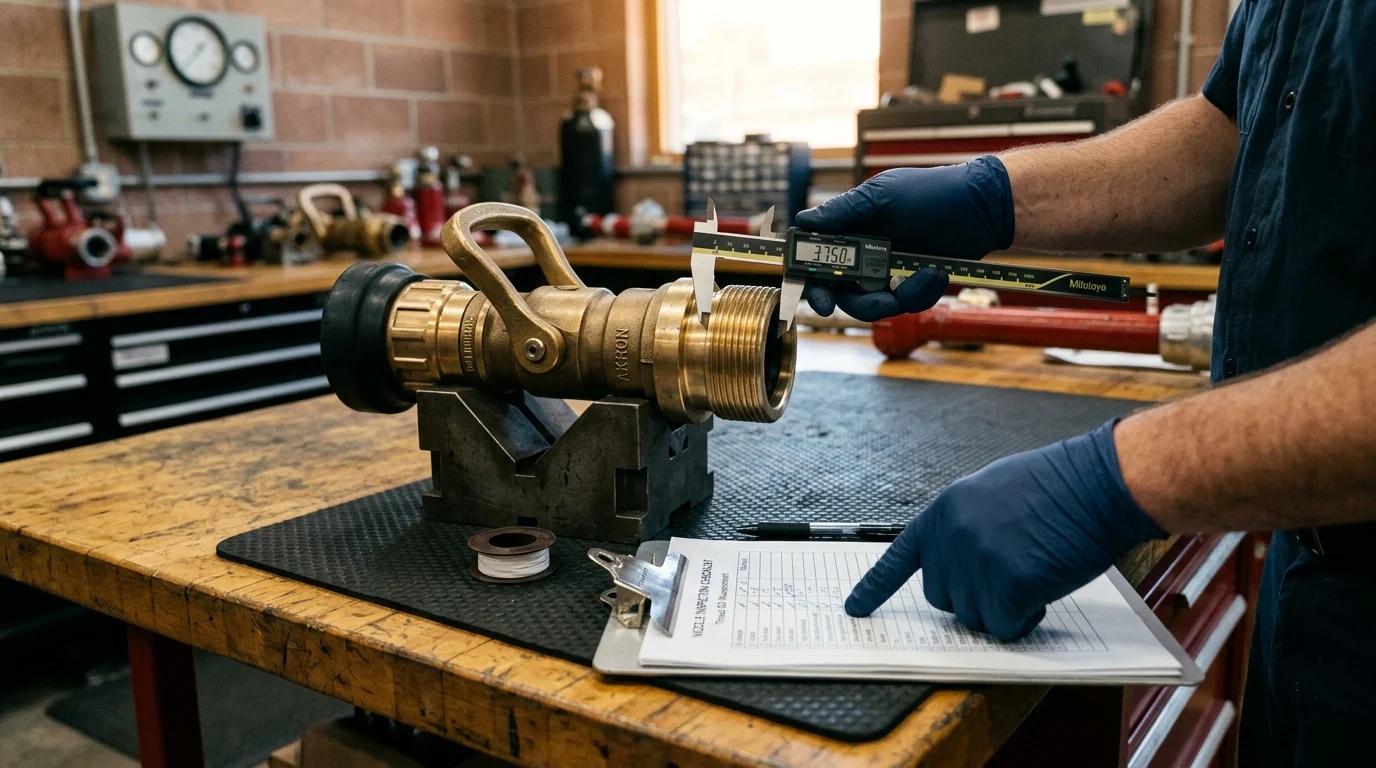
Executing a structured selection process ensures that all hydraulic, environmental, and regulatory variables are systematically addressed before finalizing a purchase order.
Step-by-step selection workflow
The selection workflow begins with a comprehensive hazard vulnerability analysis to determine required flow rates and agent types. Next, engineers must perform hydraulic calculations, applying a 10% to 15% safety margin to pump capacity to account for friction loss and potential system degradation over time. Once the required specifications (GPM, PSI, and pattern) are established, procurement teams narrow down the nozzle types and material compositions. Finally, the selected models are cross-referenced against site-specific thread standards and required third-party certifications (e.g., FM/UL) before soliciting vendor quotes.
Using a decision matrix
To formalize the evaluation, industrial buyers often utilize a decision matrix to objectively score competing fire nozzles based on weighted criteria. This analytical approach strips away marketing bias and focuses purely on performance metrics and lifecycle value.
| Evaluation Criteria | Weight (%) | Key Metric / Indicator | Minimum Acceptable Threshold |
|---|---|---|---|
| Hydraulic Performance | 35% | Flow rate (GPM) at rated pressure | Matches site hazard application rate |
| Material Durability | 25% | Corrosion resistance (Alloy type) | 10-year projected lifecycle |
| Compliance & Approvals | 20% | FM Approved / UL Listed / NFPA | Valid third-party certification |
| Ergonomics & Safety | 10% | Nozzle reaction force (lbs) | < 85 lbs for handline operations |
| Vendor Lead Time | 10% | Delivery schedule (weeks) | Maximum 8-week lead time |
Key Takeaways
- The most important conclusions and rationale for fire nozzle
- Specs, compliance, and risk checks worth validating before you commit
- Practical next steps and caveats readers can apply immediately
Frequently Asked Questions
Which fire nozzle type is best for long reach in industrial fires?
A smooth bore nozzle is usually best for maximum reach and penetration, especially on solid fuel fires or high-heat areas where a strong straight stream is needed.
How do I match a fire nozzle to my facility’s water pressure?
Check your available pump pressure and required flow. Use low-pressure, fixed, selectable, or automatic nozzles only within their rated PSI or bar to avoid weak performance or excessive nozzle reaction.
When should an industrial buyer choose a fog nozzle?
Choose a fog-capable nozzle when you need adjustable patterns for heat absorption, personnel protection, or wider coverage, especially in mixed-risk manufacturing or processing areas.
What materials are best for fire nozzles in corrosive industrial environments?
For refineries, marine sites, or chemical plants, select corrosion-resistant brass or stainless steel nozzles to improve durability and maintain reliable operation under harsh conditions.
Why buy certified fire nozzles from NBWorldFire?
NBWorldFire serves global B2B buyers with ISO 9001:2015 manufacturing and products certified for worldwide markets, helping distributors and industrial users source reliable, regulation-ready fire nozzle solutions.
Post time: May-18-2026