

Introduction
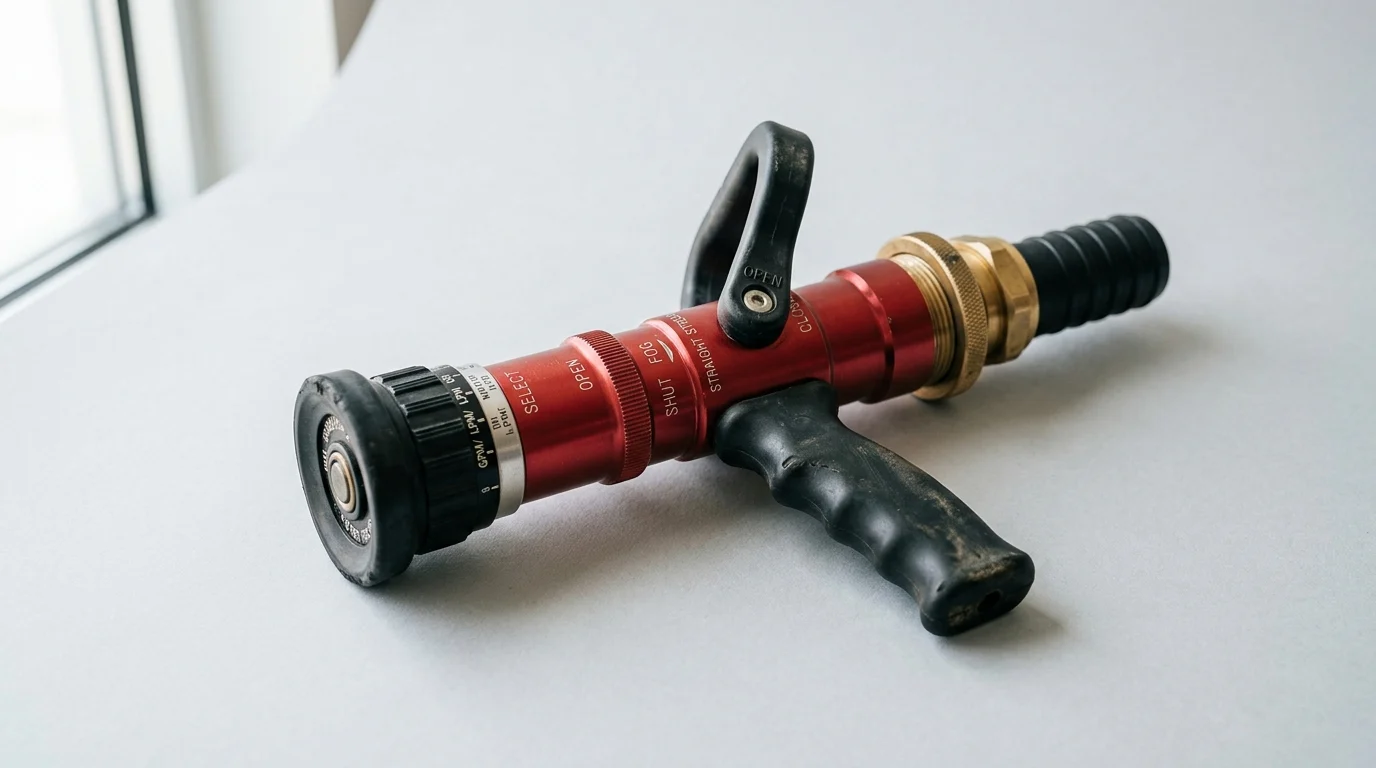
In industrial firefighting, the nozzle is not a minor accessory but a control point for reach, flow, droplet size, and reaction force. The right choice affects how well water or foam penetrates heat, protects equipment, and stays manageable for operators under demanding conditions. This article explains the key factors that drive nozzle selection, including hazard type, pressure and flow requirements, stream pattern, foam application needs, and handling limits. By the end, readers will have a practical framework for matching a fire nozzle to specific industrial risks and operating conditions, making the technical details in the sections ahead easier to evaluate and apply.
Why Fire Nozzle Selection Matters in Industrial Settings
Industrial firefighting demands precision, reliability, and an acute understanding of fluid dynamics. The selection of a fire nozzle is a foundational decision that directly dictates hydraulic efficiency, agent application rates, and tactical capability during high-stress suppression operations.
Impact on Suppression Performance and Operator Safety
The primary function of a nozzle is to shape water or foam solution into a strategically useful stream, but its design profoundly impacts both extinguishment efficacy and operator safety. Droplet size and stream reach determine how effectively the extinguishing agent penetrates thermal columns. For instance, smaller droplets maximize surface area for heat absorption but lack the mass to penetrate high-velocity thermal updrafts.
Conversely, operator safety is heavily dictated by nozzle reaction force. The reaction force for a solid stream is calculated using the formula NR = 1.57 × d² × p, where a 1.25-inch tip operating at 50 PSI generates approximately 122 pounds of reaction force. Exceeding ergonomic thresholds—typically 60 to 75 pounds for a single operator—can lead to rapid fatigue, loss of stream control, and severe workplace injuries.
Industrial Fire Scenarios That Influence Nozzle Choice
Industrial environments present complex hazard profiles that far exceed standard municipal fire scenarios. Facilities such as petrochemical refineries, bulk storage warehouses, and chemical processing plants often feature fire scenarios with extreme heat release rates (HRR). An industrial liquid spill fire can easily generate an HRR exceeding 100 megawatts, necessitating massive cooling capacities and high-volume flow rates.
In a chemical processing unit, the presence of pressurized gas lines might require a wide protective fog pattern to shield the advance team while they isolate the fuel source. Selecting the correct nozzle requires mapping these specific operational environments to the equipment’s delivery capabilities, ensuring the hardware can handle the anticipated thermal loads and specific chemical hazards present on site.
Fire Nozzle Types and Key Performance Specifications
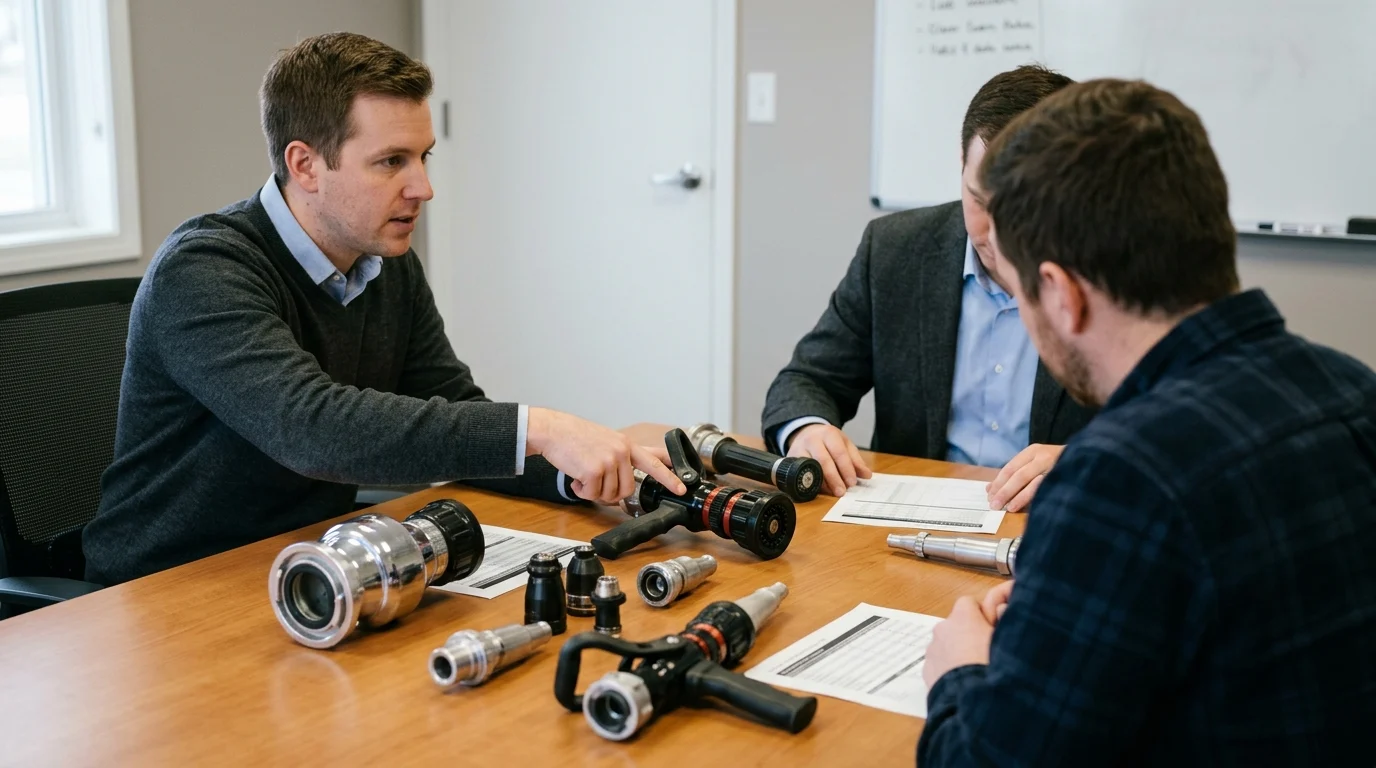
Categorizing nozzles by their operational mechanics is critical for aligning the hardware with the facility’s existing hydraulic infrastructure. The internal engineering of the nozzle dictates how water is shaped, accelerated, and delivered to the hazard zone.
Smooth Bore, Fog, Selectable Gallonage, and Automatic Nozzles
Industrial fire brigades typically choose between smooth bore and various configurations of fog nozzles. Smooth bore nozzles deliver a solid column of water at lower operating pressures—frequently 50 PSI—providing maximum reach, deep penetration, and minimal air entrainment, which is crucial for preventing the disruption of thermal layers.
Fog nozzles, which can produce patterns ranging from straight streams to wide protective cones, are subdivided into fixed gallonage, selectable gallonage, and automatic variants. Selectable gallonage nozzles allow operators to manually adjust the flow rate (e.g., 95, 125, 150, or 200 GPM) while maintaining a constant pump discharge pressure. Automatic nozzles utilize an internal spring mechanism to maintain a near-constant nozzle pressure—typically 75 or 100 PSI—across a variable flow range, optimizing the stream reach even if pump pressures fluctuate during complex industrial incidents.
Critical Specifications: Flow Rate, Pressure, Reach, and Pattern
Evaluating critical specifications ensures the nozzle will perform adequately under site-specific hydraulic conditions. Flow rate (measured in Gallons Per Minute or Liters Per Minute) and operating pressure are the most fundamental metrics. A mismatch between the nozzle’s design pressure and the system’s delivery pressure will result in either an unmanageable reaction force or a flaccid, ineffective stream.
| Nozzle Type | Typical Operating Pressure | Flow Control Mechanism | Primary Industrial Advantage |
|---|---|---|---|
| Smooth Bore | 50 PSI (3.5 Bar) | Fixed by tip size | Maximum reach, high penetration, low reaction force. |
| Fixed Gallonage Fog | 50, 75, or 100 PSI | Fixed internal baffle | Reliable proportioning for foam applications. |
| Selectable Gallonage | 75 or 100 PSI | Manual rotating collar | Tactical flexibility for varying fire loads. |
| Automatic Fog | 75 or 100 PSI | Pressure-regulating spring | Consistent stream reach under variable pump pressures. |
How to Match a Fire Nozzle to Industrial Hazards and
A successful deployment relies on seamlessly matching the nozzle’s discharge characteristics to the specific chemical hazards and the overarching hydraulic system of the industrial facility. A nozzle is only one component of a broader suppression ecosystem.
Matching Nozzles to Flammable Liquid, Electrical, and General Fi
re Risks
Different fire classifications demand distinct application techniques and agent compatibilities. For Class B flammable liquid hazards, the fire nozzle must effectively deliver foam solutions. While standard fog nozzles can apply non-aspirated foam with expansion ratios around 3:1 to 5:1, specialized aspirating attachments are often required to achieve ratios up to 20:1 for a thicker, more resilient vapor-suppressing blanket.
When addressing Class C electrical fires in power generation facilities, solid streams pose a severe electrocution risk. Instead, a finely atomized fog pattern is mandated. Industry guidelines generally require maintaining a minimum clearance distance of 10 feet from live high-voltage equipment while utilizing a fog pattern at a minimum of 100 PSI to ensure the water droplets remain disconnected, thereby preventing electrical conductivity back to the operator.
System Factors: Hose Configuration, Pump Capacity, and Foam Prop
ortioning
The nozzle must be hydraulically compatible with the facility’s hose configurations, pump capacities, and foam proportioning systems. Friction loss within the hose lay is a critical variable; for example, flowing 150 GPM through a 1.75-inch hose generates approximately 30 to 35 PSI of friction loss per 100 feet.
If a facility utilizes long hose lays (e.g., 300 feet or more), a low-pressure 50 PSI nozzle may be necessary to ensure adequate flow without exceeding the maximum discharge pressure limits of the on-site fire pump. Furthermore, when using inline foam eductors, the nozzle’s flow rating must precisely match the eductor’s rating (e.g., a 125 GPM eductor paired strictly with a 125 GPM nozzle) to prevent back-pressure from disrupting the Venturi effect, which would otherwise result in a lean, ineffective foam mixture.
Compliance, Durability, and Lifecycle Cost Considerations
Procurement of industrial firefighting equipment extends beyond hydraulic performance into the realms of regulatory compliance, environmental durability, and long-term asset management. Industrial settings expose equipment to corrosive chemicals, extreme weather, and severe mechanical abuse.
Standards, Testing, and Site Approval Requirements
Industrial fire nozzles must adhere to rigorous manufacturing and performance standards to guarantee reliability during catastrophic events. In North America, NFPA 1964 (Standard for Spray Nozzles) dictates stringent performance baselines. To achieve compliance, a nozzle must withstand a hydrostatic pressure test of 900 PSI without structural failure and endure a 6-foot drop test onto a concrete surface without compromising its operational mechanisms.
Additionally, many industrial facilities, particularly those insured by global risk management firms, require equipment to carry FM Global approvals or UL listings. These certifications provide independent verification that the nozzle will perform precisely to its published specifications under extreme industrial conditions, thereby satisfying both safety audits and insurance underwriting requirements.
Maintenance, Training, and Total Cost of Ownership
Total Cost of Ownership (TCO) encompasses the initial purchase price, routine maintenance, and the operational lifespan of the equipment. Material selection plays a dominant role in TCO. Hard-coat anodized aluminum is standard for its lightweight properties, but in corrosive environments like coastal refineries or chemical plants, heavier cast brass or stainless steel may be required to prevent rapid degradation.
| Material Type | Initial Cost Index | Est. Lifespan (Industrial) | Avg. Weight (1.5-inch Nozzle) | Corrosion Resistance |
|---|---|---|---|---|
| Anodized Aluminum | $$ | 7 – 10 Years | 3.5 – 5.0 lbs | Moderate (Vulnerable to galvanic corrosion) |
| Cast Brass | $$$ | 15 – 20+ Years | 10.0 – 14.0 lbs | Excellent (Ideal for marine/heavy chemical) |
| Stainless Steel | $$$$ | 20+ Years | 8.0 – 11.0 lbs | Superior (Maximum durability) |
Training costs must also be factored into the TCO. Complex automatic nozzles require more intensive operator training to interpret flow dynamics and higher maintenance budgets for internal spring calibrations, whereas smooth bore nozzles require minimal maintenance and offer highly intuitive operation.
A Practical Process for Choosing the Right Fire Nozzle
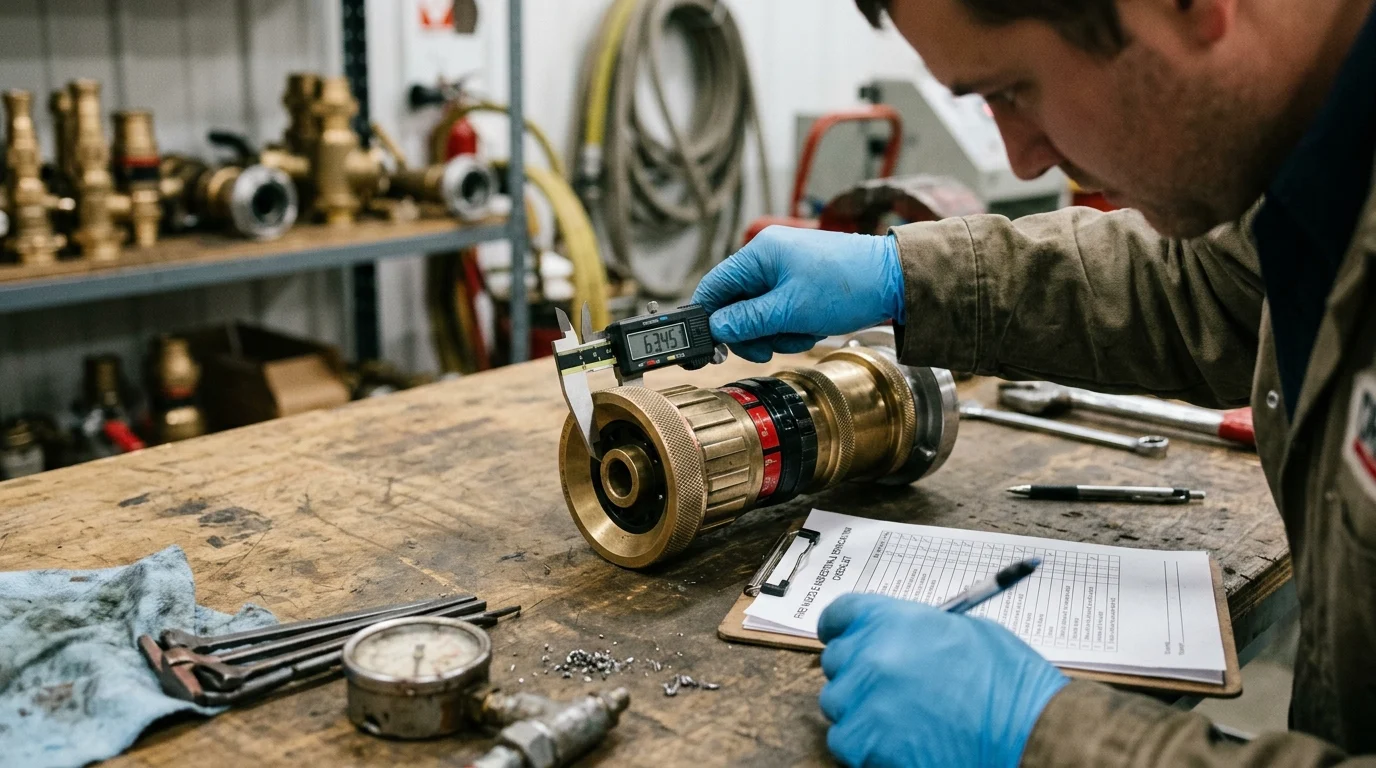
Establishing a standardized procurement protocol ensures consistency, safety, and operational efficiency across industrial emergency response teams. A methodical approach mitigates the risk of selecting incompatible or ergonomically hazardous equipment.
Step-by-Step Evaluation and Shortlisting
The evaluation process must begin with a comprehensive hazard assessment to identify the primary fire risks (e.g., polar solvents, pressurized gases, combustible dust). Next, engineers must perform hydraulic calculations based on the facility’s existing fire pumps and standpipe pressures to determine the maximum available flow and pressure at the most remote hose station.
Once the hydraulic parameters are established, the procurement team should shortlist nozzles that operate within these limits—for instance, filtering for 150 GPM nozzles operating at 75 PSI. The final shortlisting step involves tactile evaluation by the brigade members. Field testing allows operators to assess the ergonomics of the bail handle, the smoothness of the pattern selection ring, and the manageability of the reaction force while wearing full personal protective equipment (PPE).
Final Decision Criteria for Performance, Compliance, and Cost
The final decision rests on a balanced matrix of hydraulic performance, regulatory compliance, and fiscal constraints. While a premium automatic fog nozzle may offer unparalleled tactical flexibility with an upfront cost ranging from $800 to $1,500 per unit, it may introduce unnecessary complexity for a facility that primarily requires rapid, high-volume cooling via $300 smooth bore tips.
Decision-makers must prioritize compatibility with existing foam concentrates and proportioners, as mismatched systems can render expensive hardware entirely ineffective. Ultimately, selecting the right fire nozzle requires prioritizing the safety margins of the operator, ensuring that the chosen hardware can deliver the required critical application rate (e.g., 0.16 GPM per square foot for specific spill fires) without exceeding the physical limitations of the response team.
Key Takeaways
- The most important conclusions and rationale for fire nozzle
- Specs, compliance, and risk checks worth validating before you commit
- Practical next steps and caveats readers can apply immediately
Frequently Asked Questions
Which fire nozzle type is best for long reach in industrial firefighting?
A smooth bore nozzle is usually best for long reach and deep penetration. It operates around 50 PSI, gives lower reaction force, and suits high-heat industrial fires where stream stability matters.
When should I choose a fog nozzle instead of a smooth bore nozzle?
Choose a fog nozzle when you need adjustable patterns, crew protection, or foam application. It is useful around chemical processes, gas lines, and situations requiring a wide protective cone or flexible flow control.
How do I match nozzle pressure to my fire system?
Check the nozzle’s rated operating pressure against your pump, hose layout, and expected flow. A mismatch can reduce reach or create excessive reaction force, making the nozzle harder and less safe to control.
What certifications should industrial buyers look for in a fire nozzle?
Look for products meeting your market and project requirements, such as UL/FM, LPCB, BSI, TUV, or MED where applicable. For global procurement, also confirm the manufacturer has ISO 9001:2015 quality management.
Can NBWorldFire supply fire nozzles for industrial and marine projects?
Yes. NBWorldFire manufactures hose nozzles and related fire protection equipment for industrial and marine use, supporting global B2B buyers who need reliable, certified products matched to different risk and compliance needs
Post time: May-19-2026