

Introduction
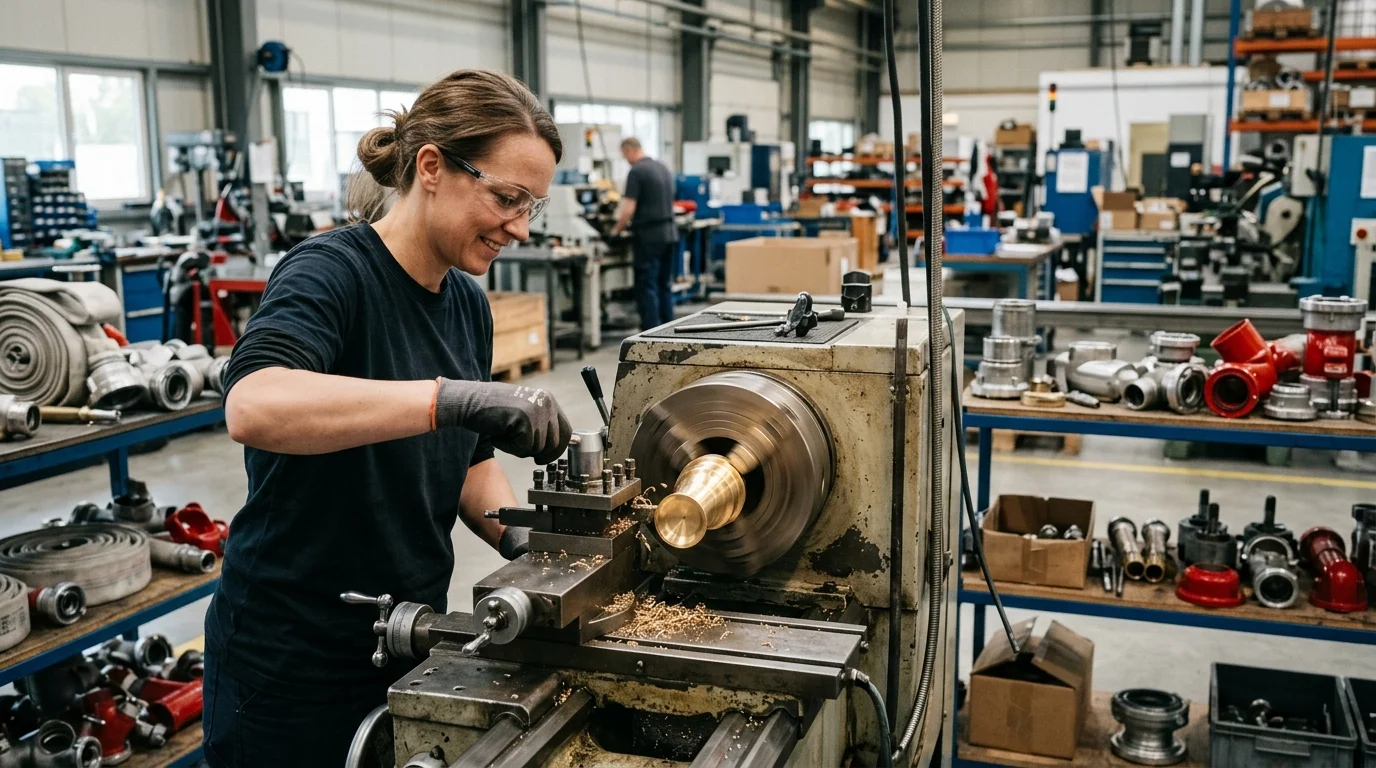
Global distributors depend on manufacturing partners that can do more than assemble standard products. In fire equipment manufacturing, OEM support influences product quality, customization, compliance, and supply reliability across different markets. This article explains the capabilities that matter most, from precision engineering and scalable production to tooling flexibility and process control. It also shows how the right factory relationship can improve a distributor’s ability to meet local requirements, protect margins, and respond quickly to demand without sacrificing safety or consistency.
How Fire Equipment Manufacturing Strengthens Commercial Position
OEM Capabilities That Matter Most
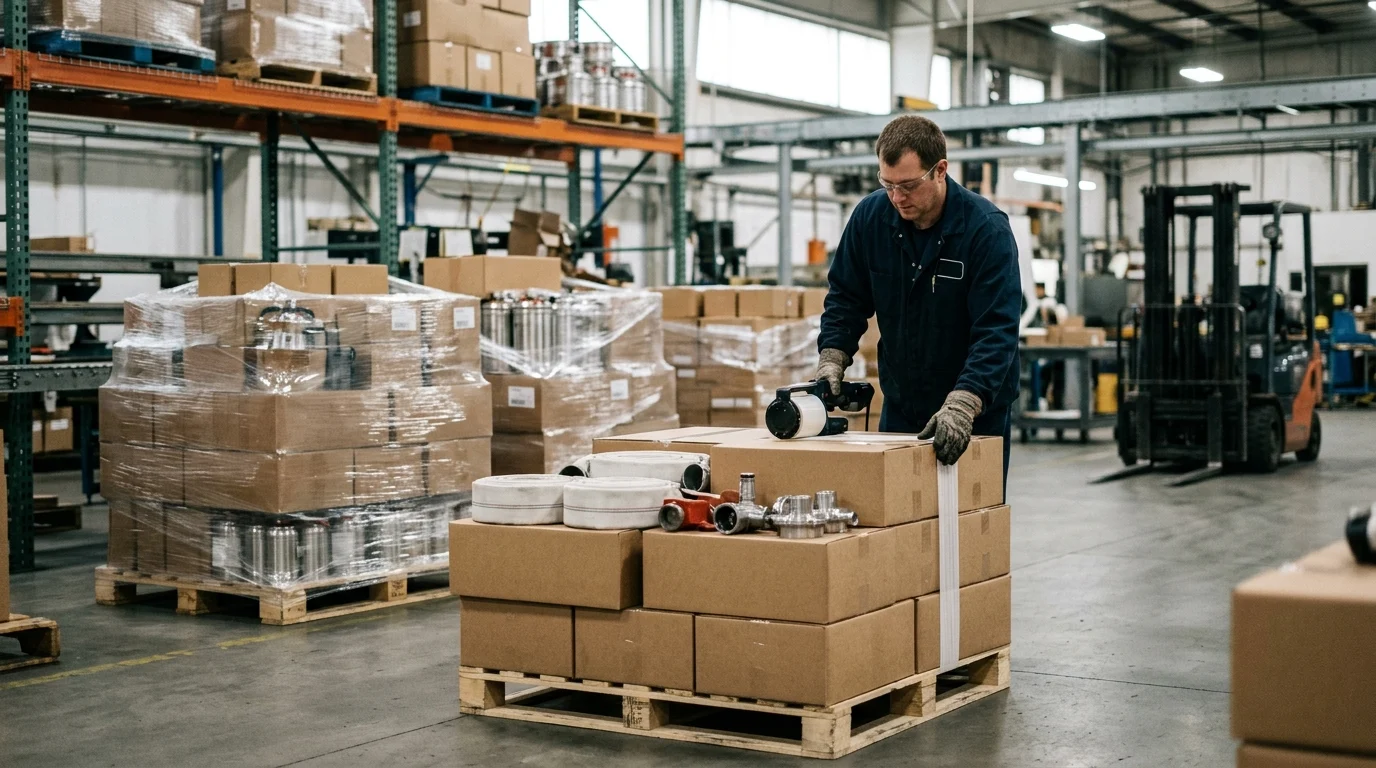
Selecting a manufacturing partner requires evaluating technical competencies that extend well beyond basic assembly. Distributors must thoroughly assess a factory’s ability to innovate, scale operations, and maintain precise engineering tolerances across high-volume production runs.
Which product, engineering, and customization capabilities matter most
The most critical capabilities include advanced CAD/CAM engineering, rapid prototyping, and in-house tooling fabrication. For critical pressure-bearing components such as brass valves and sprinkler heads, CNC machining tolerances must routinely hit ±0.01mm to guarantee leak-free performance over a multi-year lifespan.
Additionally, specialized capabilities in automated deep-drawing for steel cylinders, robotic welding for structural integrity, and automated powder coating for corrosion resistance are essential. A manufacturer’s ability to customize these processes—altering valve thread sizes or modifying discharge nozzle flow rates—dictates how effectively a distributor can serve niche market applications.
How distributors should compare fire equipment manufacturing suppliers
Distributors should evaluate suppliers based on their production capacity, historical research and development (R&D) expenditure, and tooling flexibility. A highly capable manufacturer will typically dedicate at least 3% to 5% of its annual revenue to continuous R&D and process improvement.
Assessing a facility’s maximum throughput is equally vital. Verifying that a supplier has the capacity to produce, for example, 100,000 portable extinguisher units per month ensures that the manufacturer can scale alongside the distributor’s geographic expansion without introducing severe production bottlenecks or extending lead times.
What comparison table the article should include for OEM suppliers
To systematically evaluate potential partners, procurement teams utilize tiered comparison matrices to match their specific market requirements with the appropriate level of manufacturing sophistication.
| Supplier Tier | Engineering Capability | Typical MOQ | Defect Rate Target | Tooling Ownership |
|---|---|---|---|---|
| Tier 1 | Full R&D, In-house Testing | 5,000+ units | < 500 PPM | Distributor Owned |
| Tier 2 | Co-design, Outsourced Testing | 1,000 – 4,999 | < 1,500 PPM | Shared |
| Tier 3 | Off-the-shelf, No R&D | < 1,000 units | < 3,000 PPM | Supplier Owned |
This framework clarifies the trade-offs between upfront investment and long-term quality control, guiding distributors toward the most appropriate OEM tier for their strategic goals.
How Compliance and Technical Specifications Shape Fire Equipment Manufac
Fire safety equipment is heavily regulated, meaning that manufacturing processes are inextricably linked to rigorous legal and technical compliance. Navigating the complex web of international life-safety standards is a primary function of any reputable OEM partner.
Which regional standards, certification pathways, and documentation matter
Regional standards dictate absolute market access. Products destined for North America typically require Underwriters Laboratories (UL) or Factory Mutual (FM) approval, while European markets demand CE marking and EN3 certification. Achieving these certifications is capital-intensive and time-consuming, often requiring 9 to 18 months of rigorous third-party testing.
To support these certifications, manufacturers must maintain an ISO 9001:2015 certified quality management system as a baseline. This ensures that all technical documentation, ranging from initial design history files to final batch release records, is meticulously maintained and immediately accessible for unannounced regulatory audits.
How material specifications, performance ratings, and traceability affect sourcing
Material selection directly impacts a product’s performance rating and its viability for certification. For instance, high-pressure extinguisher valves require CW617N forged brass to prevent dezincification, while the main cylinders rely on high-tensile, deep-drawn DC01 carbon steel.
Performance ratings dictate severe testing parameters during the manufacturing process. A cylinder designed for a standard 15-bar operating pressure must be engineered to consistently withstand hydrostatic burst testing at 55 bar or higher to meet safety margins. To ensure absolute accountability, top-tier manufacturers implement lot-level traceability via laser etching or permanent stamping, allowing distributors to track any individual unit back to its raw material heat number in the event of a field recall.
How Sourcing, Production, and Logistics Affect Fire Equipment Manufactur
The commercial viability of fire equipment manufacturing hinges on efficient raw material sourcing, optimized production workflows, and compliant, highly secure global logistics operations.
What cost drivers in fire equipment manufacturing most influence pricing
Pricing in the fire equipment sector is highly sensitive to commodity market fluctuations. Raw materials—specifically copper, zinc for brass alloys, and carbon steel—account for 60% to 75% of the Free on Board (FOB) cost of a standard extinguisher or suppression system.
Secondary cost drivers include energy-intensive processes like heavy forging and thermal curing, as well as skilled labor costs. To mitigate sudden cost spikes and protect margins, sophisticated distributors negotiate index-linked pricing contracts with their manufacturers, ensuring that cost adjustments are transparently tied to the London Metal Exchange (LME) or regional steel indices.
How OEM production planning, packaging, labeling, and after-sales support work
Effective production planning integrates Just-In-Time (JIT) material delivery with batch manufacturing to optimize factory utilization and reduce holding costs. Once produced, fire equipment must be packaged according to strict hazardous materials (HazMat) regulations, particularly if the units are shipped pre-pressurized.
UN-approved corrugated packaging and proper International Maritime Organization (IMO) labeling are mandatory for ocean freight to prevent customs delays. Post-delivery, the manufacturer’s after-sales support—including the reliable provision of spare parts kits, valve assemblies, and technical schematics—ensures the distributor can service the equipment throughout its standard 10-to-15-year lifecycle.
What practical sourcing and supplier qualification steps distributors should follow
Rigorous supplier qualification is non-negotiable when sourcing life-safety equipment. Distributors must conduct comprehensive on-site audits focusing on incoming quality control (IQC), in-process quality control (IPQC), and final quality control (FQC).
| Audit Category | Key Evaluation Metric | Minimum Acceptable Standard |
|---|---|---|
| Quality Systems | ISO Certification & Audit History | ISO 9001, Zero Major Non-Conformances |
| Testing Infrastructure | In-house Hydrostatic & Burst Testing | 100% inline pressure testing |
| Supply Chain | Tier-2 Supplier Traceability | Full documentation retention for 5+ years |
Implementing a structured audit process ensures that the chosen manufacturer possesses the operational discipline required to consistently deliver defect rates below the stringent industry benchmark of 0.1% (1,000 PPM).
How Global Distributors Choose the Right Fire Equipment Manufacturer
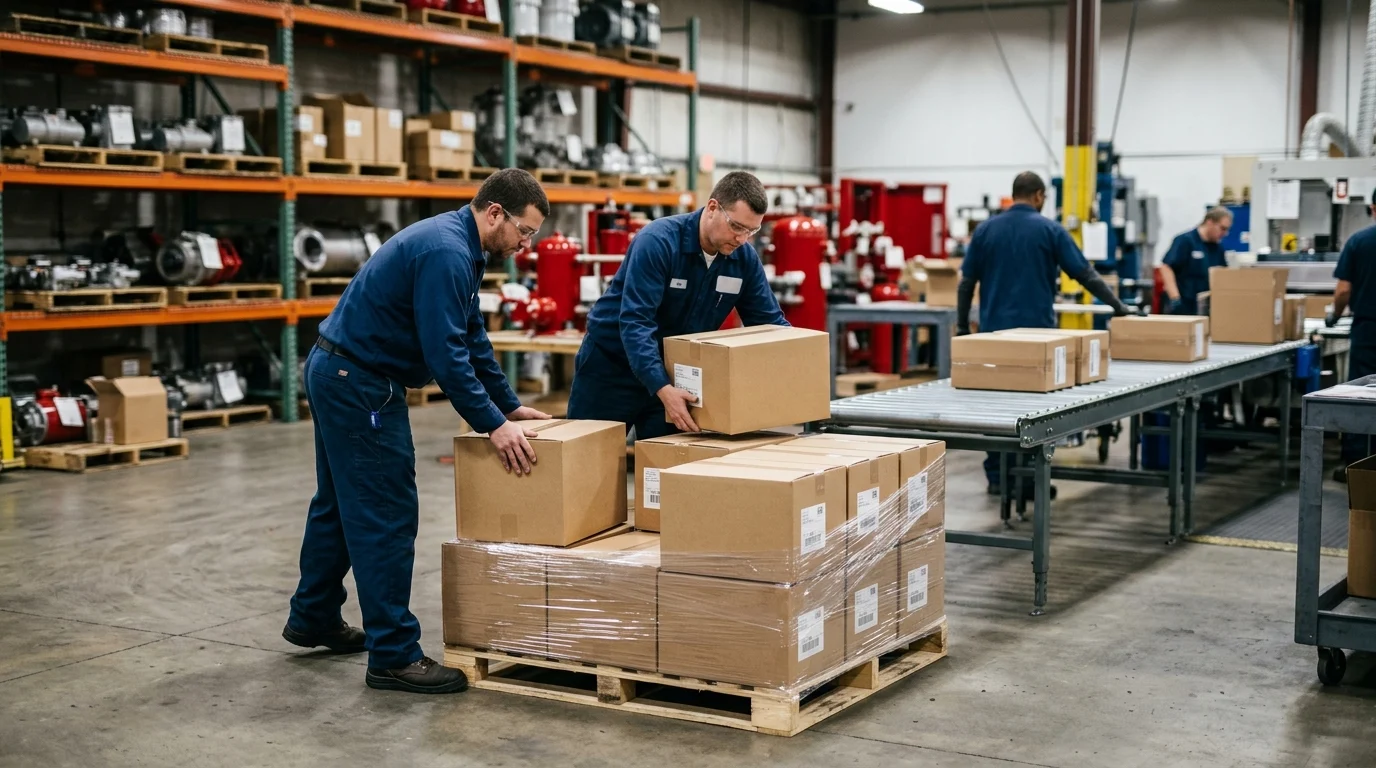
The final phase of establishing an OEM partnership involves aligning the distributor’s specific market strategy with the manufacturer’s engagement model. Choosing the correct collaboration framework determines long-term profitability and operational friction.
When to choose private label, semi-custom, or fully customized fire equipment
Distributors must decide between private label, semi-custom, or fully customized equipment based on their projected sales volume and need for market differentiation. Private labeling existing manufacturer designs requires minimal capital investment and features low Minimum Order Quantities (MOQs), typically ranging from 500 to 1,000 units.
Semi-custom approaches, involving unique cylinder colors, localized labeling, or modified valve handles, generally require MOQs of 2,000+ units. Conversely, fully customized equipment, designed from the ground up to secure proprietary patents, demands high MOQs (5,000+ units) and upfront tooling investments ranging from $15,000 to $60,000. However, this fully custom route offers the highest barrier to entry against regional competitors.
What decision criteria help distributors balance price, compliance, and lead time
Balancing price, compliance, and lead time requires a weighted decision matrix. While securing a low unit cost is commercially attractive, delays in compliance certification or extended production lead times—especially those exceeding 90 days—can rapidly erase any initial margin gains through lost tender opportunities and inventory stockouts.
Distributors must prioritize manufacturers that offer transparent production schedules, proven regulatory expertise, and scalable capacity over those merely offering the lowest FOB price. Ultimately, a successful fire equipment manufacturing partnership transcends transactional unit pricing, focusing instead on total landed cost, uncompromising life-safety reliability, and collaborative commercial growth over a multi-year horizon.
Key Takeaways
- The most important conclusions and rationale for Fire Equipment Manufacturing
- Specs, compliance, and risk checks worth validating before you commit
- Practical next steps and caveats readers can apply immediately
Frequently Asked Questions
How does OEM fire equipment manufacturing improve distributor margins?
Buying direct from the factory removes intermediary markups, often improving gross margins by 18% to 32%. That extra margin can support better bid pricing, local stock, and faster market expansion.
Which NBWorldFire products are suitable for OEM distributor programs?
NBWorldFire can support OEM projects across hydrants, landing valves, hose nozzles, couplings, cabinets, extinguishers, valves, flanges, and related fire protection parts for industrial and marine markets.
What certifications should a fire equipment OEM partner provide?
Look for ISO 9001:2015 plus market-specific approvals such as UL/FM, LPCB, BSI, TUV, or MED. These help distributors meet local compliance requirements and reduce approval risk.
What technical capabilities matter most in a fire equipment manufacturer?
Prioritize in-house design, R&D, tooling, CNC machining, pressure-component accuracy, welding quality, and corrosion-resistant finishing. These capabilities support consistent performance and practical product customization.
How can distributors evaluate whether NBWorldFire fits their OEM supply needs?
Check product range, certification match, customization options, production capacity, quality systems, and export experience. NBWorldFire serves global B2B buyers and offers a broad certified catalog for varied procurement needs.
Post time: May-07-2026