

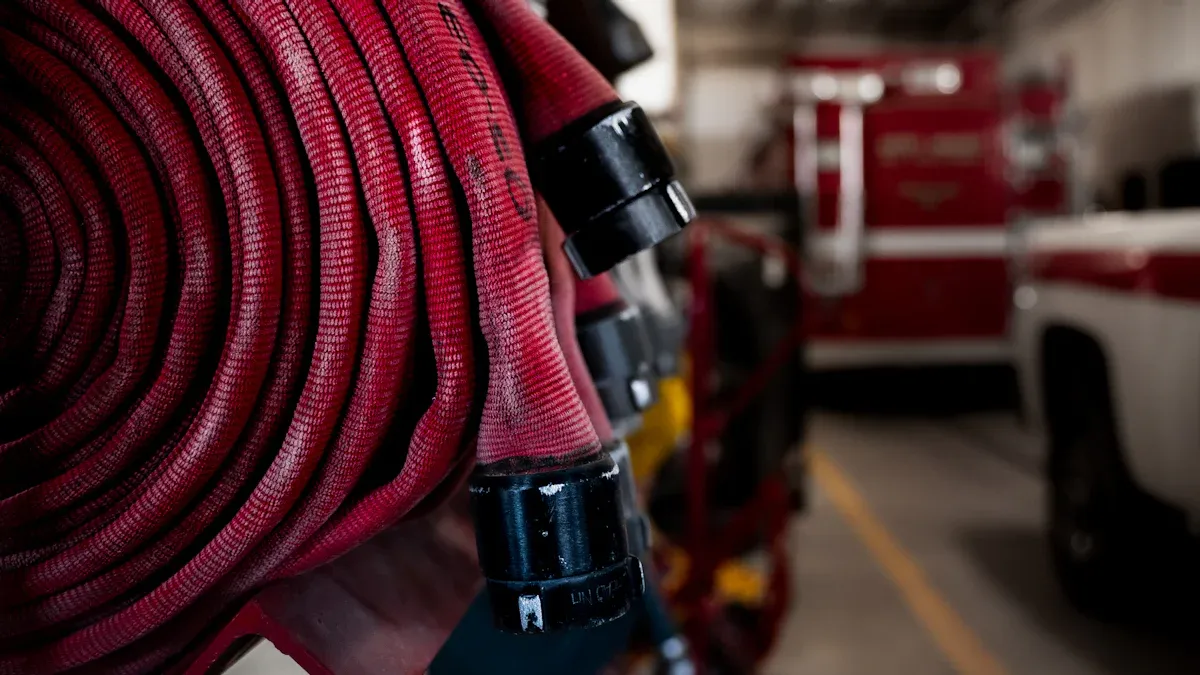
Fire safety equipment standards play a vital role in ensuring effective firefighting operations. These standards establish guidelines that firefighters must follow to maintain safety and operational efficiency. Familiarity with key standards, such as those set by NFPA and ANSI, is essential for all firefighters. Compliance with these regulations not only protects lives but also enhances the performance of fire safety equipment. Regular testing and adherence to established standards ensure that various fire hose coupling types, including brass fire hose coupling and BS / NH / Storz coupling, function correctly, preventing potential hazards during emergencies. Additionally, the integration of fire hose reel and cabinet systems further supports efficient firefighting efforts.
Key Takeaways
- Familiarize yourself with NFPA and ANSI standards to ensure safety and efficiency in firefighting operations.
- Choose the right type of fire hose coupling based on your specific needs, such as Camlock for quick connections or Storz for high-pressure situations.
- Regularly inspect and maintain fire hose couplings to prevent leaks and failures that can compromise safety during emergencies.
- Ensure compatibility among couplings and hoses to avoid dangerous situations and equipment damage during firefighting efforts.
- Invest in quality equipment that meets established standards to enhance reliability and performance in critical firefighting scenarios.
Understanding Fire Hose Couplings
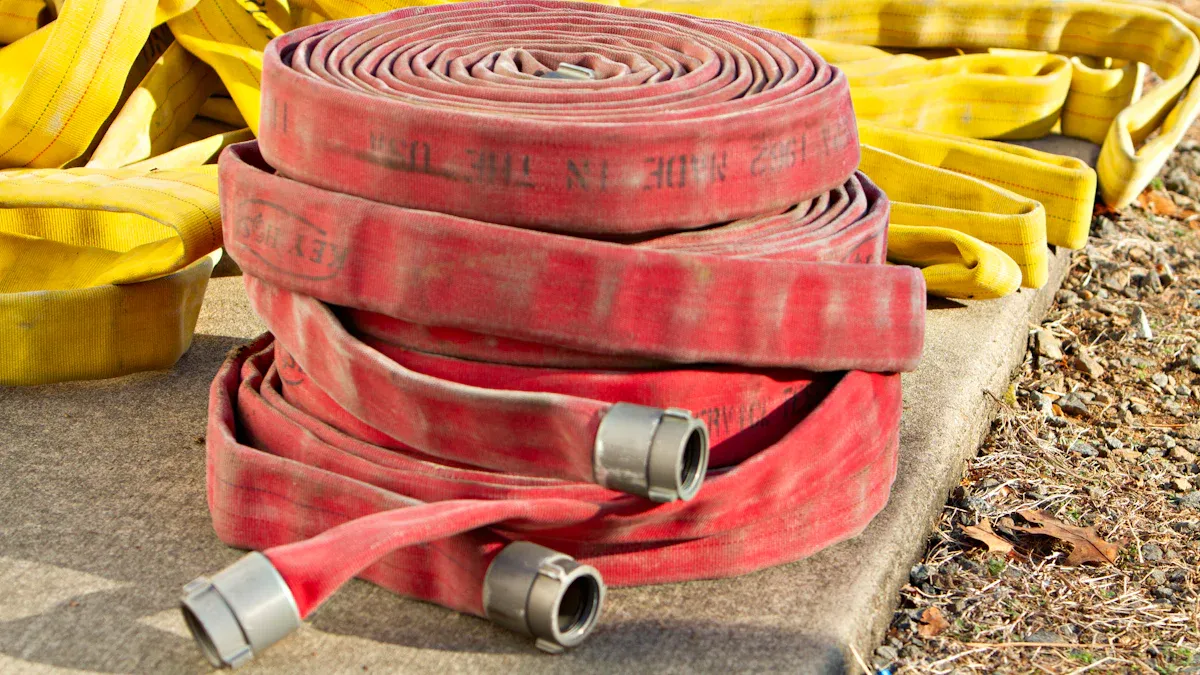
Fire hose couplings serve as critical components in firefighting operations. They connect hoses to various equipment, ensuring a reliable flow of water or other extinguishing agents. Understanding the different types of couplings and their functions is essential for effective firefighting.
Firefighters commonly use several types of couplings, each designed for specific applications:
- Camlock Couplings: These couplings allow for fast and easy connections without tools. They feature a lever arm that secures the connection, making them ideal for quick deployments during emergencies.
- Storz Couplings: Known for their sexless design, Storz couplings enable rapid connections. Firefighters favor them for their reliability and speed, especially in high-pressure situations. Their quarter-turn connection system allows for quick assembly, which is particularly beneficial in cold weather when ice can hinder traditional threaded connections.
- Guillemin Couplings: These versatile couplings are easy to connect and suitable for both high and low-pressure systems. They include a locking latch that ensures a secure fit.
- Pin Lug Couplings: Traditional and cost-effective, these couplings consist of male and female components secured with pins. They work well for moderate pressures and are straightforward to use.
Proper selection and maintenance of fire hose couplings are vital. They ensure safety and efficiency in firefighting operations. Regular checks prevent mismatches and failures, which can be crucial during emergencies. Firefighters must choose couplings that match their equipment and operational needs.
Common Types of Fire Hose Couplings
National Standard Thread (NST)
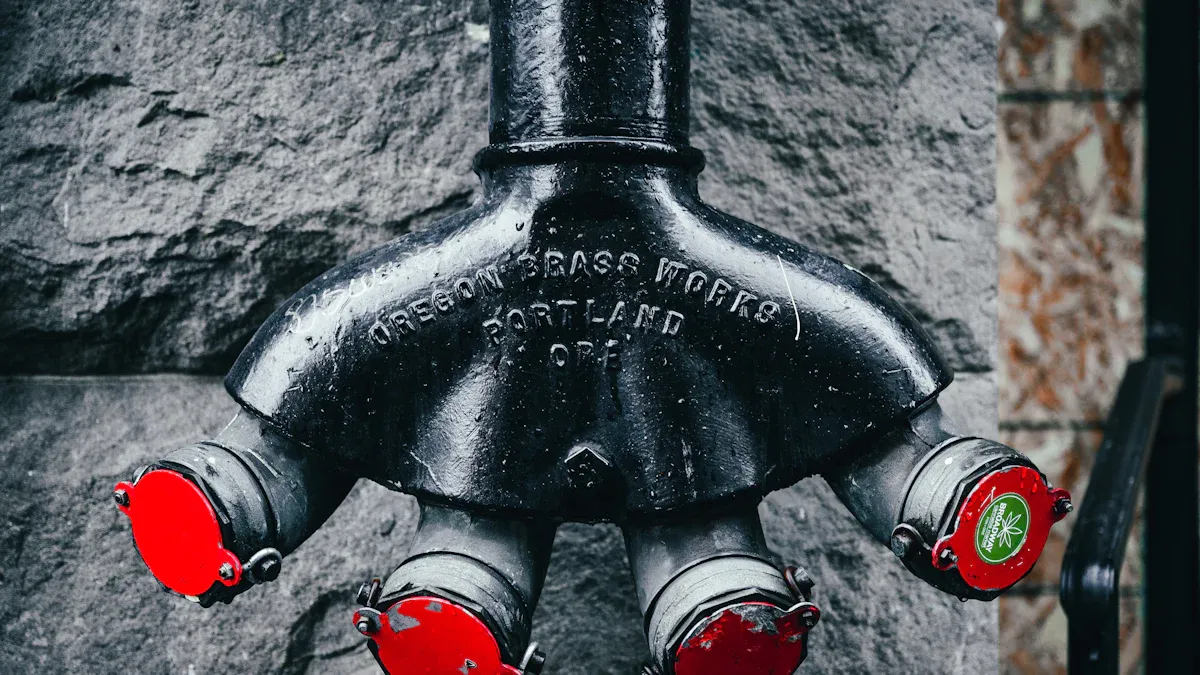
National Standard Thread (NST) couplings are among the most widely used types in North America. Their design features ensure a secure and leak-proof connection, which is vital for firefighting operations. The parallel threads allow for quick assembly without requiring precise alignment, making them essential during emergencies. Additionally, NST couplings can accommodate gaskets or O-rings, enhancing their sealing capabilities under high pressure. This reliability makes them a preferred choice for critical firefighting tasks.
National Pipe Thread (NPT)
National Pipe Thread (NPT) couplings play a crucial role in fire service equipment, particularly in fire suppression and sprinkler systems. These couplings provide essential connections that ensure reliable performance in safety applications. The tapered threads of NPT create a tight seal, preventing leaks and maintaining pressure within the system. Firefighters often rely on NPT couplings for their durability and effectiveness in high-stress environments.
Storz Couplings
Storz couplings are favored in Europe for their quick-connect features, which significantly enhance operational efficiency. Their design allows for rapid connections, making them ideal for high-pressure situations. Storz couplings utilize standard international lug distances, such as 31, 66, and 89 mm, ensuring compatibility between equipment from different jurisdictions. This interoperability is invaluable during automatic aid agreements and large mutual response incidents. Firefighters appreciate the ease of use and reliability that Storz couplings provide, especially in urgent scenarios.
| Coupling Type | Region of Use | Description |
|---|---|---|
| National Hose thread (NH) | United States | Most common type, uses straight threads sealed with a gasket. |
| British Standard thread (BS) | UK and Commonwealth | Uses Whitworth thread with a 55-degree angle, widely adopted in the UK. |
| Storz couplings | Europe | Known for quick-connect features, favored for ease of use. |
Understanding these common types of fire hose couplings equips firefighters with the knowledge necessary to select the right equipment for their specific needs.
Camlock Couplings
Camlock couplings are essential tools in firefighting and emergency response. Their design allows for quick and efficient connections, making them invaluable during critical situations. Firefighters and emergency responders appreciate the speed and ease of use that Camlock couplings provide.
The advantages of using Camlock couplings in emergency scenarios include:
- Speed and Efficiency: Camlock couplings excel in rapid setup. They enable quick connections for suction and discharge hoses, especially in applications like vacuum trucks and containment systems during oil spills or chemical leaks.
- Tool-Free Operation: These couplings can be connected and disconnected without tools. This feature is crucial in emergencies, allowing even untrained personnel to operate them effectively, which reduces downtime.
- Minimized Leak Risk: The design of Camlock couplings helps minimize leaks. This enhances safety during emergency operations, where maintaining a secure connection is vital.
- Versatility: Camlock couplings are suitable for various emergency response applications. Their quick-connect design is essential in situations where time is critical, such as firefighting or chemical spill responses.
Firefighters often rely on Camlock couplings for their reliability and user-friendly operation. The ability to quickly connect hoses can make a significant difference in emergency situations. By ensuring that responders can act swiftly, Camlock couplings contribute to effective firefighting efforts and overall safety.
Key Fire Hose Coupling Standards
Fire hose coupling standards play a crucial role in ensuring the safety and effectiveness of firefighting operations. Firefighters must understand these standards to ensure compatibility and reliability in their equipment.
NFPA Standards
The National Fire Protection Association (NFPA) sets essential standards for fire hose couplings. These standards outline requirements for inspection, testing, and performance. Key NFPA standards include:
- NFPA 1962: This standard details visual inspection criteria and service testing requirements for fire hoses. Firefighters must examine the outer jacket for damage, inspect couplings for corrosion, check the inner lining for defects, and verify markings.
- NFPA 1963: This standard specifies performance requirements for fire hose couplings and adapters. It includes specifications for sizes ranging from 3/4 inch to 8 inches and various connection types.
The following table summarizes the key requirements outlined in NFPA standards for fire hose couplings:
| Requirement Type | Details |
|---|---|
| Visual Inspection Criteria | Examine outer jacket for damage, inspect couplings for corrosion, check inner lining for defects, verify markings. |
| Service Testing Requirements | Pressurize hose to specified levels, maintain pressure, observe for leaks, document results. |
| Coupling Specifications | Performance requirements for couplings and adapters, including sizes from 3/4 in. to 8 in. and connection types. |
ANSI Standards
The American National Standards Institute (ANSI) also establishes standards that apply to fire hose couplings. These standards differ from NFPA standards in specific areas. Notable ANSI standards include:
- ANSI B26: This standard defines screw threads for fire hose couplings with diameters of 2 1/2 to 4 1/2 inches.
- ANSI-ASME B1.20.7: This standard defines garden hose thread and non-tapered iron pipe thread, which are sometimes used in wildland firefighting.
The following table highlights the differences between ANSI and NFPA standards:
| Standard | Description |
|---|---|
| NFPA 1963 | Defines the majority of fire hose couplings in existence. |
| ANSI-ASME B1.20.7 | Defines garden hose thread and non-tapered iron pipe thread, sometimes used in wildland firefighting. |
| ANSI B26 | Defines screw threads for fire hose couplings with diameters of 2+1⁄2 to 4+1⁄2 inches. |
ISO Standards
International Organization for Standardization (ISO) standards promote compatibility and safety in fire hose couplings on a global scale. These standards ensure that couplings are durable and reliable, which aids in quick deployment during emergencies. Key aspects of ISO standards include:
- Compatibility: ISO standards ensure that fire hose couplings from different manufacturers can work together seamlessly.
- Safety: These standards enhance safety and reliability, which is essential for effective collaboration among various firefighting organizations.
By adhering to ISO standards, firefighters can minimize leaks and ensure that their equipment functions correctly in critical situations.
Importance of Compatibility
Compatibility among fire hose couplings is crucial for effective firefighting operations. Firefighters must ensure that all couplings and hoses work seamlessly together. This compatibility enhances safety and operational efficiency during emergencies.
Ensuring Safe Connections
Firefighters rely on standardized connections to maintain safety. Incompatible couplings can lead to dangerous situations. For instance, if a mutual aid department uses different hose connectors, it may delay rescue operations. A documented incident in Los Angeles highlighted this issue, where incompatible couplings turned a rescue operation into a recovery effort.
To prevent such incidents, facilities must adhere to specific requirements:
| Requirement | Description |
|---|---|
| Standardization | All fire hose coupling and connection threads must be standardized throughout the facility and on vessels. |
| Compatibility | Ensure that all fire hoses and couplings are compatible with those used by outside fire response organizations. |
| Adapter Provision | If compatibility cannot be ensured, suitable adapter couplings must be provided for external agencies. |
Avoiding Equipment Damage
Incompatible couplings can also cause significant equipment damage. When fittings separate from hose ends under pressure, leaks and disconnections may occur. This compromises the firefighting capabilities, making the system unreliable when it is needed most.
Common issues include:
- Use of non-standard fittings leading to failures under pressure.
- Incorrect coupling sizes fitted to fire hydrants, rendering them incompatible with fire hoses.
Such failures can severely impact firefighting efforts. Firefighters must regularly inspect their equipment to ensure compatibility and functionality. By prioritizing compatibility, they can enhance the effectiveness of their fire safety equipment and ensure a swift response during emergencies.
Selecting the Right Couplings
Choosing the right fire hose couplings is essential for effective firefighting operations. Firefighters must consider several factors to ensure optimal performance and safety.
Size Considerations
The size of fire hose couplings directly impacts water flow and pressure. Selecting the appropriate coupling size ensures efficient water delivery during emergencies. The following table illustrates how different hose sizes affect flow rates and coupling sizes:
| Hose Size | Flow Rate (gpm) | Weight (lbs) | Coupling Size |
|---|---|---|---|
| 1 ¾” | 280—300 | 21 (charged) | 1 ½” |
| 2” | 400—450 | 21 (charged) | 1 ½” |
| 2 ½” | 600—700 | 65 (charged) | 2 ½” |
Firefighters should match coupling sizes to hose diameters to maintain optimal flow rates. Mismatched sizes can lead to reduced pressure and inefficient firefighting efforts.
Material Selection
The material of fire hose couplings significantly influences their performance and durability. Common materials include brass, steel, and plastic, each with distinct advantages and disadvantages. The following table summarizes these materials:
| Material | Advantages | Disadvantages |
|---|---|---|
| Brass | Strong, resistant to corrosion, handles high pressure, conductive | Can be expensive compared to plastic |
| Steel | Very strong, handles higher pressure, durable | Heavier, more expensive than brass |
| Plastic | Lightweight, inexpensive, easy to handle | Not as strong, can be damaged under high pressure or harsh chemicals |
Firefighters should select materials based on the specific demands of their firefighting environment. For instance, brass couplings are ideal for high-pressure situations, while plastic couplings may suffice for lighter applications.
Pressure Ratings
Understanding pressure ratings is crucial when selecting fire hose couplings. Couplings must withstand the pressures encountered during firefighting operations. Firefighters should always check the pressure ratings of couplings to ensure they meet or exceed the requirements of their hoses.
Tip: Always prioritize quality and compliance when selecting couplings. Ensure adherence to safety standards and quality control measures. Look for suppliers with a proven track record in producing reliable fire hose couplings.
By considering size, material, and pressure ratings, firefighters can select the right couplings for their specific needs, enhancing safety and operational efficiency.
Common Challenges with Fire Hose Couplings
Fire hose couplings face several challenges that can impact their performance and reliability. Understanding these issues helps firefighters maintain equipment and ensure safety during operations.
Leaks and Failures
Leaks and failures in fire hose couplings can lead to significant operational challenges. Common causes include:
- Cuts or abrasions exposing the inner lining.
- Blistering or bubbling of the jacket.
- Coupling slippage exceeding manufacturer specifications.
- Damaged threads that compromise the connection.
- Fabric deterioration causing significant weakening.
These issues can result in fitting slippage on the hose, leading to leaks at fittings or within the hose itself. Firefighters must regularly inspect couplings to identify these problems early.
Corrosion and Wear
Corrosion poses a serious threat to the lifespan and reliability of fire hose couplings. In marine environments, corrosion can weaken materials and cause structural damage. This deterioration may lead to failures during critical emergencies. For instance, an incident revealed that electrolytic corrosion caused a fire hose fitting to fail during pressure testing. Regular inspections are essential to prevent such occurrences.
Corrosion can penetrate deeper, causing pitting that renders couplings unusable when they are needed most. Firefighters should prioritize the use of corrosion-resistant materials and conduct routine checks to ensure equipment remains in optimal condition.
Improper Connections
Improper connections can severely hinder firefighting efforts. Common mistakes include:
- Using wrong fittings and non-standard components, such as unapproved elbows or mismatched thread types.
- Poor hose reel connections that lead to water dripping from joints or hoses slipping off the drum.
- Not following installation standards, which can result in leaks, corrosion, and total failure during emergencies.
Firefighters must ensure that all connections adhere to established standards. Proper training and awareness of best practices can help mitigate these risks, ensuring that equipment functions effectively when it matters most.
Solutions and Best Practices
Regular Maintenance
Regular maintenance of fire hose couplings is essential to prevent failures and ensure reliable performance. Firefighters should implement the following best practices:
- Visual Inspections: Conduct monthly checks for damage, corrosion, and ensure proper winding and secure connections.
- Flow Tests: Perform annually to ensure adequate water supply and check for leaks or kinks.
- Pressure Tests: Verify every five years that the hose can withstand 1.5 times the maximum working pressure.
- Storage Best Practices:
- Clean and dry hoses before storage to prevent contamination.
- Use ventilated cabinets to avoid moisture buildup.
- Maintain storage temperatures between 10°C and 24°C (50°F and 75°F).
- Store hoses away from direct sunlight and chemicals to prevent degradation.
- Coil hoses in large, even loops to avoid kinks.
- Regularly inspect stored hoses for signs of wear or damage.
Proper Training
Ongoing training significantly enhances firefighter proficiency in using fire hose couplings. Firefighters should focus on:
- Emphasizing proper techniques, teamwork, and effective communication during hose deployment.
- Practicing in various scenarios to manage hose lines effectively, which is critical for fireground operations.
- Advancing lines in challenging positions to ensure proficiency when responding to real fires.
Such training prepares firefighters to handle equipment confidently and efficiently during emergencies.
Using Quality Equipment
Selecting quality equipment is crucial for the safe and effective operation of fire hoses. Firefighters should consider the following criteria when choosing couplings:
| Criteria | Description |
|---|---|
| Material Specifications | Requirements for couplings, connectors, and components for firefighting hoses. |
| Performance Testing | Methods for testing various aspects of performance are specified in Annex A to Annex E. |
| Adherence to Standards | Compliance with BS 6391, BS 3165, or BS EN ISO 14557 for firefighting purposes up to 16 bar. |
Quality equipment ensures reliable connections and minimizes the risk of failures during critical operations. Proper selection of hose couplings, typically made of materials like steel, brass, or aluminum, must be compatible in size and threading to ensure a secure connection.
Understanding fire hose coupling standards is vital for effective firefighting. These standards ensure compatibility and reliability, which enhances safety during operations. Firefighters should prioritize the use of quality equipment that meets established specifications.
- Adhering to these standards leads to:
- Faster connection times, especially with Storz couplings.
- Reliable performance during critical situations.
- Improved response times, preventing fires from escalating.
By focusing on safety and compatibility, firefighters can enhance their operational effectiveness and ensure the safety of their teams and communities.
FAQ
What are fire hose couplings?
Fire hose couplings connect hoses to equipment, ensuring a reliable flow of water or extinguishing agents. They come in various types, including NST, NPT, Storz, and Camlock, each designed for specific applications.
Why is compatibility important in fire hose couplings?
Compatibility ensures that couplings and hoses work seamlessly together. Incompatible couplings can lead to leaks, equipment damage, and delays during emergencies, compromising safety and operational efficiency.
How often should fire hose couplings be inspected?
Firefighters should inspect fire hose couplings monthly. Regular checks help identify damage, corrosion, or wear, ensuring reliable performance during critical situations.
What materials are commonly used for fire hose couplings?
Common materials include brass, steel, and plastic. Brass offers strength and corrosion resistance, while steel provides durability. Plastic is lightweight and cost-effective but may not withstand high pressures.
What standards govern fire hose couplings?
Key standards include NFPA, ANSI, and ISO. These organizations establish guidelines for performance, compatibility, and safety, ensuring that fire hose couplings meet industry requirements.
Post time: Mar-25-2026