

Introduction
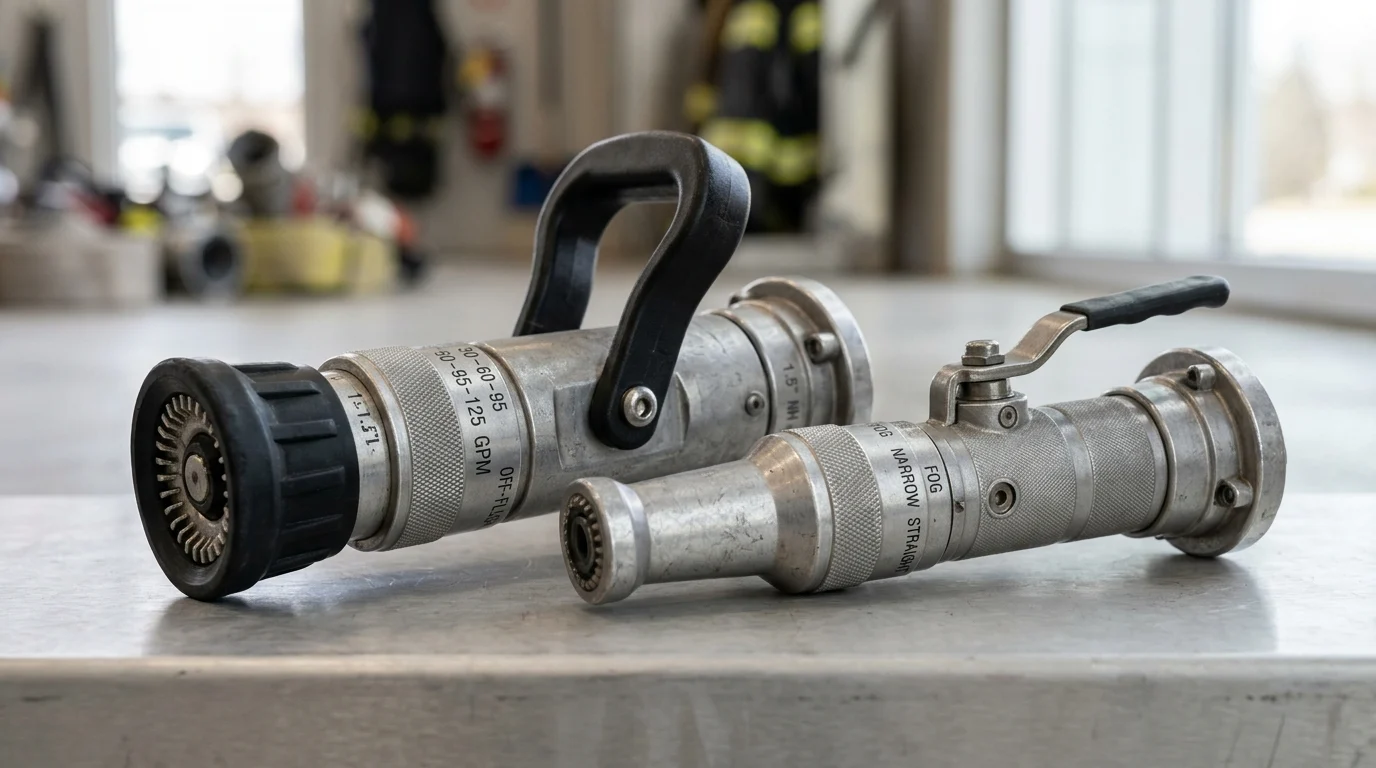
Choosing between brass and aluminum nozzles comes down to more than tradition or price. Both materials can deliver the flow needed on the fireground, but they differ in weight, handling, corrosion resistance, and long-term maintenance demands. This article compares aluminum fire nozzles with brass alternatives to show where each material performs best, how those differences affect firefighter fatigue and durability, and which option offers better value across daily operations and service life.
Why Compare Aluminum Fire Nozzles and Brass Fire Nozzles
The specification of fire suppression equipment requires rigorous evaluation of metallurgical properties, particularly when contrasting legacy brass with modern aluminum fire nozzles. While brass has historically dominated the fire service due to its inherent durability and weight, advancements in aluminum alloys and surface treatments have shifted procurement trends over the last three decades.
What criteria define performance and value
Performance and value in fire stream delivery are dictated by flow characteristics, ergonomic impact, and lifecycle costs. Aluminum fire nozzles offer a substantial reduction in mass, typically weighing 40% to 60% less than their brass equivalents. For a standard 1.5-inch attack line, this translates to a reduction from roughly 6.5 pounds to just 2.8 pounds. This weight differential directly reduces firefighter fatigue during prolonged operations, while maintaining equivalent flow rates ranging from 10 to 250 gallons per minute (GPM) depending on the baffle and bore design.
How do operating environment and duty cycle affect choice
The operational environment heavily influences the lifespan and wear of firefighting equipment. Duty cycles involving frequent physical impacts on concrete or asphalt demand high yield strength, whereas static deployments in corrosive atmospheres prioritize chemical resistance. Brass excels in environments with continuous exposure to saltwater or caustic industrial chemicals, where bare aluminum would rapidly oxidize. However, modern aluminum fire nozzles utilize hardcoat anodizing to bridge this gap, offering sufficient environmental protection for standard municipal duty cycles while preserving the ergonomic benefits required for high-mobility structural firefighting.
Material Properties and Field Performance
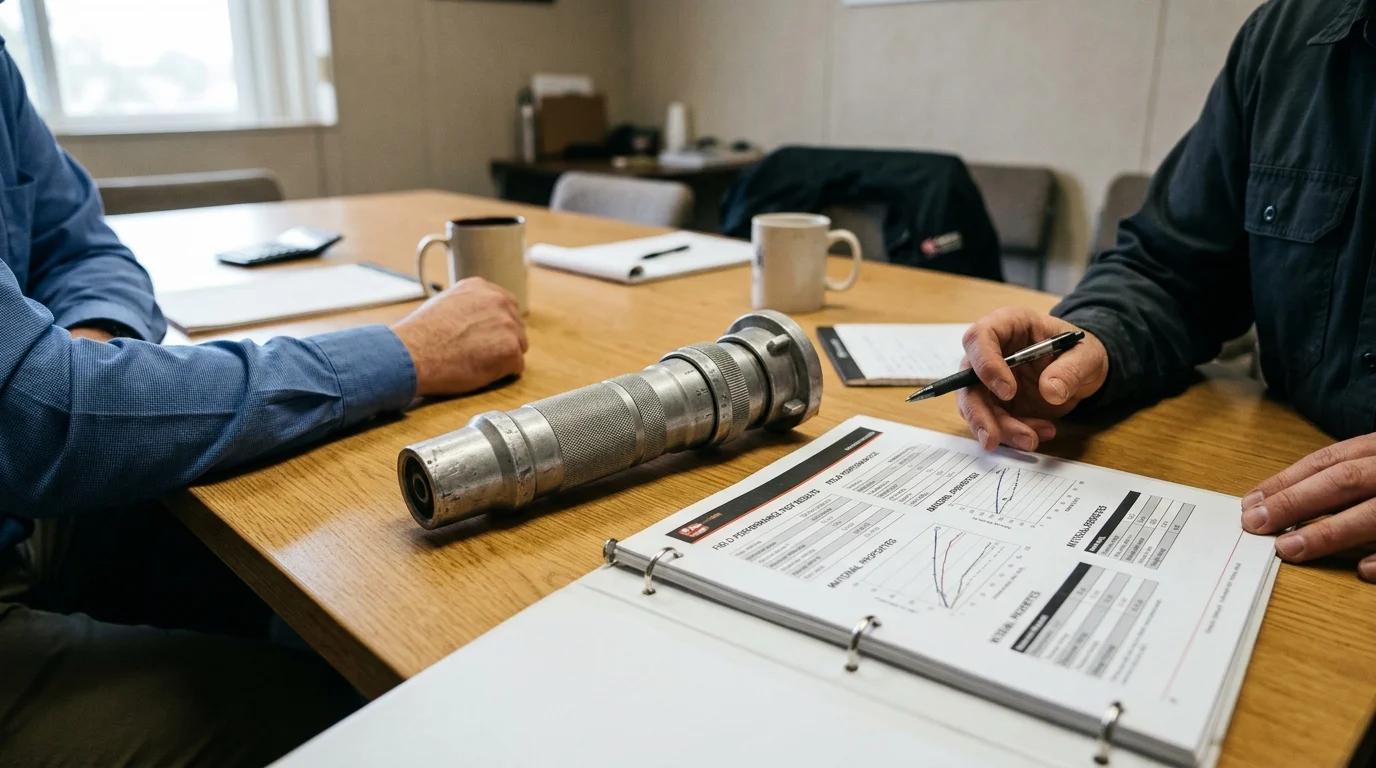
Evaluating field performance requires a comparative analysis of the raw material properties used in nozzle manufacturing. The industry standard for brass nozzles typically involves cast red brass or C36000 free-machining brass, whereas premium aluminum fire nozzles are CNC-machined from extruded 6061-T6 or aircraft-grade 7075-T6 aluminum billets.
How do weight, corrosion resistance, impact tolerance, and therm
al behavior differ
The physical difference between these materials is stark. Extruded 6061-T6 aluminum features a tensile strength of approximately 45,000 psi, while standard brass alloys range between 50,000 and 58,000 psi. Although brass possesses superior inherent impact tolerance and is less susceptible to thread galling, aluminum compensates through advanced surface treatments. Hardcoat anodizing (MIL-A-8625 Type III) applies an aluminum oxide layer up to 2 mils (0.002 inches) thick, achieving a surface hardness approaching 65 Rockwell C. Thermally, aluminum dissipates heat more rapidly, though brass maintains dimensional stability under extreme thermal shock slightly better than aluminum.
Which nozzle specifications should buyers compare first
Procurement teams must analyze specific hydraulic and mechanical specifications beyond base metallurgy. Key metrics include the designated operating pressure—typically standardized at 50, 75, or 100 PSI—and the compatibility of the coupling threads, usually National Hose (NH/NST) or National Pipe Straight Hose (NPSH). The material of internal components, such as the shutoff ball (often stainless steel or polymer-coated brass) and the seat (typically Teflon or specialized elastomers), must align with the primary body material to prevent galvanic corrosion and ensure a watertight seal.
What comparison table best contrasts the two materials
To synthesize these metallurgical and performance variables, the following matrix contrasts the primary characteristics of standard brass and anodized aluminum configurations.
| Specification | 6061-T6 Aluminum (Type III Anodized) | C36000 Brass |
|---|---|---|
| Average Weight (1.5″ Nozzle) | 2.5 – 3.5 lbs | 6.0 – 8.0 lbs |
| Tensile Strength | ~45,000 psi | ~58,000 psi |
| Surface Hardness | 60-65 HRC (Anodized Layer) | 70-80 HRB |
| Corrosion Resistance | High (Dependent on coating integrity) | Excellent (Inherent to material) |
| Cost Factor | Moderate | High (Due to copper market) |
Manufacturing, Compliance, and Supply Chain Factors
The reliability of fire suppression hardware is closely linked to stringent manufacturing tolerances, comprehensive compliance testing, and resilient supply chains. The transition from cast brass to machined aluminum has introduced specific production variables that directly impact final product quality.
Which production variables, alloys, coatings, and machining deta
ils matter
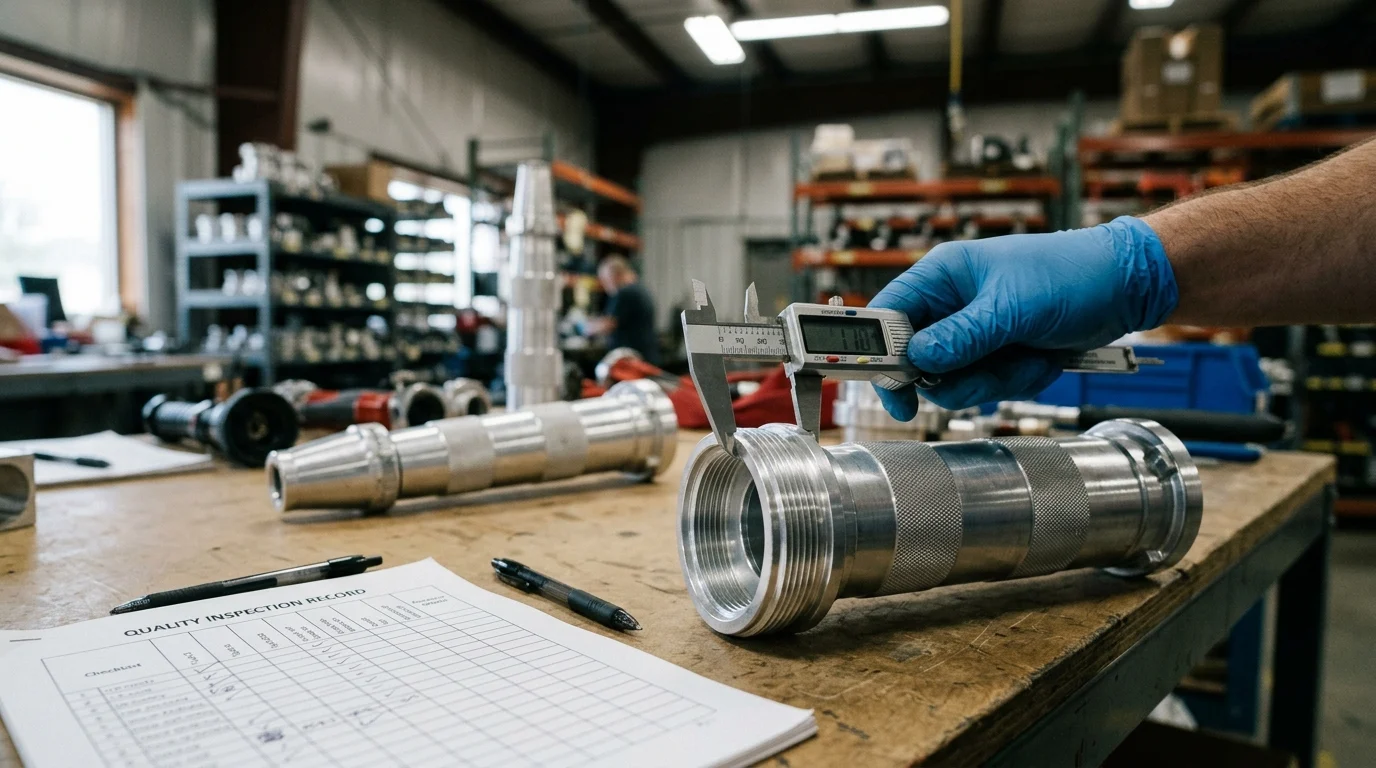
The manufacturing of aluminum fire nozzles relies heavily on multi-axis CNC machining, which ensures tighter dimensional tolerances (often within ±0.001 inches) compared to traditional sand-casting methods used for brass. This precision is critical for the smooth actuation of pattern selection rings and shutoff valves. Furthermore, the integrity of the MIL-A-8625 Type III hardcoat anodizing process is paramount; any variance in electrolyte temperature or voltage during coating can result in a porous finish, drastically reducing the nozzle’s lifespan when exposed to abrasive particulates or hard water.
How should buyers verify certifications, testing records, and st
andards
Compliance with international standards serves as the baseline for procurement. Buyers must mandate adherence to NFPA 1964 (Standard for Spray Nozzles), which dictates rigorous performance benchmarks. Testing protocols include hydrostatic pressure tests at 1,000 PSI to verify structural integrity, alongside salt spray testing (such as ASTM B117, typically for 100 to 200 hours) to validate the corrosion resistance of surface treatments. Certifications from recognized bodies like Underwriters Laboratories (UL) or FM Global provide independent verification of these engineering claims.
What sourcing risks, lead times, and regional supply differences
affect procurement
Supply chain dynamics introduce significant procurement variables. The raw material cost for brass is highly sensitive to fluctuations in the London Metal Exchange (LME) copper indices, often making brass nozzles 20% to 40% more expensive at the point of origin. Conversely, aluminum supply chains are generally more stable, though specialized aerospace-grade billets can experience localized shortages. Consequently, standard lead times for bulk municipal orders of aluminum fire nozzles typically range from 4 to 8 weeks, whereas specialized brass configurations may require 8 to 12 weeks, depending on foundry capacity.
Which Applications Favor Each Material
The choice between brass and aluminum ultimately depends on the specific application and deployment environment. No single material universally satisfies the disparate demands of municipal, industrial, and maritime fire protection.
Where do aluminum fire nozzles perform better in municipal
or portable use
Aluminum fire nozzles are the optimal choice for high-mobility municipal firefighting, wildland applications, and high-rise standpipe operations. In a typical high-rise pack, where firefighters must manually transport 150 to 200 feet of hose alongside tools, a weight reduction of 3 to 4 pounds per nozzle significantly mitigates cardiovascular strain. Similarly, in forestry and wildland applications, where personnel traverse rugged terrain for extended durations, the lightweight profile of aluminum is indispensable. The ergonomic benefits facilitate faster deployment, easier pattern adjustments under pressure, and reduced physical fatigue during prolonged structural attacks.
When does brass remain the stronger choice for harsh
or demanding conditions
Despite the ergonomic advantages of aluminum, brass remains the definitive choice for fixed installations, severe industrial environments, and maritime operations. In petrochemical refineries, offshore drilling platforms, or saltwater marine environments, the continuous exposure to corrosive elements and lack of routine freshwater flushing rapidly degrade anodized aluminum coatings. Once the Type III coating is compromised, galvanic corrosion accelerates. Brass, conversely, thrives in these environments, maintaining structural integrity and valve operability even after decades of neglect. Furthermore, fixed monitor nozzles, where weight is supported by a flange or apparatus rather than a human operator, derive no benefit from aluminum and rely on the sheer mass and impact resistance of brass to withstand continuous 500 to 1,000+ GPM flows.
How Should Buyers Decide Between Aluminum and Brass
Establishing a standard operating procedure for nozzle procurement requires moving beyond initial unit price and evaluating the Total Cost of Ownership (TCO) alongside tactical requirements. A structured evaluation prevents the misallocation of capital on over-engineered or ill-suited equipment.
What step-by-step evaluation process helps match nozzle material
to need
Procurement teams should execute a sequential evaluation process. First, analyze the primary water source: drafting from brackish water or seawater strongly indicates a need for brass, whereas municipal hydrants favor aluminum. Second, assess the deployment mechanism: handlines prioritize the weight savings of aluminum, while fixed monitors negate this requirement. Third, calculate the maintenance bandwidth. Aluminum fire nozzles require disciplined preventive maintenance, including bi-annual lubrication of the shutoff ball and inspection of the anodized finish; brass is generally more forgiving of deferred maintenance. Finally, factor in the lifecycle budget, recognizing that while brass carries a 20% to 40% premium upfront, its potential 20-year lifespan in harsh conditions may yield a lower TCO than replacing an aluminum nozzle twice in the same period.
Which decision matrix can guide procurement teams toward the
best option
To streamline tactical and financial decision-making, procurement officers can use a targeted decision matrix to align the deployment scenario with the optimal metallurgical profile.
| Deployment Scenario | Recommended Material | Primary Justification | Estimated Lifespan (Years) |
|---|---|---|---|
| Municipal Structural Handlines | Aluminum (Hardcoat) | Ergonomics, speed of deployment, fatigue reduction | 10 – 15 |
| Wildland / Forestry | Aluminum | Maximum weight reduction for manual transport | 8 – 12 |
| Industrial / Petrochemical | Brass | Resistance to harsh chemicals and physical abuse | 15 – 25 |
| Marine / Saltwater Exposure | Brass | Inherent resistance to aggressive galvanic corrosion | 20+ |
| Fixed Apparatus Monitors | Brass | Weight is irrelevant; maximum durability required | 25+ |
Key Takeaways
- The most important conclusions and rationale for Aluminum Fire Nozzles
- Specs, compliance, and risk checks worth validating before you commit
- Practical next steps and caveats readers can apply immediately
Frequently Asked Questions
Are aluminum fire nozzles lighter than brass nozzles?
Yes. Aluminum nozzles are typically 40% to 60% lighter, which helps reduce firefighter fatigue during long operations.
Do aluminum fire nozzles perform as well as brass in flow delivery?
Yes. Properly designed aluminum nozzles can deliver the same flow rates as brass, often from 10 to 250 GPM depending on the nozzle design.
When is brass still the better choice?
Brass is better for harsh corrosive environments, such as saltwater or chemical exposure, where maximum inherent corrosion resistance is needed.
How do aluminum fire nozzles resist corrosion?
They usually use hardcoat anodizing to protect the surface. This makes them suitable for most municipal and industrial duty cycles.
What should buyers check before choosing a fire nozzle?
Check operating pressure, thread compatibility, internal component materials, and certification needs. These factors matter more than material alone.
Post time: May-07-2026